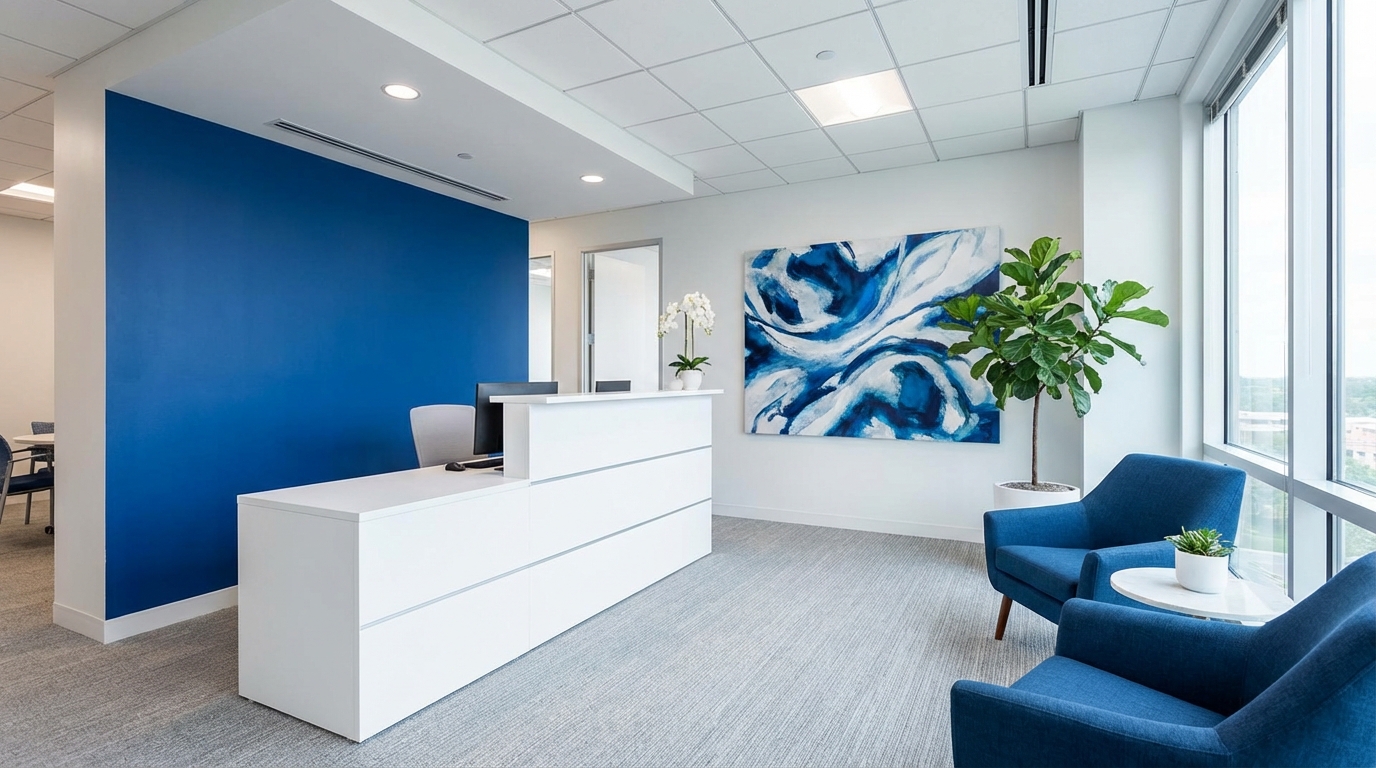
| Aspect | Good Reception Area | Bad Reception Area |
|---|---|---|
| First impression | Calm, clear, confident | Confusing, rushed, forgettable |
| Business impact | Builds trust, shortens sales cycle | Creates doubt, stalls deals |
| Cost | Moderate one-time investment | Hidden cost in lost business |
| Brand signal | Consistent with your promise | Mixed signals, weak message |
| Usability | Obvious where to go and what to do | Guests wait, wander, or feel ignored |
Your reception area sells long before your team says a word. People step in, scan the room in a few seconds, and quietly decide whether to trust you, pay your price, and recommend you. That first impression sticks more than the deck you show later, more than the proposal, maybe even more than the meeting itself. So if you treat reception like an afterthought, you are basically letting random furniture and old paint run your sales process.
Why reception areas sell before you do
Walk through your front door like a stranger. Do not look at it as the owner or manager. Watch what happens in your head.
You notice smell, light, noise, clutter. You notice whether anyone looks up. You notice if there is a clear place to go. You notice if your brand feels sharp or outdated.
You do not think all of this as full sentences. Your brain just tags the place as “professional”, “cheap”, “cold”, “warm”, or “chaotic”.
Your reception area is your silent sales pitch. It tells people what working with you will feel like.
When a reception area is clean, simple, and intentional, you send a signal:
– “We respect your time.”
– “We know what we are doing.”
– “You are safe here.”
When it is cramped, messy, loud, or confusing, you send a different signal:
– “We are not organized.”
– “We are too busy for you.”
– “Quality might be hit or miss.”
You can have a great product, world class service, smart people, and still lose deals because someone sat in a tired, awkward reception space for ten minutes and quietly decided to go with someone else.
The psychology behind first impressions in reception
People judge fast and then defend that judgment
Research on thin slicing shows people form strong opinions in a few seconds based on limited cues. Your reception area is full of cues:
– How long it takes to be greeted
– The posture and tone of the person at the desk
– The state of the furniture and floor
– The clarity of signage
– The sound level and type of noise
Once visitors decide “these people are sharp” or “these people are sloppy,” they look for proof that they are right. That means a strong reception gives your team an edge before the meeting starts.
Environment sets expectations for price and quality
Think of the difference between walking into a luxury hotel and a discount motel. Same basic function: a place to stay. Very different expectation for price and service.
Your clients do the same mental math. A reception space that looks cheap, tired, or random makes it harder to charge premium prices or pitch strategic work. People will still buy, but they will push harder on price and scope.
Comfort lowers resistance
Selling is not only about logic. It is also about nervous systems.
If reception is confusing, loud, or uncomfortable, visitors arrive in the meeting room already stressed or annoyed. They are polite, but they are not relaxed. Their guard is up.
If reception is clear, calm, and welcoming, they enter the meeting room more open. They are more willing to listen, ask questions, and share real concerns. That helps you shape a better deal.
When people feel physically safe and respected, they are more open to new ideas, higher prices, and deeper partnerships.
Translating brand into reception design
Your reception area should feel like your brand in physical form. That sounds grand, but you can break it down.
Step 1: Define the feeling you want visitors to have
Before picking chairs or paint, write down three words that match your brand and your target visitor.
For example:
– A boutique consultancy: “calm, sharp, confident”
– A creative agency: “curious, energetic, bold”
– A medical clinic: “clean, gentle, trustworthy”
– A financial firm: “solid, discreet, stable”
Everything in your reception area should support those feelings. If it does not, reconsider it.
Step 2: Choose a simple visual direction
Keep it simple. Most reception areas fail because they mix too many styles.
Ask yourself:
– Are we more minimal or more expressive?
– Warmer tones or cooler tones?
– Soft shapes or clean angles?
Then commit.
Consistency beats decoration. Your reception should look like a clear decision, not a pile of random choices.
Use your brand colors in a focused way. One accent wall. A piece of art. Cushions. Do not flood the whole room with your logo color. You want subtle confidence, not visual shouting.
Step 3: Decide the main message on entry
When someone stands just inside your door and looks around, what one message should they see?
Examples:
– “We help you grow.” next to a simple, strong graphic.
– “Design that sells.” under your logo.
– “Clarity in complex markets.”
This is not a tagline contest. You want a short, clear phrase that matches why people come to you. Put it at eye level near reception, not hidden behind plants or screens.
Reception layout: guiding people without words
The layout of your reception area should answer three questions in less than three seconds:
1. Where do I go?
2. Who do I talk to?
3. What do I do while I wait?
Clear entry and path
When someone walks in, they should see:
– The reception desk or check-in point straight ahead or with a gentle turn.
– Enough space to step in without bumping into furniture.
– A natural flow from door to desk to seating.
Avoid these common mistakes:
– Furniture blocking the visual line to the desk.
– A desk pushed to the side while the center is empty and awkward.
– A maze of chairs that confuses people.
If your door opens directly into a small room, keep furniture against the walls and the sightline to the desk clear. In a larger space, you can define a path with a rug or flooring change.
Reception desk placement and design
Your reception desk is the control point. It should:
– Be visible from the door.
– Be easy to approach from the front.
– Let the person behind it see the door without twisting.
Height matters. A very high front panel can feel like a barrier. A very low desk can feel exposed. Aim for a height where reception staff can sit and make eye contact with standing visitors without craning their neck.
Design wise, keep it clean. No piles of paper. No busy signage. One small sign with your logo. A small, clear name display or “Reception” sign can help shy visitors.
Seating zones and placement
Seating should sit slightly away from the main traffic line, so people do not feel like they are in the way. At the same time, visitors should not feel hidden or forgotten.
A few guidelines:
– Position chairs so people can see the desk without staring at the receptionist.
– Avoid placing seats directly behind the desk or in blind spots.
– Group seats in small clusters so strangers are not forced into awkward closeness.
If clients often arrive in pairs or small teams, mix single chairs with small sofas. If people tend to come alone, simple chairs spaced with a bit of room work well.
Reception that sells: the sensory experience
You can think of your reception as a five sense script. You do not need something dramatic. You just want every sense to support the story you are trying to tell.
Sight: what people see in the first 5 seconds
Here is a simple visual checklist:
– Light: natural light where possible, with soft artificial light filling the rest; avoid harsh blue light that feels like a factory.
– Clutter: clear surfaces; one or two items per table, not ten.
– Cleanliness: no scuffs on walls where bags rub; no dusty plants; no full bins.
– Color: a quiet background with a few strong accents that fit your brand.
If you want your reception to sell, invest in one or two visual anchors:
– A single large piece of art that reflects your field or values.
– A simple digital screen with your logo, short message, and subtle motion.
– A wall with framed client logos or press mentions, arranged neatly.
These act as proof signals. They say “this place is intentional” without you saying anything.
Sound: managing noise and tone
Sound is where many reception areas lose people.
Hard surfaces (tiles, glass, bare walls) bounce sound. Phone calls, steps, printers, all bounce around and create a noisy echo.
To soften this:
– Add rugs, fabric chairs, or acoustic panels to absorb sound.
– Move loud machines (printers, shredders) away from reception.
– Keep background music low and neutral. No lyrics is often safer.
Technically, silence is not always the goal. A light buzz can feel alive and safe. You just do not want visitors to hear every internal conversation or feel like they are inside a call center.
Smell: the quiet influence
People notice smell first when it is bad. Old food. Damp air. Harsh cleaning chemicals.
If your reception is near a kitchen, bathroom, or street, pay attention to this.
Simple steps:
– Good ventilation.
– Regular cleaning with neutral products.
– If you use scent, keep it very light and consistent.
A very strong perfume or air freshener can bother people. A faint, clean smell is enough. Think “fresh, nothing odd” rather than “hotel lobby signature scent.”
Touch: comfort signals in chairs and surfaces
Chairs that are too low or too deep can make visitors feel awkward. Hard, cold surfaces everywhere can feel uninviting.
Choose seating that:
– Supports the back.
– Lets people sit and stand without effort.
– Does not sag or wobble.
Tables and counters should feel solid and clean. No sticky residue. No rough edges. These tiny details matter more than we like to admit.
Taste: hospitality as a selling tool
Taste is optional, but it can help.
Simple options:
– Water station with glasses and a small sign that says “Please help yourself”.
– Tea and coffee offered by the receptionist, not just a lonely machine in the corner.
You do not need a full barista setup. You just want a small, genuine gesture of care. That act often feels more human than yet another branded brochure.
Hospitality is not luxury. It is a signal: “You matter enough for us to prepare for your arrival.”
Reception staff: the humans who close the gap
You can design the nicest space and still lose the sale if the first person visitors meet looks bored or annoyed.
Role and mindset
Treat reception as a real role, not a task you give someone between ten other duties.
Their job is not only to answer calls and hand out visitor badges. Their job is to make people feel expected and welcome.
This means:
– Making eye contact within a few seconds of entry.
– Greeting visitors by name when possible.
– Acknowledging people even when busy: “I will be with you in just a moment.”
The exact words do not need to be perfect. The intent needs to be clear.
Training for first impression moments
Give your reception team simple scripts for common moments:
– When someone arrives very early.
– When someone arrives late and stressed.
– When your team is running behind schedule.
– When a walk-in appears without an appointment.
For example:
– “Good morning, you must be Alex. Welcome. Can I get you some water while you wait?”
– “Thanks for coming in. I know traffic can be tough. You are right on time for us.”
When you practice these phrases, your staff will handle awkward situations better. That protects your brand and your sales conversation.
Dress and behavior guidelines
Your reception staff should look like part of your brand, not an afterthought.
Decide:
– Formal, casual, or smart casual, based on your field and clients.
– Simple rules on colors and patterns.
– Clear rules on phone use at the desk.
You do not need a strict uniform, but you do want consistency. A visitor should never wonder if the person at the desk works there.
Using reception to tell your business story
Your reception area can quietly share your story without feeling like an ad.
Client proof and social proof
Think of tasteful ways to show:
– Client logos or partner logos.
– Awards or certifications.
– Short quotes from happy clients.
The key is to keep it focused. A tight grid of well framed items beats a crowded wall full of random certificates.
You can also use a single digital screen that cycles:
– Your logo and message.
– A short list of brands you work with.
– A simple graphic with “Serving clients in X countries” or “Trusted by Y companies.”
No long case studies. People in reception rarely want to read paragraphs.
Values and culture in small touches
If your company values learning, a small shelf with current business or industry books can hint at that.
If you care about community, a simple photo of your team at a local event, with a short caption, can be enough.
Avoid long values posters full of buzzwords. Keep it human.
Use your walls and surfaces to show what you care about, not to repeat your mission statement.
Reception for different business types
The right reception area depends on who you serve and how they feel when they arrive.
Professional services: consulting, law, finance
Clients often arrive carrying risk and uncertainty. They want clarity and control.
Reception here should feel:
– Ordered: clean lines, simple layout, no clutter.
– Private: conversations not easily overheard.
– Stable: neutral colors, solid materials, nothing too trendy.
Small signals that help:
– Clear, precise signage.
– Staff that speaks calmly and confidently.
– Printed or digital reading material that matches client interests, not celebrity gossip.
Creative agencies and studios
Visitors expect creativity, but they also want reliability. Your reception can show both.
You can be more bold with:
– Color and art.
– Unique furniture pieces.
– Interactive elements, like a screen with recent work.
Just keep some structure:
– Clear check-in point.
– Comfortable seating.
– A tidy desk space.
Many creative teams overload reception with concepts and objects. Edit hard. Show only what strengthens your story.
Healthcare and wellness
Patients often walk in with worry or discomfort. You want to lower anxiety.
Focus on:
– Soft, natural colors and materials.
– Clear signs about process and waiting times.
– Comfortable, supportive seating.
Avoid:
– Harsh lighting.
– Loud TV shows.
– Confusing or confronting medical posters everywhere.
A simple board that explains “What happens next” can calm people more than an extra plant or painting.
Retail showrooms and service centers
Here, reception often blends into the sales floor. People may not know where to stand or who to talk to.
To fix that:
– Use flooring, lighting, or a ceiling feature to mark the main entry zone.
– Have one obvious welcome point with a friendly person or clear sign.
– Guide people to either “Browse freely” or “Check in here” with simple, large text.
You reduce friction, and your guests feel less awkward. That leads to more open conversations and stronger sales.
Small reception changes with big sales impact
You might not have budget for a full redesign. That is fine. Many gains come from small, cheap changes.
Declutter and reset
Take one weekend and:
– Remove old posters, flyers, and notices from walls and tables.
– Clear the reception desk of anything not needed daily.
– Remove damaged or sagging chairs.
– Hide cables and random tech boxes where possible.
Then walk in again. The space will already feel clearer.
Improve lighting
Better light often matters more than new furniture.
Look for:
– Dark corners where people wait.
– Overly bright spots that glare in eyes.
Add floor lamps or wall lights in waiting zones. Choose warm white bulbs. Replace flickering or mismatched lights.
Fix signage language
Many reception areas speak in cold, passive signs: “NO ENTRY”, “WAIT HERE”, “RING BELL”.
Rewrite them with a human voice:
– “Welcome. Please check in at the desk.”
– “For your privacy, this area is for staff only.”
– “Press the bell once if the desk is unattended.”
Small language shifts change how people feel about your rules.
Add a simple welcome routine
Design a basic script:
– Eye contact and smile within 3 seconds.
– Greeting within 10 seconds.
– Offer of water or seat if waiting longer than 2 minutes.
Practice it with your team. It will feel stiff at first. After a while, it will feel natural. Your visitors will feel the difference.
Connecting reception experience to your sales process
The best reception areas are not just pretty rooms. They are integrated into your sales flow.
Preparing for each visitor
Before clients arrive, reception should know:
– Names and companies of expected visitors.
– Who they are meeting.
– Whether this is a first visit or a repeat.
Simple tools help:
– A shared calendar with guest names.
– A short note: “First meeting about X,” “Existing client, review call,” etc.
Then, your receptionist can say:
– “Hi, you must be Jordan from Greenstone. Welcome back.”
– “Welcome, this is your first time here, right? Let me show you where the restrooms are before your meeting.”
That level of care sends a strong signal: “We prepare. We pay attention.”
Hand-off from reception to meeting
The transition from reception to meeting room is part of the first impression.
You want:
– Short waiting time.
– A clear, polite hand-off: “Alex will be right with you; your meeting room is just here.”
– Smooth guidance: whoever comes to collect the guest knows their name and what the meeting is about.
Avoid shouting names across the room or making visitors wander through corridors alone.
Collecting small bits of feedback
Reception is also a place to learn.
Teach your team to notice:
– Visitors who look lost or tense.
– Frequent questions: “Is there a restroom?” “Where do I park?” “How long will this take?”
Patterns here point to small fixes in signage, directions, or communication before the visit.
You can also ask your sales team one simple question after meetings:
– “How did the client seem when they walked in compared to when they left?”
If they often say, “They seemed cold at first,” check whether reception is part of the issue.
Remote and hybrid work: reception in a changing world
Even with more remote work, reception areas still matter. The form changes, but the first impression principle does not.
Physical reception for fewer but higher value visits
Office visits may be less frequent, but often more important. Strategic meetings, board sessions, key negotiations.
That makes each visit more valuable. Investing in reception is really investing in those high leverage conversations.
You might:
– Reduce office size but improve the quality of shared spaces, including reception.
– Use reception more as a lounge for pre-meeting prep.
– Integrate better tech, like touchless check-ins, without losing human contact.
Digital reception: your website and video waiting room
Your website homepage and booking process play the role of a digital reception area.
Ask the same questions:
– Is it clear where to go?
– Do people know what happens next?
– Do we acknowledge them fast?
For video calls, your “reception” is the virtual waiting room and the first minute when the call connects. A quick, warm, structured opening does the same job as a good physical welcome.
Physical or digital, the first few seconds of contact tell people how you run your business.
Planning your reception upgrade
If you want to treat your reception area as a sales tool, plan your changes like a project, not as random purchases.
Start with a walk-through audit
Walk in alone, then with a friend who does not know your office. Ask them to narrate what they feel and notice in the first minute.
Take notes on:
– Confusing spots.
– Awkward waiting moments.
– Visual clutter.
– Missed chances to tell your story.
This is your starting point.
Set a clear budget and priority list
Decide how much you can spend in the next 3 to 6 months. Then prioritize:
1. Function: layout, signage, check-in process.
2. Comfort: seating, light, sound, temperature.
3. Brand: colors, art, messaging, proof displays.
Even a small budget can go far if you focus on function first.
Phase upgrades
You do not have to do everything at once. You can plan phases:
– Phase 1: Declutter, repaint, simple signage, basic training for staff.
– Phase 2: New seating, lighting improvements, better storage to keep surfaces clear.
– Phase 3: Art, digital screen, refined brand elements, extra hospitality touches.
After each phase, watch how visitors react. Listen to comments. Adjust next steps accordingly.
Bringing it back to business and life growth
Your reception area is a physical mirror of how you run your company and, in a way, how you run your life.
If the space is random, cluttered, and confusing, there is often a similar pattern in processes, offers, or even your calendar.
When you take the time to design a reception that sells, you practice a broader habit:
– You think about how others experience you.
– You remove friction from first contact.
– You create space for better conversations.
That habit helps in client meetings, hiring, partnerships, and even personal relationships. People feel the intent behind the environment you create.
So, walk through your door again. Look with fresh eyes. Then start shaping a reception area that quietly says what you want every visitor to believe: “You are in the right place. Working with us will be worth it.”