| Aspect | Manual Referrals | Automated Referral Engine |
|---|---|---|
| Consistency | Random, hard to predict | Steady, trackable flow |
| Volume | Depends on luck and timing | Structured campaigns and triggers |
| Tracking | Word-of-mouth, hard to measure | Links, codes, dashboards |
| Control | Low control over who refers and when | Rules, rewards, and segments |
| Effort | Manual asks and follow-ups | Automated flows once set up |
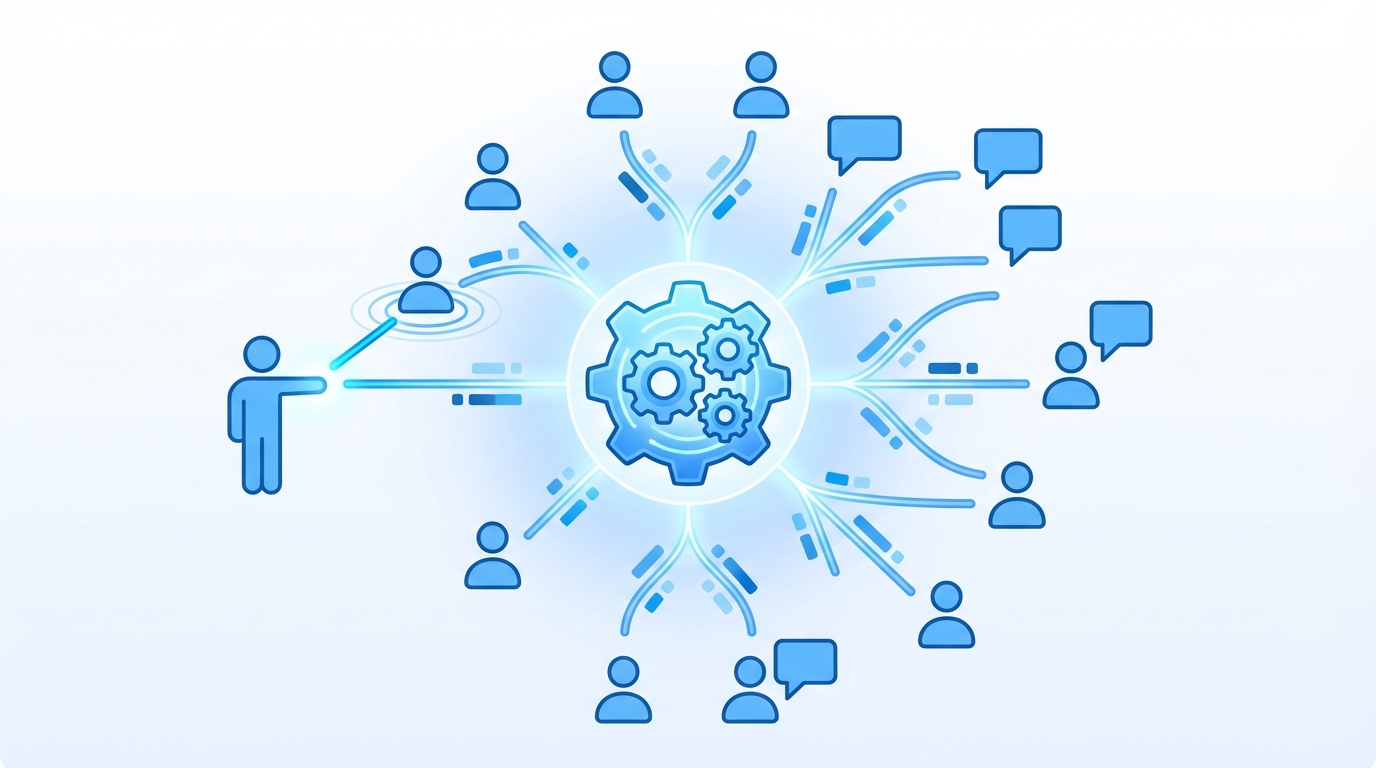
Word-of-mouth is still the strongest growth driver for most businesses. The problem is, you usually wait and hope for it instead of treating it like a system. A referral engine turns that word-of-mouth into a repeatable process. Not perfect. Not magic. Just a practical way to ask the right people, at the right time, with the right nudge, and then track what happens.
If you do not design how referrals happen, you leave one of your best growth channels to chance.
You are not trying to force people to talk about you. You are trying to make it easy and natural when they already want to. That is the heart of an automated referral engine.
What a referral engine really is (and what it is not)
A referral engine is a set of systems that:
– Identify who is likely to refer you.
– Ask them at the right moment.
– Give them something simple to share.
– Track who they send.
– Reward them if that fits your model.
No single tool does all of this perfectly. You usually combine:
– Your CRM or customer database.
– Email or SMS tools.
– Referral or affiliate software.
– Analytics.
Many founders think referral engines are only for big SaaS companies. That is not true. A solo consultant with 20 clients can use one. A local gym can use one. An online course creator can use one.
It is less about tools and more about repeatable triggers and flows.
The real engine is not the software. It is the sequence: when you ask, how you ask, and what happens next.
The four building blocks of a referral engine
You can break any referral engine into four parts:
1. The trigger moment.
2. The referral ask.
3. The sharing asset.
4. The tracking and reward.
Let us go deeper into each.
1. Trigger: picking the right moment to ask for referrals
Most businesses either never ask for referrals or ask at random times. Both approaches lose money.
Referrals work best when the customer just experienced a win with you. That is usually a specific moment. Your job is to define those moments and tie automation to them.
Common referral trigger moments by business type
– SaaS: after a user hits a key milestone.
– Example: “Created first project,” “Invited 3 team members,” “Closed 5 deals in your CRM.”
– Agency or service business: after a clear result.
– Example: “Campaign hit target ROI,” “Project delivered,” “Client renews.”
– Course or coaching: after completion or breakthrough.
– Example: “Finished module 3,” “Shared a win in your community.”
– Local business: after a positive visit.
– Example: “5-star review,” “Second or third visit,” “Membership renewal.”
You then map those moments to triggers in your systems.
Some practical ways to trigger:
– Product analytics event (for SaaS).
– Project status change in your project tool.
– Tag added in your CRM.
– Survey response (like a high satisfaction score).
– Online review posted.
You do not need every trigger. Start with one. The single moment where your clients are happiest and mentally say “I am glad I chose this.”
Automate around one moment of customer happiness before you touch anything else.
Two trigger types: event-based vs time-based
There are two simple categories.
Event-based triggers:
– Fire when something specific happens.
– Need integration with product or workflow tools.
– Stronger intent, because the timing relates to a win.
Time-based triggers:
– Fire after X days or weeks.
– Easy to set up in email tools.
– Less precise, but still better than nothing.
If you are early or not very technical, start with time-based. For example:
– 21 days after someone becomes a customer and has logged in at least once.
– 7 days after you deliver a project.
– 14 days after a coaching session where you know they had a result.
Then refine. Over time you can move to event-based triggers where they make sense.
2. The referral ask: how you actually ask
The ask is where most referral engines fall apart. They sound stiff. They feel like a pitch. Or they just feel… off.
You want language that:
– Ties back to their success.
– Feels personal, even if automated.
– Makes a small, clear request.
– Gives them an easy next step.
Here is a simple email structure you can adapt.
Simple referral ask email template
Subject line ideas:
– “Quick favor?”
– “Got a friend who needs this?”
– “Small request from me”
Email body:
“Hey [First name],
I am glad to see you [mention their win: launched X, hit Y, finished Z].
Most of our growth comes from clients who share our work with friends or colleagues.
If you know 1 or 2 people who would benefit from [specific outcome you helped with], would you be open to introducing us?
You can either:
– Forward this email and copy me, or
– Share your personal link: [referral link]
Thank you for being a client,
[Your name]”
Nothing fancy. Ties to a win. Simple ask. Two options.
You can also use similar language inside your app, in SMS, or in your client portal.
What to avoid in your ask
You can still automate and keep it human if you skip a few common mistakes:
– Do not guilt them: “We survive only because of your referrals.”
– Do not make it vague: “Tell everyone you know.”
– Do not list 10 different actions. One or two clear options is enough.
– Do not hide the reward if there is one. Be open about it.
You want the ask to feel like a natural extension of a positive moment, not a sudden shift into sales mode.
Timing your ask inside the user journey
If you are running a product or service with a clear journey, place your ask where it fits the story.
Examples:
– SaaS onboarding:
– Day 0: Welcome, get started.
– Day 7: Show them a progress report.
– Day 14: Teach them a feature.
– Day 21: “You are now doing X. Know someone else who wants this result?”
– Agency:
– Proposal accepted.
– Project kickoff.
– Mid-project check-in.
– Project wrap-up.
– 30 days after results.
The ask fits either at project wrap-up or 30 days after, when you can reference results.
– Coaching:
– Pre-program survey.
– Midpoint milestone.
– Final session.
– 60 days after completion.
The ask fits at the midpoint (when they see progress) and again at the end.
If you stack multiple asks, space them. You do not want to feel like you care more about their friends than their own progress.
3. The sharing asset: what people actually send
“Can you refer me?” sounds nice. What they actually need is something concrete they can send.
This is where you give them a “sharing asset” that matches their style.
Common sharing assets
You can use:
– A simple referral link that goes to:
– A landing page.
– A 2 minute explainer video.
– A special referral offer.
– A short email script they can customize:
– “If you want to send an email, here is a short draft you can edit.”
– A short message for LinkedIn, WhatsApp, or text.
– For service businesses, a one-page PDF or simple page that explains:
– Who you help.
– What problems you solve.
– What to do next.
The key is to keep all of this very short. Your referrer does not want to become your sales rep. They just want to point someone in your direction.
The best referral asset looks like something your customer could have written themselves in 30 seconds.
Example: simple referral email they can forward
You give them text like this:
“Subject: Thought of you
Hey [Friend name],
I have been working with [Your name / company] on [problem you solved].
They helped me with [short result: ‘getting more demo calls’, ‘cleaning up my sales process’, ‘sticking to my workout plan’].
If you want to talk with them, here is their link: [referral landing page].
No pressure. Just thought it might help.
[Referrer’s name]”
You drop this into your referral email:
“Want to refer someone by email? Here is a short draft you can copy and edit.”
You are not forcing a script. You are lowering friction.
Example: simple referral landing page
Your referral landing page can follow a simple layout:
– Headline: “Referred by [Referrer name]? You are in the right place.”
– Short problem statement.
– Short promise or outcome.
– 1 to 3 bullet points of what you do.
– Simple form or call to action.
No long sales copy needed. The referrer already did the trust-building. You just need clarity and an easy next step.
4. Tracking and reward: closing the loop
If you are going to automate referrals, you need some kind of tracking. Otherwise you cannot see what works, or who is actually sending business.
You have three big questions to answer:
1. Who referred this new customer?
2. How much value did that referral create?
3. What do you give back, if anything?
Basic tracking setup
You can start with a simple setup:
– Each customer gets a unique referral link.
– The link adds a parameter to the landing page URL, like:
– yoursite.com/ref?ref=jane-smith
– Your referral tool or analytics tracks:
– Clicks.
– Signups or leads.
– Purchases.
If you are not ready for a referral tool, you can:
– Use UTM parameters and Google Analytics to see basic traffic.
– Track “How did you hear about us?” with an open text field on your signup or intake form.
– Ask new customers in their first call and record it manually.
It is not perfect. That is fine. You are after progress, not perfect attribution.
Choosing a reward model
Not every referral engine needs rewards. Some customers refer just because they like your work.
Still, rewards can help if they feel fair and simple.
Common models:
– Cash or credit per referral.
– Example: $50 credit when a referred customer signs up.
– Discount for both sides.
– Example: “Give 15%, get 15%.”
– Non-cash perks.
– Example: free upgrade, bonus session, special content.
– Donations.
– Example: “We donate $25 to [cause] for every new customer you send.”
The reward should:
– Match your margins.
– Be easy to explain in one sentence.
– Trigger on a clear outcome:
– “When your friend becomes a paying customer.”
– “When your friend completes their second month.”
You can also set tiers:
– 1 referral: X reward.
– 3 referrals: a bigger perk.
– 5 referrals: VIP status or personal call.
Just do not turn this into a math puzzle. Your customers should understand the reward in under 5 seconds.
Closing the loop with referrers
The part many people skip: communicating back to the referrer.
Whenever someone sends you a referral, your system should:
– Confirm you saw it.
– Let them know what happened, when possible.
– Deliver the reward without them chasing you.
Even a short email helps:
“Hey [Name],
Thank you for introducing [Friend name] to us.
We had a call and they decided to move forward. As promised, here is your [reward]. Really appreciate your trust.
[Your name]”
This simple loop builds trust and encourages more referrals.
Designing your referral engine around your business model
Every business type needs a slightly different referral engine. The core principles stay the same, but the triggers, assets, and rewards change.
Referral engines for SaaS products
For SaaS, you usually have:
– Clear product usage data.
– Many users per account in some cases.
– Lower-touch sales process.
This gives you more options for automation.
Example referral flow for SaaS:
1. Trigger:
– User reaches a milestone: “created 3 projects” or “invited 5 team members.”
2. Ask:
– In-app message: “Know a friend who could use this? Invite them.”
– Follow-up email with a personal link.
3. Asset:
– Referral link that goes to a simple trial page.
– Optional one-click invite form inside the product.
4. Tracking and reward:
– Credits toward subscription.
– “Invite 3 friends, get 1 month free.”
– Dashboard inside the app showing progress.
You can also limit the program to “power users” or admins to keep quality high.
Referral engines for agencies and service businesses
For agencies, consulting, and similar services, volume is lower but deal value is higher. You care more about quality than quantity.
Example referral flow for an agency:
1. Trigger:
– Project completed with good results.
– Client renewal or upsell.
2. Ask:
– Personal email from the account manager.
– Short mention in your regular update call.
3. Asset:
– Short one-page PDF or link that explains who you help.
– Email template they can forward.
4. Tracking and reward:
– Simple spreadsheet or CRM tag for “source: client referral.”
– Thank-you gift, donation, or discount on next invoice.
Many agencies get nervous about rewards. They worry it feels like commission. You can frame it as a thank-you, not a payment.
For example:
“We send a small thank-you when a referral becomes a client. It is our way of saying we appreciate your trust.”
Referral engines for coaches, consultants, and course creators
If you work in training, coaching, or education, your best referrers are usually:
– Clients who had a visible personal win.
– Students who finish your course.
– Alumni of your program.
Example referral flow:
1. Trigger:
– Student finishes a module or the full course.
– Client shares a win in your community.
2. Ask:
– Email: “If you know someone who wants the same result, I would love an intro.”
– Short post inside your community or portal.
3. Asset:
– Simple page that explains your program.
– Short “story” video you filmed once, that they can share.
4. Tracking and reward:
– Discount on next cohort.
– Free bonus session.
– Access to a private Q&A call.
You can layer this with public proof:
– With permission, share their success story (no pressure).
– Then ask if they want a private referral link to share with one or two friends.
Referral engines for local and offline businesses
Local gyms, salons, clinics, and similar businesses often rely heavily on word-of-mouth already. They just do it informally.
Your referral engine can be very simple:
1. Trigger:
– Second or third visit.
– Positive review.
– Membership renewal.
2. Ask:
– SMS: “Happy with your experience? Bring a friend and you both get X.”
– Small card at checkout with a referral code.
3. Asset:
– Physical card with a simple offer.
– Unique URL on the card.
4. Tracking and reward:
– Code entered at signup.
– Staff marks the referrer in your system.
– Referral credit on their next visit.
Local businesses already know their customers personally, which can make the ask stronger. You just add light tech and process around what is already happening.
Where automation fits, and where it should not
You want automation to do three things:
– Detect the right moment.
– Send the initial ask.
– Track and reward.
Some steps need a human touch, especially in higher-ticket deals.
What to automate confidently
You can safely automate:
– Trigger-based emails or messages.
– Referral link generation and tracking.
– Reward delivery (gift cards, credits).
– Simple reminder emails.
You can also automate gentle nudges, like:
“Subject: Still open to making that intro?
Hey [Name], just a quick follow-up on my last email. No pressure. If anyone comes to mind who needs help with [problem], you can share this link: [link].”
Short, respectful. No chasing.
Where to keep humans involved
Some parts work better when a person handles them:
– High-value clients and partners.
– You or your account manager doing personal outreach.
– Custom rewards or thank-yous.
– Handwritten notes, personal videos.
– Sensitive introductions.
– When the referrer wants to feel sure you will not push their friend too hard.
You can still support your team with templates and reminders, but let them personalize.
Common mistakes that kill referral engines
Referral engines fail less because of tools and more because of missteps in the design.
1. Asking too early or too late
If you ask before a client sees value, it feels premature.
If you ask months after their win, the emotional peak is gone.
You want that window when:
– They remember the pain they had before.
– They can see the progress you helped create.
For some products, that is a few days. For others, it is a few months. You can test this by sending small batches at different times and comparing response rates.
2. Treating everyone the same
Not all customers want to refer. That is fine.
You can segment:
– High engagement users.
– Clients with good results.
– People who gave high satisfaction ratings.
Start with those. Your referral program will feel more natural, and you avoid putting pressure on people who are neutral or still unsure.
3. Over-complicating the reward
Complex referral schemes might look smart on paper but confuse people in practice.
If someone needs to read a long FAQ to know how it works, you lose them.
Try this test:
– Say the reward out loud in one sentence.
– If it feels long or messy, simplify.
For example:
– “Every friend who becomes a client gives you $100 credit.” Clear.
– “Earn up to 17% on tiered conversions across categories.” Not clear.
4. Ignoring non-financial motivators
Not everyone cares about money or discounts. Many people refer because:
– They want their friends to get help.
– They feel proud of choosing well.
– They enjoy being seen as a connector.
You can support this by:
– Highlighting how their referrals help others.
– Sharing anonymized outcomes with them.
– Giving them recognition, not just rewards.
A short line like:
“Your referrals helped 7 new clients clean up their finances this quarter. Thank you.”
can be more powerful than an extra $20.
5. Letting the engine run without review
Once people see referrals coming in, they stop checking the system. Then small problems add up:
– Outdated messages.
– Broken links.
– Rewards not sent on time.
Set a simple review rhythm:
– Once a month, check:
– Are links working?
– Are messages still accurate?
– Is the reward still sustainable?
You can treat your referral engine like a small product inside your business.
Setting up your first referral engine step-by-step
Let us put this into a simple, practical sequence you can follow.
Step 1: Clarify your ideal referrer and ideal referral
Before tools and triggers, define two things:
– Who is most likely to refer you?
– Power users.
– Long-term clients.
– Students who completed your program.
– Who do you want them to refer?
– One clear type of customer, with a clear problem.
Write this down in one short sentence:
“I want [type of current customer] to refer [type of new customer] who needs help with [specific problem].”
For example:
“I want marketing managers who use our reporting tool to refer other managers at SaaS companies who complain about slow reporting.”
This clarity shapes your language and assets.
Step 2: Pick one trigger moment
Review your current journey and pick one trigger:
– SaaS: “User creates their 5th report.”
– Agency: “Client approves final deliverables.”
– Course: “Student completes lesson 5.”
– Local: “Customer’s third visit.”
Do not try to cover everything yet. One strong trigger can outperform several weak ones.
Step 3: Draft your referral ask
Write an email or message that:
– Mentions their win.
– Asks for 1 or 2 referrals.
– Gives them a link or simple next step.
Read it out loud. If it sounds like something you would say in person, you are close. If it sounds stiff, rewrite in simpler language.
Step 4: Create a landing page or simple destination
Build a basic page that:
– Acknowledges they were referred.
– Explains what you do in plain terms.
– Gives them one call to action:
– Book a call.
– Start a trial.
– Apply for a program.
Avoid long forms. Referenced leads usually do not need a huge sales page. They need clarity, not persuasion.
Step 5: Set up tracking and basic rewards
Choose your approach:
– If you have referral software, configure:
– Unique links.
– Reward rules.
– Email templates.
– If you do not, start lightweight:
– Use a unique URL for your referral page.
– Add a short form field: “Who referred you?”
– Track in a simple spreadsheet.
Pick a simple reward that fits your model. Start small. You can adjust later.
Step 6: Automate the trigger and message
Use your existing tools:
– Email automation:
– Trigger the referral email when criteria are met (tag added, stage changed, time since X).
– Product messaging:
– Show an in-app prompt at the right milestone.
– CRM:
– When a deal is marked “Won,” add the client to a “referral invite” sequence.
Test it on yourself and your team first. Then roll it out to a small group of customers. Watch replies and behavior.
Step 7: Review and refine every month
Each month, look at:
– How many people got the referral ask.
– How many clicked or responded.
– How many actual referred leads came in.
– Which referrers sent the best-fit leads.
Then:
– Adjust the timing if response is weak.
– Tune the language if click rates are low.
– Consider segmenting your best referrers for more personal outreach.
Think of it as a live experiment, not a one-time setup.
Balancing growth, trust, and relationships
Referral engines live in a sensitive place. You are working with relationships and trust. That matters in business and in life.
A few simple principles help you stay on the right side of the line:
– Only ask for referrals from people who already see value.
– Give them control over how and when they share.
– Treat their introductions with care, not pushy sales tactics.
– Be transparent about rewards.
If you keep your focus on helping your existing clients win, referrals become a side effect. The engine just makes that side effect consistent, trackable, and easier to improve.
The goal is not to automate your relationships. The goal is to automate the parts that keep you asking, thanking, and learning from every referral.
Over time, this does more than grow your customer list. It forces you to focus on the moments where your clients actually feel progress. That discipline tends to make both your business and your life cleaner and more intentional, because you stop guessing and start building around real trust.