| Topic | What You Need To Know |
|---|---|
| Big idea | Most sewer backups in Arvada are preventable with simple habits and early inspections. |
| Cost range | Cleaning: $200–$600 • Spot repair: $1,500–$5,000 • Full replacement: $6,000–$20,000+ |
| Risk level | High if you ignore slow drains, gurgling, or recurring clogs. |
| Key actions | Watch early warning signs, schedule camera inspections, protect the line from roots and grease. |
| Local factor | Arvada soil movement and older clay or cast iron lines raise the chance of sewer damage. |
The short answer is that you avoid a costly sewer backup in Arvada by paying attention to early warning signs, limiting what you send down your drains, and getting your line inspected before there is an emergency. One timely visit from a pro for sewer repair Arvada CO can cost hundreds, while waiting until sewage is on your basement floor can cost tens of thousands. The gap is that wide. That is why this topic matters to you even if you feel like your plumbing is fine today.
I know sewer talk is not something most people enjoy. It feels messy and technical. But it is also one of those hidden systems that quietly decides whether your home and your schedule keep running. Kind of like your cash flow in business. When it fails, everything else stops until you fix it. So it is worth slowing down for a few minutes and thinking about how it actually works under your lawn and under your street.
Why sewer backups hit Arvada homeowners so hard
If you live in Arvada, you have a few things working against you.
Parts of the city have older housing stock. Many homes still have clay, cast iron, or Orangeburg lines that are past their expected life. Some neighborhoods have a lot of trees, which is nice for shade, but roots travel to water. They do not care that your sewer pipe was not meant to be a root highway.
There is also the freeze and thaw cycle. Soil shifts and swells. Pipes sag, crack, or separate a little at the joints. It is small at first. Then a bit of toilet paper catches there. Then some grease. Then more. Months later you flush, and everything stops.
So you have three forces quietly adding up:
- Aging materials
- Tree roots looking for moisture
- Seasonal soil movement under your yard
If you think of your sewer line like a long, sloped slide that needs to stay smooth for water and waste to move, each of those factors puts a bump or crack in the slide. You do not see it from inside the house. You only see the symptoms.
Early warning signs that you should never ignore
I want to start here because this is where most people lose money. They see clues, but they treat them like a small annoyance instead of a signal.
Here are the main red flags that your sewer line is in trouble:
Slow drains across more than one fixture are not a coincidence. They usually point to a problem deeper in the main line, not a simple clogged trap.
1. Repeated clogs in different fixtures
If just one sink clogs every six months, that can be a local issue. Maybe there is hair in the trap or kitchen grease near the sink.
If your toilets, showers, and basement floor drain are all slow or cloggy within the same week, that is a pattern. It tells you the problem is in the main line that joins everything before heading out to the city sewer.
That pattern is your first big signal.
2. Gurgling sounds and bubbles
If you hear a toilet gurgle when you run a sink, or you see bubbles in a shower drain after the washing machine drains, something is off.
Those sounds are often trapped air in the sewer line trying to escape because the flow is restricted. It is like air pockets working their way through a narrowed pipe.
Is it always a major problem? Not always. But if gurgling shows up along with slow draining, treat it as a serious clue.
3. Sewage smell in or around the house
If you step into your basement and smell something like rotten eggs or a strong musty odor, that could be sewer gas. Outside, a strong odor near a certain patch of lawn can also point to a leak.
Sometimes people try to mask it with air fresheners and candles. That only buys time and, honestly, probably increases the overall cost later.
4. Wet spots or lush patches in the yard
An odd green strip across the lawn, especially during a dry spell, can mean your sewer line is leaking and “fertilizing” the soil.
If you notice soft ground in a straight line from your house toward the street, that can match the path of the sewer line. This is one of those details that people see but do not connect until after a backup.
5. Backups during heavy water use
If your system backs up when you have guests over, or when laundry, dishes, and showers all run on the same day, it is a clear sign your line does not have much spare capacity left.
The pipe is likely narrowed by roots, scale, or grease. It can handle normal daily use but not peak flow.
Any one of these signs by itself might be minor, but two or more together usually mean it is time for a camera inspection, not another bottle of drain cleaner.
Why “just wait and see” is so expensive
When it comes to sewer problems, waiting is not neutral. It is not like waiting to repaint a room. The damage grows while you ignore it.
Small issues in a sewer line often follow a rough path:
- Minor restriction: line is partially blocked, drains are just a little slow.
- Frequent clogs: you start using the plunger more and think you just had bad luck.
- Partial backup: a floor drain or lower level toilet backs up with a bit of sewage.
- Full backup: sewage comes up into the basement or lowest tub and keeps coming.
- Structural damage: water and waste soak into walls, flooring, and furniture.
At each step the cost jumps:
| Stage | Typical Fix | Rough Cost Range |
|---|---|---|
| Minor restriction | Cleaning and basic inspection | $200 – $600 |
| Frequent clogs | Camera inspection + cleaning, minor repair | $500 – $2,500 |
| Partial backup | Emergency cleaning + some cleanup | $800 – $3,000 |
| Full backup with damage | Line repair + water damage remediation | $4,000 – $20,000+ |
You can argue with exact numbers for your city or your house, but the direction is clear. The bill grows far faster than the problem.
There is another cost that people forget. Time. A serious backup does not just cost money. It steals work days, ruins planned events, and drains mental energy.
For someone who cares about business and personal growth, that is a bigger hidden price. You lose focus when your home is not usable.
How your sewer system actually works under your feet
You do not need to be a plumber to understand the basics. Knowing the simple layout makes it easier to spot where risk lives.
Here is the short version of the system inside a typical Arvada home:
- Each sink, toilet, tub, and appliance connects to a branch drain.
- These branches join into a main drain inside the house, usually under the lowest floor.
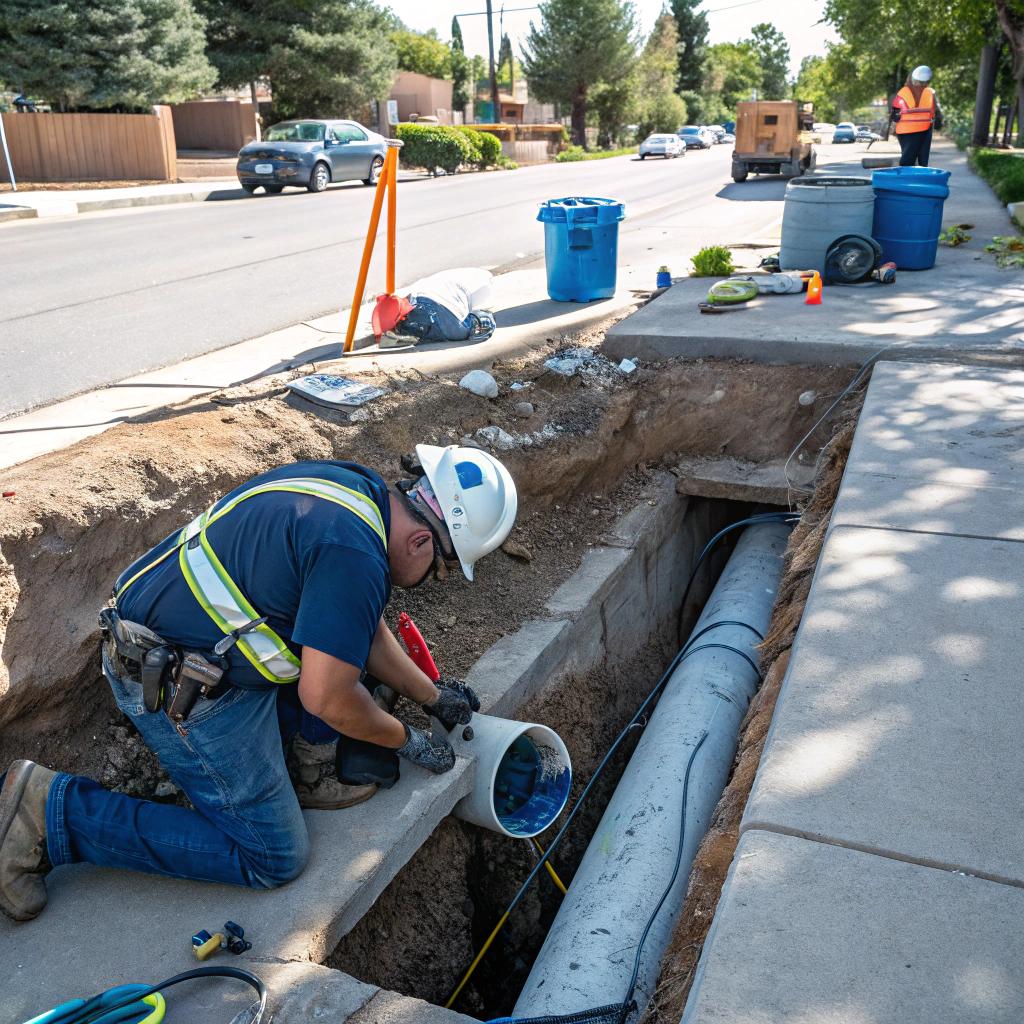
- The main drain becomes the main sewer line that exits the foundation and runs through your yard.
- That line runs to the city main in the street.
Gravity does most of the work. The line slopes slightly downward all the way to the street. If that slope is interrupted by a sag, offset joint, or blockage, waste slows down or stops.
Older houses in Arvada often have:
- Clay tiles with joints every few feet where roots sneak in
- Cast iron that can rust and scale inside, making the pipe rough
- In some cases, older “fiber” pipe that is very fragile
Newer homes tend to have PVC, which is smoother and more resistant, but it can still shift, break, or be damaged by heavy equipment or poor backfill.
Once you picture that long, buried tube sloping away from your home, it is easier to see why some habits cause trouble.
Habits that quietly damage your sewer line
If I had to point to the simplest way to avoid a sewer backup, it would be to change a few repeat habits. They feel small in the moment, but they add up every single day.
1. Flushing the wrong things
Many packages say “flushable.” That does not mean your sewer line can handle them.
Items that cause trouble:
- Wipes of any kind, even if the label claims they break down
- Paper towels and napkins
- Feminine products
- Cotton swabs and dental floss
- Small trash items like wrappers or plastic
These do not break down like toilet paper. They snag on tiny rough spots in the pipe and start a blockage.
It sounds a little boring, but the rule that works is simple: only flush human waste and toilet paper. Nothing else.
2. Pouring grease and food down the sink
Hot grease is liquid. In the pan it looks harmless. But when it hits cooler water in the pipes, it coats the inside and hardens.
Over time, it narrows the pipe like plaque in an artery. Throw in coffee grounds, eggshells, and fibrous foods and you have a dense clog.
If you cook a lot, this habit has an even bigger effect. You can build a sort of grease dam over a few years without realizing it.
3. Using harsh chemical drain cleaners
Store drain cleaners are popular because they promise a fix in minutes. They rarely solve the deeper issue if the problem is in the main sewer line. They also can corrode older pipes and harm the environment.
One bottle might not ruin your system. But treating clogs with chemicals instead of figuring out why they happen is like taking painkillers for a broken bone and never setting it.
4. Planting trees and shrubs too close to the line
This one is very Arvada specific. Many people want shade or privacy, so they plant new trees along the side or front of the house.
If those roots find the seam of an older clay line, they will follow the moisture and nutrients. Over time they fill the pipe with a massive root ball.
Some cities keep old utility maps. You can sometimes request a rough idea of where your sewer line runs from your house to the main. Even a simple call can help you avoid planting directly over that path.
5. Ignoring small leaks and dampness in the basement
If you see moisture around a floor drain, base of a toilet, or along a wall near where the main line exits, do not just bleach and forget it. That moisture might be from a small backup or a seep.
Water in the wrong place is rarely just a cosmetic problem. It is often an early warning that something underground is changing in a way you will pay for later.
Preventive steps that actually save money
Now to the part that matters for your wallet and your peace of mind. What can you actually do, practically, to avoid a major backup?
I will split this into simple recurring habits and planned checkups.
Daily and weekly habits
These are not glamorous, but they work.
- Keep all non-toilet-paper items out of toilets
- Pour grease into a container and throw it away once it hardens
- Use a sink strainer in kitchen and shower drains to catch hair and food
- Run hot water for a short period after washing greasy dishes to help move residue along
- Respond to new slow drains instead of hoping they clear themselves
If this feels slightly overcautious, that is fine. Preventive habits usually do. But the trade is small daily effort for much lower risk.
Annual or periodic professional checks
This is where many homeowners hesitate, and I understand why. No one loves the idea of paying someone to tell them “everything is mostly fine.” But that is exactly the news you want.
Here are the main services that protect you:
| Service | What it does | Typical timing |
|---|---|---|
| Drain and sewer camera inspection | Shows the real condition of your line from inside | Every 2–5 years, or sooner if there are warning signs |
| Power auger or hydro jet cleaning | Clears roots, grease, and buildup from the pipe walls | Every 1–3 years in older or root-prone areas |
| Root treatment | Uses foaming solutions to slow root growth inside the line | As recommended after inspection |
If you run a business, you already know about preventive maintenance for vehicles, computers, and equipment. Your sewer system is just another asset. You can treat it the same way.
How to think about sewer repair decisions like a business owner
People interested in growth often have good instincts for cost management. But with home repairs, those instincts sometimes short-circuit. It can feel like “avoid any big expense” instead of “minimize total lifetime cost.”
With sewer issues, the second mindset is more useful.
Here is a simple way to frame it:
- What is the current risk of a major failure in the next 1–3 years?
- What would a full backup cost me in money, time, and disruption?
- What is the cost of inspection or partial repair now to reduce that risk?
If an inspection shows a minor crack that is not moving, you may decide to monitor it and clean the line regularly. If you see a fully broken section or a line that is already half blocked with roots, waiting starts to look unreasonable.
It is similar to deciding whether to replace a failing piece of equipment before it ruins a big client project. Timing matters.
Repair options you might face
When problems do show up, sewer repair usually falls into a few categories.
- Cleaning only: If the line is structurally sound but dirty, a thorough cleaning and camera check may be enough.
- Spot repair: A small section that has cracked or collapsed gets dug up and replaced.
- Full replacement: The whole line from house to street is replaced with new pipe.
- Trenchless methods: In some cases, the pipe can be repaired or lined from the inside with limited digging.
Each choice has its own cost and benefit tradeoffs. A short-term fix might be cheaper right now but more expensive over ten years. A full replacement is bigger upfront but can remove constant worry.
You do not need to know the technical details, but you should ask clear questions:
- What did the camera actually show?
- What happens if I only clean instead of repair?
- How likely is it that this problem will return?
- What is the expected life of the repair or new line?
Those questions shift the conversation from “what can you do today” to “what makes sense for the next decade.”
Insurance, money, and planning ahead
Many homeowners are surprised that their insurance does not always cover sewer line repairs. Sometimes it covers resulting water damage inside the home but not the pipe itself. The details vary by policy.
If you care about managing risk like you would in a business, it is worth:
- Reading your policy or asking your agent about sewer and drain coverage
- Checking if there is an option to add a rider for sewer line issues
- Setting aside some savings for “house infrastructure” repairs, not just cosmetic projects
I know some people prefer not to think about worst-case scenarios. But planning here gives you more freedom later. It is easier to say yes to a smart repair if you have already accepted that some part of your budget is for hidden systems.
What to do on the first sign of a backup
Let us say you ignored all of this, or you are reading this because you already had your first small backup. What should you actually do in that moment?
Step 1: Stop adding water
Turn off:
- Showers and faucets
- Dishwasher
- Washing machine
Every gallon of water you send down the drains has nowhere to go if the line is blocked. Stopping the flow buys time and can limit the height of the backup.
Step 2: Limit the affected area
If wastewater has already come up through a floor drain or a lower toilet, keep people and pets away. Contamination is real. Again, I will not dramatize it, but treating it casually is not smart either.
Do not start ripping up flooring or walls in a panic. First fix the source, then clean.
Step 3: Get a real diagnosis, not just a quick clear
When a plumber arrives, ask for a camera inspection after they get the line flowing. Some companies may suggest skipping this step. You can push back a little.
The goal is not only to clear the immediate clog but to understand why it formed. Without that piece, you are likely to repeat the experience.
Step 4: Document everything
This part feels tedious when you are stressed, but it matters.
- Take photos or videos of the affected areas before cleanup
- Write down when the backup started and which fixtures were used recently
- Ask the technician for any photos or video from the camera inspection
If you ever need to make an insurance claim or show evidence for a warranty, that record helps.
Connecting sewer maintenance to life and business growth
At first glance, sewer lines and personal growth do not seem related. But I think they are more connected than we like to admit.
Personal growth often depends on:
- Protecting your time and attention
- Reducing constant low-level stress
- Thinking ahead instead of reacting to every crisis
Home systems like plumbing quietly feed or drain those same areas. A well maintained sewer line is not glamorous, but it removes one category of random chaos from your life.
There is also something about how you handle hidden problems. Many of us are tempted to focus on what people see: paint, furniture, visible upgrades. That mirrors how we sometimes treat our own lives and businesses, focusing on visible wins while ignoring the unglamorous foundations.
If you only invest in what others notice, you often pay more later for the parts that actually hold everything up.
Spending a few hundred dollars on a camera inspection, or changing how your household uses drains, is not exciting. It will not impress your friends. But it is the kind of quiet, mature decision that supports everything else you want to build.
Questions homeowners in Arvada often ask
How often should I have my sewer line inspected?
For older homes in Arvada, every 2 to 5 years is reasonable. If your line has a history of issues, lean closer to the 2 year side. If your home is newer with PVC and no big trees nearby, you can stretch it out, but the first inspection still gives you a baseline.
Can I just keep using drain cleaner instead of hiring someone?
You can, but it is usually a short-term patch. Chemical cleaners might open a small clog in a local drain. They do not fix broken pipes, roots, or sagging sections in the main line. Over time, relying on chemicals can make real repairs more urgent and more costly.
Is it worth replacing the whole line if only part is bad?
Sometimes yes, sometimes no. If only one short section failed because of something like a point load or a small issue, a spot repair can be enough. If the entire line is old clay with multiple root intrusions or cracks, it might be smarter to replace more while the yard is already open. The camera footage and the age of the pipe should guide this choice, not guesswork.
What can I do this week to lower my risk?
If you want one simple action step, here is a short list:
- Stop flushing anything except toilet paper and waste
- Collect grease in a container instead of pouring it down the sink
- Pay attention to any gurgling or slow drains and write down when they happen
- If your home is more than 20–30 years old and you have never had a camera inspection, schedule one
If you follow just those steps, your odds of facing a sudden, costly sewer backup drop a lot.