| Option | Best for | Typical cost range (per sq ft) | Durability | Maintenance |
|---|---|---|---|---|
| Stamped concrete | Patios, driveways, walkways | $12 – $20+ | High | Low to medium |
| Stained concrete | Basements, living rooms, offices | $5 – $12 | Medium to high | Low |
| Polished concrete | Homes, showrooms, studios | $6 – $15 | Very high | Very low |
| Epoxy / coatings | Garages, shops, gyms | $7 – $18 | Very high | Low |
You can transform a plain slab into something that looks intentional, creative, and even a bit premium by using decorative concrete finishes. In Denver, where concrete is almost everywhere, that can change not just how your home or business looks, but how people feel in that space. If you pick the right system, understand the local climate, and work with a reliable supplier for decorative concrete in Denver, you get a surface that looks good, holds up to freeze-thaw cycles, and supports the kind of life and business you are trying to build.
Why decorative concrete matters more than it looks like
Most people see concrete as the boring gray background. It is just “there.” Floors, driveways, steps. Functional, a bit cold, not something you think about much.
That is exactly why it is interesting.
Your floor is often the largest single surface in any space. It sets the tone quietly. When it looks cheap or neglected, people feel it, even if they do not say anything. When it looks clean, intentional, and consistent with your style or brand, people also feel that.
For a home, that might mean:
– Your basement feels like part of the living area instead of a storage cave.
– Your patio feels like an outdoor room instead of an afterthought.
– Your garage feels like a workshop you want to use, not a space you avoid.
For a business, it can shape how clients see your standards. A polished, well-planned floor says something about how you operate. It tells your team what level you expect.
Decorative concrete is less about “pretty floors” and more about making a strong, practical base match the life or business you are actually building on top of it.
I think a lot of people underestimate this. We obsess over furniture and wall color, then stand on a cracked, dusty slab and try to pretend it does not matter. It does.
Denver adds a twist: climate, elevation, and daily use
Concrete in Denver has a different job than concrete in a mild coastal city. You have:
– Freeze-thaw cycles
– De-icing salts on driveways and sidewalks
– Intense UV exposure at higher elevation
– Wide swings between day and night temperatures
If a finish looks good in photos but cannot handle those conditions, it will not age well. You might start to see:
– Flaking or spalling on the surface
– Peeling coatings
– Faded color
– Cracking around joints
So when you think about decorative concrete here, you are not just choosing style. You are choosing how your surface will fight the environment for the next decade.
If you live and work in Denver, the “nice floor” you want has to be a “tough floor” first, or it will not stay nice for long.
This is where a lot of regret comes from. People shop only by color or pattern, not by how the system behaves in Colorado weather.
Decorative concrete basics: what are your real options?
To keep this grounded, let us look at the main ways people turn plain concrete into something more interesting.
1. Stamped concrete
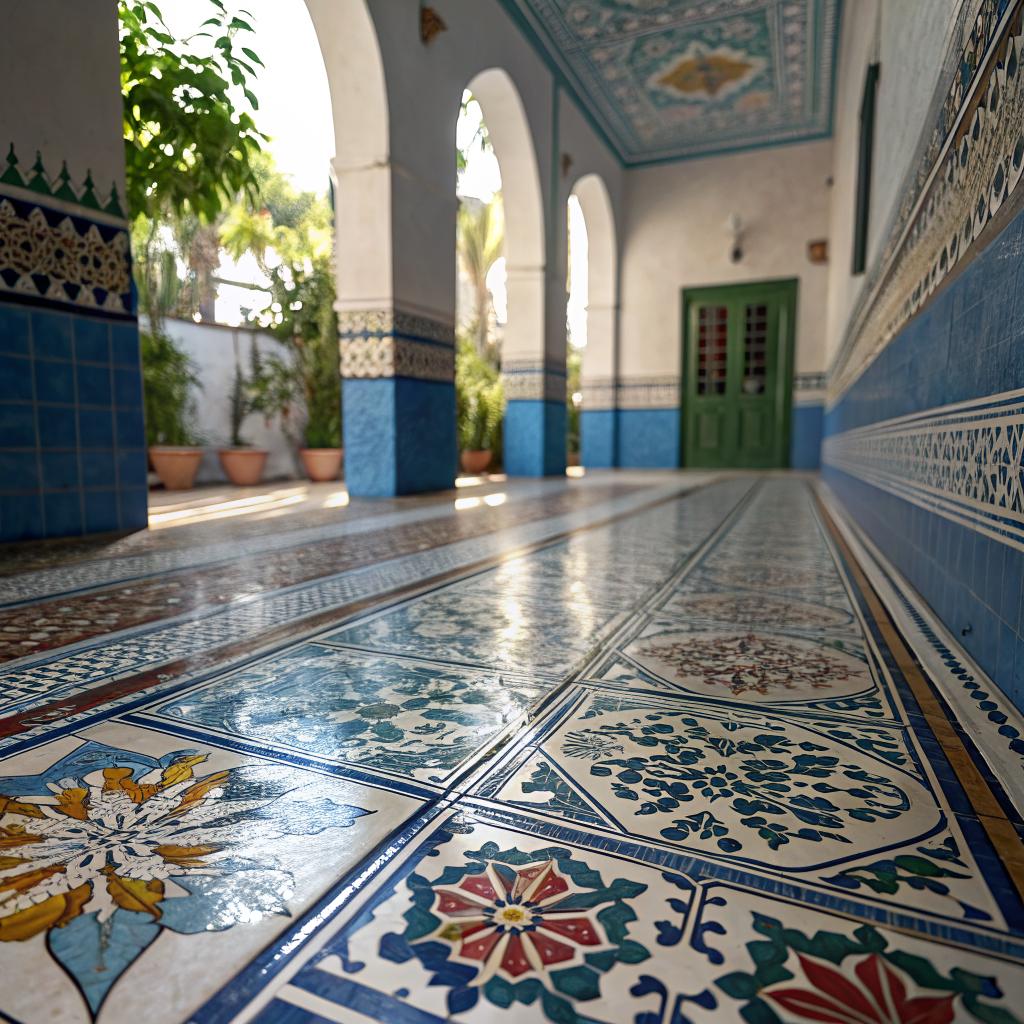
Stamped concrete is poured and then imprinted with patterns while it is still workable. It can mimic:
– Stone
– Brick
– Slate
– Wood planks
You see it a lot in patios, pool decks, and walkways.
Some people love it because it gives that “hardscape” look without laying individual pavers. Others do not like it because if it cracks poorly or the color is off, it is harder to hide.
| Stamped concrete pros | Stamped concrete cons |
|---|---|
| Looks like stone or pavers at a lower cost | Cracks are more visible if not planned correctly |
| Large variety of patterns and release colors | Can be slippery if not textured and sealed carefully |
| Good for large outdoor areas | Repairs can be tricky to match |
For Denver, the key thing is joint layout and sealer choice. If your installer does not think about expansion and contraction, you may get random cracking that ruins the pattern.
2. Stained concrete
Stained concrete can work on existing slabs or new ones. You treat the surface with a color system, usually in one of two broad categories:
– Acid stains
– Water-based stains or dyes
Acid stains react with the surface and create more variegated, sometimes unpredictable color. Water-based products give more control over tone and coverage.
Stained concrete can feel calm, simple, and clean. It often suits basements, studios, offices, and living spaces where you want something low profile, not flashy.
Advantages:
– Usually costs less than tearing out and replacing floors
– Works with many existing slabs, if they are not too damaged
– Often very low maintenance with the right sealer
Limitations:
– Stains are translucent, so they do not hide flaws well
– Old glue, paint, or oil can resist the stain
– Once the color is in, changing it is not simple
If you like a natural, slightly imperfect look, stains make sense. If you want absolute uniformity, you might feel frustrated with them.
3. Polished concrete
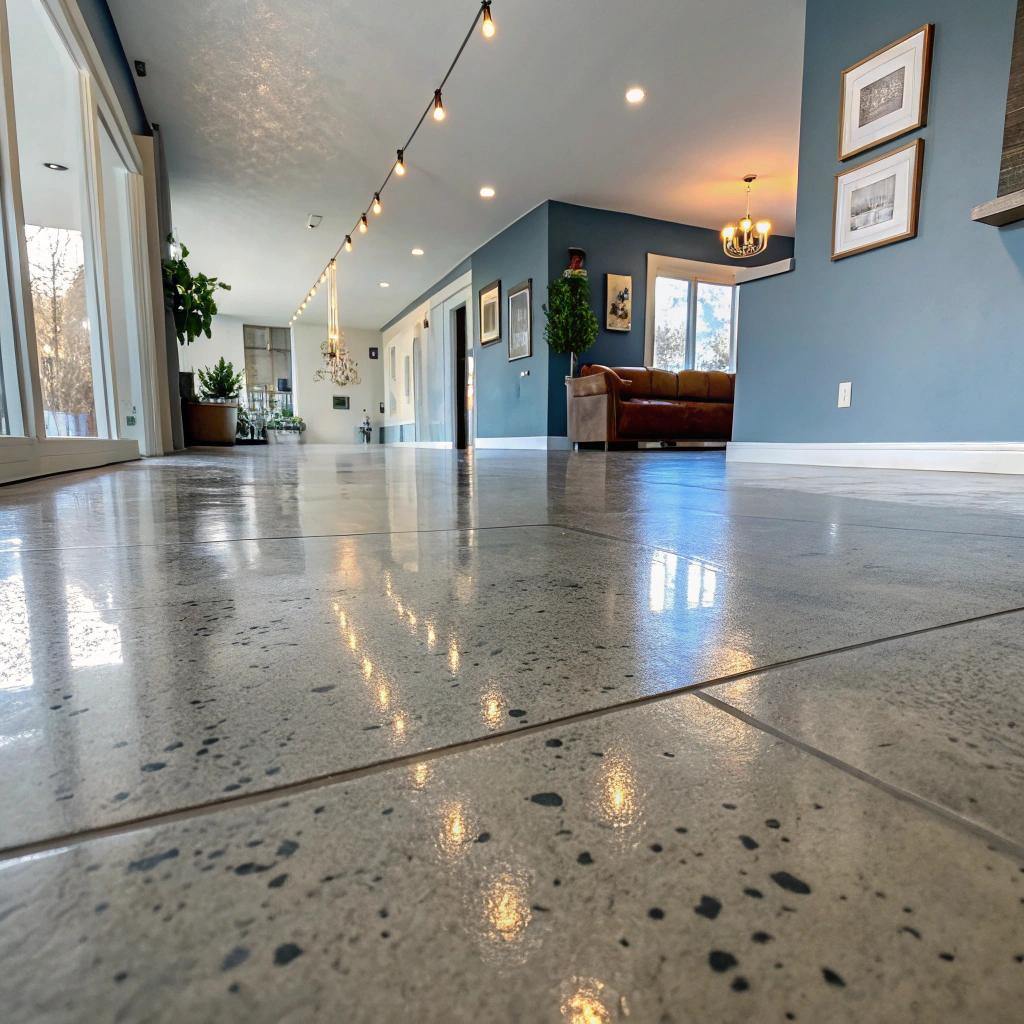
Polished concrete is common in lofts, galleries, studios, and a lot of modern retail spaces. The surface is mechanically ground and refined through a sequence of diamonds. It is not just “shined up.” It is a process.
You can choose different levels of sheen:
– Matte or satin
– Semi-gloss
– High gloss
In Denver, polished concrete has a few nice perks:
– No topical coating to peel from hot tires or abrasion
– Easy to clean with basic tools
– Very long life if done properly
On the flip side, it does not solve structural issues. If your slab is heavily cracked or not flat, you may need patching, joint work, or more aggressive grinding, which raises cost.
I have seen polished floors in small Denver offices where the owner said it shifted the way clients behaved. People stood a bit taller, walked a bit slower, just because the space felt ordered and intentional.
4. Coatings and epoxy-style systems
Garage floors, workshops, home gyms, and many commercial spaces often use coating systems. Epoxy, polyaspartic, polyurea, and other resins fall in this group.
You can get:
– Solid colors
– Decorative flake systems
– Quartz broadcast systems
– Metallic blends
These are not just about looks. They can also resist chemicals, heavy wear, staining, and hot tire pick-up if installed well with proper prep.
Common mistakes:
– Applying over unprepped concrete
– Trapped moisture under the coating
– Using cheap, thin DIY kits for heavy-duty spaces
In Denver, moisture vapor from the slab and freeze-thaw action are real. If the installer ignores that, you may see bubbling or peeling. This is where a local, experienced supplier and installer combination matters more than a pretty color card.
If you want a coated garage or shop floor that lasts in Denver, the conversation has to start with surface prep and moisture, not with the color flake chart.
How this connects to business and life growth
You might wonder why a surface topic like decorative concrete shows up in a blog aimed at growth in life and business. That is a fair question.
There is a simple answer: your environment shapes your habits. Your habits shape your results.
A few examples:
– A neat, bright garage with a solid floor finish makes it easier to keep tools organized and start projects. That can support a side business or hobby that turns into income.
– A clean, polished office floor at a small firm sends a signal to clients that you care about details, even small ones. That might sound minor, but those first impressions compound over years.
– A welcoming patio or lower level makes it easier to host friends, business partners, or clients. That is not abstract. Relationships grow in spaces where people feel comfortable.
Is decorative concrete magic? No. You can absolutely grow a business with a cracked floor if you have to. But it is not a bad idea to remove small sources of friction that quietly drain energy or send mixed signals.
Sometimes investing in the floor is less about vanity and more about saying, “This place matters. I am taking it seriously.”
Choosing the right system for your Denver space
Let us be direct. Not every decorative concrete method fits every situation. Here is a simple way to think about it.
Start with these questions
Ask yourself:
1. What abuse will this surface take?
– Foot traffic only?
– Cars and hot tires?
– Chemicals, oils, or heavy equipment?
2. Is this indoors or outdoors?
– Outdoors in Denver brings freeze-thaw and UV into the picture.
3. How much do you realistically want to maintain it?
– Reseal every couple of years?
– Light cleaning only?
4. Do you care more about a “natural” look or a “finished” look?
– Natural: stained or polished concrete.
– Finished: coatings, stamped patterns, etc.
5. Are you planning to stay long term or is this for resale in a few years?
– That can change how much you invest and where.
Typical choices by use-case
| Space | Good options | Key consideration in Denver |
|---|---|---|
| Garage | Epoxy or other coatings, sometimes polished | Hot tire resistance, prep, moisture in slab |
| Basement | Stain and seal, polished, some coatings | Moisture migration and radon mitigation strategy |
| Patio | Stamped, stained, or decorative overlays | Freeze-thaw, slip resistance, UV stability |
| Retail / studio | Polished, stained, or high build coatings | Wear resistance, cleaning routine, brand image |
| Office | Polished, stained, sealed concrete | Acoustics, comfort, furniture movement |
If you find yourself trying to make one system do everything, you are probably forcing it. It is better to match the method to the actual use.
Cost, value, and the real ROI
People often ask, “Is decorative concrete worth it?” That question is a bit vague on its own. Worth it compared to what?
Here are a few useful comparisons.
Compared to replacement flooring
If you are considering tearing out an existing slab and putting in another material, decorative treatments often cost less and last longer.
For example, instead of:
– Tearing out concrete
– Hauling it off
– Installing a new floor over a subfloor
You might:
– Repair, grind, or patch the existing slab
– Stain or polish it
– Or install a coating system
That can save both money and time, while also giving a cleaner, lower maintenance surface.
Compared to doing nothing
Doing nothing is a decision, but it has a cost too.
– Dusty, unsealed concrete can hurt air quality and make cleaning harder.
– Visible cracks and stains can hurt perceived value for tenants or buyers.
– Poor surfaces in a business can quietly push customers away.
The return is not always visible in a single number, but over the life of a building, a well-chosen floor tends to pay you back in less maintenance, better daily experience, and better impression.
Where people go wrong with budget
Common mistakes:
– Shopping only by the lowest price per square foot
– Ignoring prep costs
– Underestimating how much poor prep can shorten the life of the finish
– Overpaying for trendy effects that do not match the use of the space
You are better off with a simple, well-prepared, correctly installed system than a complex look thrown over a poorly understood slab.
Practical maintenance in Denver
A nice finish that fails early is frustrating. Maintenance is not glamorous, but it keeps the whole thing worth what you paid.
Outdoor decorative concrete
For driveways, patios, and walks:
- Use a quality sealer that can handle UV and freeze-thaw cycles.
- Avoid strong, harsh de-icing products when you can. Sand or milder products are usually safer.
- Plan to reseal stamped or stained outdoor surfaces every couple of years, depending on exposure and traffic.
- Keep water draining away from the slab. Standing water in winter is rough on surfaces.
Indoor decorative concrete
For polished, stained, or coated floors:
- Dust mop or vacuum regularly to remove grit.
- Clean with neutral cleaners instead of harsh chemicals.
- Protect high traffic zones with mats where sensible, especially at entrances in winter.
- Watch for early wear at edges and high traffic paths, and address it before it turns into visible damage.
This is not a full maintenance manual, but you can see the pattern. A bit of steady care beats long periods of neglect and then panic.
Design: color, texture, and how it affects mood
Concrete does not have to feel cold or industrial. The choices you make with color and texture can change how a space feels.
Color choices
– Light, neutral tones: Make spaces feel larger and cleaner. Good for offices, studios, and many homes.
– Medium earth tones: Often work well for basements, patios, and living rooms, especially when you want warmth without dominating the room.
– Dark or bold colors: Risky if overused, but powerful in small, focused areas or as part of a brand story in a business.
One thing I have seen: people often pick colors that look good on a tiny sample, then feel shocked by how strong that same color feels across a whole floor. Concrete is a big canvas. A subtle tone can look richer in real life than on a color chip.
Texture and pattern
Texture affects:
– Slip resistance
– How easy it is to clean
– How “formal” or “casual” the space feels
Stamped patterns with deep texture can feel more rustic and help with grip. Smooth polished floors feel modern but may need the right finish level and rugs to support comfort and sound.
Patterns should generally support the shape of the space, not fight it. For example:
– Long plank patterns along the length of a patio can make it feel longer.
– Busy patterns in small rooms can make them feel cluttered.
You can ignore all this and still survive, of course, but if you care about how a space makes people feel, these details matter.
Mindset: treating your space like a partner, not a backdrop
If you care about business and life growth, you are probably already thinking about systems, habits, and structure. Your environment is part of that structure.
Decorative concrete might sound like a narrow topic, but it points to a broader idea:
When you treat your space as a partner in your work and life, you begin to design it on purpose, not just accept whatever happened to be there.
You do not have to turn your house into a showroom. That is not the point. The point is to ask a better question:
“Does this space help or hinder the kind of person I am trying to become and the kind of work I want to do?”
Sometimes the answer leads you to invest in a new floor. Sometimes it just means cleaning what you have and adding better lighting. Both can be valid. I do not think decorative concrete is always the right move, but it can be a very practical one when you already have concrete underfoot.
Common questions about decorative concrete in Denver
Q: Will decorative concrete crack in Denver’s climate?
A: All concrete can crack. The goal is to control where and how. Good joint layout, a solid subbase, proper reinforcement, and correct curing help. For existing slabs, repairs and overlays can manage the look, but you cannot fully erase the nature of concrete. The key is to plan for movement, not pretend it will not happen.
Q: Is decorative concrete slippery?
A: It can be, especially if smooth and wet. For outdoor surfaces and areas near water, installers can add texture or traction additives to sealers and coatings. Indoors, you balance slip resistance with ease of cleaning. If you have children, older adults, or high-traffic commercial use, mention that up front to your installer so they can adjust the system.
Q: How long will it last?
A: A well-prepared, well-chosen decorative concrete system in Denver can last many years, sometimes decades, with basic upkeep. Polished concrete, for example, can go a very long time if maintained. Coatings may need re-topcoating after heavy wear, and sealers outdoors will need reapplication. The lifespan is not only about materials, but also about how you treat the surface.
Q: Can I DIY or should I hire a pro?
A: For small projects, simple stains, or basic sealing, a careful DIY approach can work. For large slabs, garages, retail spaces, or anything that needs grinding, moisture testing, or advanced coatings, a professional is usually the better choice. Mistakes in prep are expensive to fix. Saving a bit today can cost a lot later if the system fails.
Q: Does decorative concrete add resale value?
A: It can support value, especially when it replaces old carpet, damaged tile, or dirty bare slabs. Buyers often react well to clean, durable, low maintenance surfaces. That said, if your taste is too extreme, it may not match everyone. Neutral, well-executed finishes usually help more than they hurt.
Q: Where should I start if my space feels overwhelming?
A: Start with one zone that affects your daily life the most. For many people in Denver, that is the garage or basement. Clean it, study how the concrete looks, note cracks or stains, and then talk to a local supplier or installer about realistic options. You do not need a full master plan. A single well-done area can shift how you see the whole property and give you confidence for future upgrades.
If you changed just one surface in your home or workplace this year to better support the life or business you want, which one would it be, and what would you want that concrete to do for you?