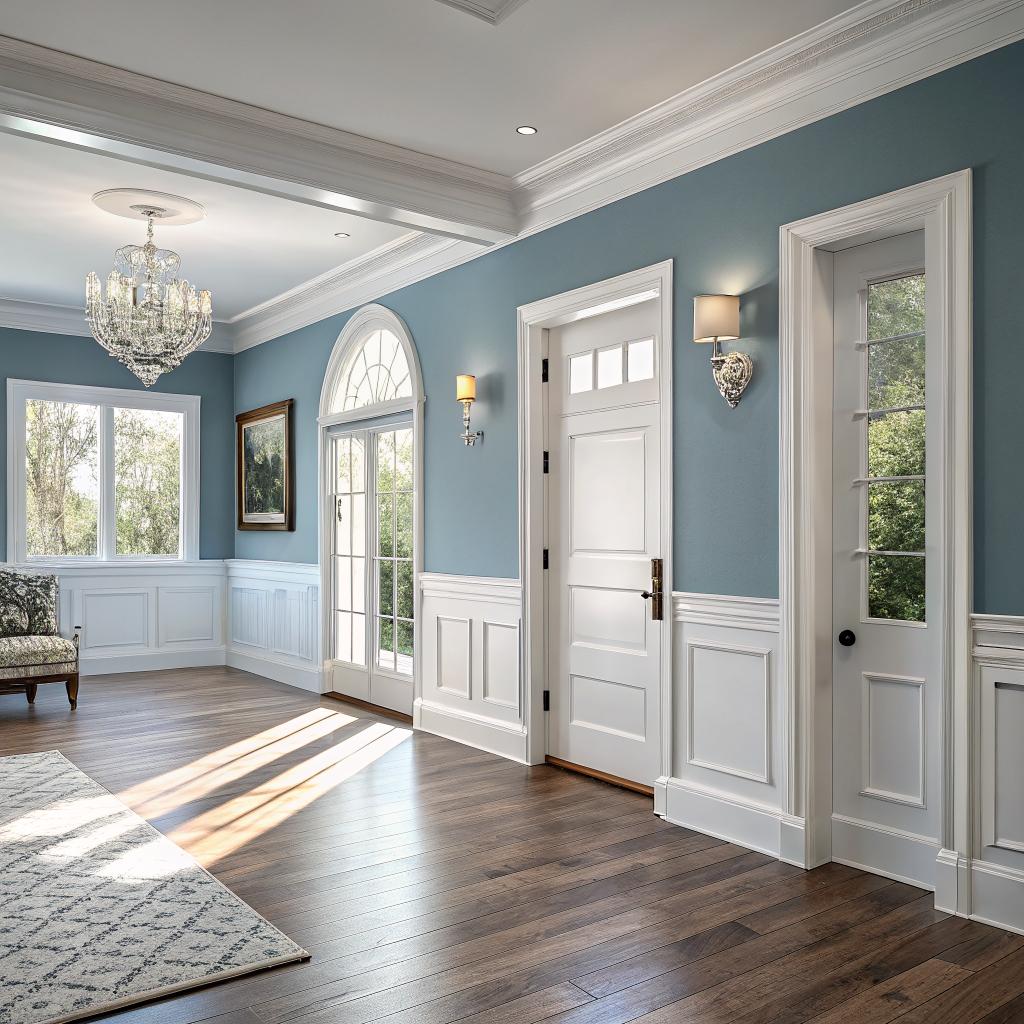
| Aspect | What You Get With Quality Interior Painting | What Can Go Wrong If You Cut Corners |
|---|---|---|
| Home Feel | Fresh, calm, and more “you” in every room | Rooms feel busy, dated, or unfinished |
| Business / Life Impact | Better focus, better mood, better energy at home | Visual clutter that keeps you distracted and tired |
| Time & Money | Lasts 7–10 years with small touch ups | Peeling, patching, and repainting every 2–3 years |
| Resale Value | Higher perceived value, easier to sell or rent | Buyers mentally lower their offer on sight |
| Daily Experience | Rooms you enjoy sitting, working, and thinking in | Spaces you avoid, or rush through without noticing why |
If you want the short version, interior paint can quietly reset your whole home in a week or two. Fresh walls shift how you think, how you rest, and even how you work. In a city like Denver with strong light, long winters, and real temperature swings, choosing the right colors and finishes is not only about style, it is about how your home supports your habits and your growth. That is where careful planning, and sometimes a professional partner for interior painting Denver, start to make real sense.
Why interior paint matters more than people admit
If you are serious about business or personal growth, your environment is not neutral. It nudges you in small ways every day.
You probably feel this when you walk into a cluttered coffee shop compared to a clean, quiet one. Your brain reacts before you even order. The same thing happens when you walk from a dark, yellowed hallway into a bright, clean office in your own home.
Interior painting is not just cosmetic; it is background architecture for your thinking, your habits, and your mood.
Here is why paint has such a big effect, especially in Denver:
You have more daylight hours and stronger sun for much of the year. Paint color reacts to that light, so a tone that feels soft in a catalog can feel sharp or cold on a Denver wall at 2 pm.
You also have stretches of winter where you are inside more than you would like. Wall color, sheen, and even ceiling color change how heavy or light those months feel.
So interior paint ends up touching:
– How easily you focus on deep work at home
– How welcome your house feels to clients or guests
– How calm you feel when you sit down to plan or to think
If your home is your base for your career and your life, ignoring the walls is like ignoring your desk, your chair, and your calendar.
How interior painting in Denver is a bit different
Plenty of generic painting advice online ignores climate and local conditions. That does not really work here.
Altitude and light: why colors shift in Denver
At higher altitude, light is stronger and slightly cooler. So:
– Colors look brighter and a bit bluer during the day
– Whites can feel stark faster
– Strong colors can feel more intense than they did in the store
A soft gray that looked quiet in a suburban showroom might look icy in your Denver living room at noon.
For work or study spaces, I think it makes sense to lean into soft, slightly warm neutrals rather than sharp whites. That small warmth keeps the room from feeling harsh, especially in winter.
Weather, walls, and paint durability
Denver has dry air and real temperature swings. That affects your walls more than most people expect.
– Old plaster and cheap drywall can crack with expansion and contraction
– South and west facing rooms get more UV exposure and heat
– Baseboards and trim can separate slightly over the years
So interior painting here is rarely just “throw on a new color.” Proper prep often means:
– Fixing small cracks before they grow
– Caulking gaps at trim and corners
– Choosing paint that can handle sunlight on the long side of the house
This is where cheap jobs usually fail. It might look fine for a year, then the cracks and shadows show through, and you start to resent the room again.
Linking your home design to your goals
Most people pick paint color with one question: “Do I like this color?” That is a start, but it is not enough if you care about your daily performance.
A more useful question is: “What do I want this room to do for me?”
Every room in your house is a tool. Paint should make that tool sharper, not duller.
Here are a few examples.
The home office or studio
If you run a business or side project from home, this room matters a lot.
Ask yourself:
– Do you need deep focus, or is the work more about conversations and calls?
– Do you spend long hours on screens?
– Do you record video or take client calls on camera?
For deep work, mid-tone, low-contrast walls can help. Soft grays, greige, or very light clay tones keep your eyes relaxed and stop reflections off monitors.
High contrast (pure white walls with black furniture) looks sharp in photos, but can be tiring for long hours and can make video calls look harsh.
For on-camera work, a slightly warm neutral behind you often works best. It reads clean without making your face look washed out.
The living room
This is usually a mixed-use space: conversation, sometimes work, sometimes TV, maybe kids.
Here you want a color that supports both social time and quiet time. That usually means:
– A neutral base on the walls
– Depth added through textiles, art, and wood, not wild wall colors
If you love bold color, a single accent wall or a painted built-in can hold that without overwhelming the room.
Bedrooms
Sleep and rest are where many driven people quietly sabotage themselves. Screens, bright lights, stimulating colors. Then they wonder why they cannot shut down.
Cooler, darker tones can help your body begin to wind down. Deep blues, smoky greens, or warm grays behind the bed can create a quiet pocket without feeling like a cave if your trim and ceilings stay light.
I know one Denver entrepreneur who repainted his bedroom from bright white to a muted blue-gray. He said he felt sleepy 30 minutes earlier each night just because the room no longer screamed at him.
Planning your interior painting like a small project
If you run a business, you would never start a project without at least a simple plan. Your home deserves the same.
Step 1: Map the rooms by function
You do not need a fancy document. A single page works.
Create a quick table like this:
| Room | Main Use | Feeling You Want | Notes |
|---|---|---|---|
| Home Office | Deep work, Zoom calls | Calm, sharp, not distracting | No direct afternoon sun, smaller room |
| Living Room | Family, reading, guests | Warm, inviting, brighter | Big windows, west facing |
| Primary Bedroom | Sleep, reading | Cozy, darker, restful | Limited natural light |
| Hallway | Transition space | Simple, clean | Connects most rooms |
That small exercise keeps you from picking one random color at the store and trying to force it into every space.
Step 2: Decide your “home color system”
Instead of ten unrelated colors, build a simple system:
– 1 main wall color for most shared spaces
– 1 secondary color for private rooms that need a different mood
– 1 trim / door color
– 1 ceiling color
Four paint colors can carry most homes. You avoid visual chaos and still get variety.
Your main color might be a light warm neutral. The secondary color can be richer and a bit darker for bedrooms or a den. Trim and doors often look good in a clean, slightly warm white.
Step 3: Sample on the actual walls
This is where many people skip steps and pay for it later.
Painting small swatches on your walls at different heights and in different rooms is boring. Do it anyway.
– Look at them at morning, midday, and evening
– Notice how they react to sun on different sides of the house
– See if they feel calm or tense when you walk past without thinking about it
I once thought a specific warm white would be perfect for a Denver condo. On the south wall it looked nice. On the east wall it went almost peach. Not horrible, but wrong for that owner who worked from home and wanted a crisp look. A second sample solved it.
DIY vs hiring painters in Denver
You are not wrong if you think you can paint yourself. Plenty of people can, and sometimes it is the right move. But the decision is not as simple as “save money vs waste money.”
Ask a simple question: “What is my time worth right now?”
If you are building a business, leading a team, or juggling work and family, a full interior repaint can eat several weekends, plus evenings. That is real cost, not just money.
When DIY painting makes sense
DIY works when:
– You like hands-on work and find it relaxing
– You have flexible time
– The rooms are simple, without high ceilings or tricky trim
– You are okay with “good enough” edges and coverage
If your standards are moderate and your time is not overloaded, painting a guest room or a small office yourself can feel satisfying. You see progress in a day. There is something grounding about that.
When professional painting is the smarter move
Hiring painters makes more sense when:
– Your home has high ceilings, lots of trim, or detailed work
– You want a consistent, clean finish throughout the house
– You want drywall repairs, caulking, and prep done correctly
– You do not want your home in chaos for weeks
Professional crews work faster and usually leave less mess. As long as you pick a good company and not just the lowest bid, the job tends to last longer too.
Cheap painting is rarely cheap if you count your own time, the rework, and the drag on your energy when you live in a half-finished space.
I think this is where many growth-focused people get stuck. They treat home projects as side quests they will “get to later,” and the house sits in a state of limbo. That low-grade distraction leaks into your work.
How interior painting connects to financial value
If you are a numbers person, you might want more than “it feels better.”
Here are a few ways interior painting affects value in a straightforward way.
Perceived value at sale or refinance
Buyers and appraisers react strongly to what they see first:
– Fresh, neutral walls signal “well maintained”
– Clean trim and ceilings signal “no hidden problems”
– Smudged, dingy walls suggest “deferred maintenance”
You might not recover every dollar of an expensive paint job in direct resale price, but you can:
– Attract more buyers
– Reduce pushback during inspection
– Shorten time on market
For landlords or short-term rentals, consistent, durable paint choices can cut vacancy and turnover costs.
Maintenance and long-term costs
High quality interior paint with proper prep tends to last 2 or 3 times longer than a quick rolled-on coat over dusty walls.
Spread over 7 or 10 years, the annual cost difference between “cheap and frequent” vs “solid and rare” is small. What changes more is your experience living with the walls day after day.
Color strategies that work in Denver homes
You do not need to be an expert in color theory, but a few simple rules help.
Keep the main areas quiet
For living rooms, hallways, and kitchens, aim for colors that:
– Do not pull too much attention
– Work with warm and cool lighting
– Let art and furniture stand out
Examples that often work well in Denver:
– Warm light grays without strong blue or green
– Soft beige-gray hybrids
– Off-whites with a hint of cream, not yellow
If a paint chip looks pure bright white under store lights, it might feel too harsh at home.
Use stronger colors in controlled doses
If you love deep color, place it where you can control lighting and you know what you want from the space.
Good spots:
– Accent wall behind a bed
– Study or reading nook
– Powder room without strong sunlight
In a city with bright light, deep colors can look rich, not gloomy, if the trim is clean and you have decent lighting at night.
Think about ceilings and trim as part of the design
Many people default to one generic white for trim and ceilings. It works, but you have other options that still feel simple.
– Slightly darker ceiling in a large room to make it cozier
– Matching trim color through the whole home for unity
– A different finish on trim (eg eggshell on walls, semi-gloss on trim) so the edges read clean
Tiny choices like this add up to a space that feels thought through, even if visitors cannot say exactly why.
Preparing your Denver home for an interior painting project
Preparation is the unglamorous part that usually decides whether you are happy with the result.
Basic prep steps worth doing right
If you paint yourself or hire someone, these steps matter:
- Clean the walls, especially near kitchens, hallways, and light switches.
- Fix nail pops, holes, and small cracks, then sand them flat.
- Prime patches and any stained areas.
- Remove or properly tape around outlet covers, switches, and fixtures.
- Protect flooring and furniture carefully to avoid stress during the job.
Skipping this often means you see every old scar through the new paint once the sun hits the wall.
Managing disruption at home
If you work from home or have a family, think about the sequence of rooms:
– Paint the least used rooms first as a test run
– Keep one clear, calm space untouched for work or rest
– Plan noisy or heavy-move days when you have fewer meetings
Even with pros, there is always some dust, smell, and movement. A bit of planning keeps it from hijacking your week.
Common mistakes people make with interior painting
Some patterns come up over and over. You can avoid them with a little awareness.
1. Chasing trends too hard
Paint trends change quickly. A color that is all over social media this year can feel dated very fast.
This matters if you are building a life and business with some long-term vision. You probably do not want to repaint every two years because a color that once felt fresh now feels forced.
Better approach:
– Use trends in small areas: bathrooms, one accent wall, or decor
– Keep your main canvas more neutral and timeless
2. Ignoring how colors connect room to room
Your house is not a collection of isolated boxes. When you stand in the hallway, you often see three or four rooms at once.
If each room has a strong, unconnected color, your brain has to work to make sense of it. It is subtle, but it adds tension.
Choosing a simple palette that flows, even with variety, makes the whole home feel calmer.
3. Underestimating ceiling and trim condition
Yellowed ceilings or chipped trim can drag down the whole repaint. You roll new color on the walls, then realize everything else looks tired.
If your budget allows, refreshing ceilings and trim along with walls gives a much bigger shift than walls alone.
4. Forgetting about future furniture or remodel plans
If you are planning a kitchen upgrade or new furniture within a year, factor that into your paint choices.
For example, bright white walls might fight with warm wood cabinets you plan to install. Or a cool gray may not suit the warmer flooring you want later.
It is fine to paint now, but think a step ahead so you do not undo your own work.
Connecting your interior space to your growth goals
This might sound a bit abstract, but I think it matters more than people admit.
If you are trying to grow a business, build better habits, or just live with more clarity, your home can work for you or against you.
Ask yourself a few blunt questions:
– Do I have at least one room that makes deep work easier, not harder?
– Does my home feel like the life I am trying to build, or the life I already outgrew?
– When I walk in the door after a long day, do the walls help me exhale or keep me wound up?
Interior painting is not magic. It will not fix broken systems or replace discipline. But it can remove a surprising amount of friction. It is easier to focus in a room that feels clear. It is easier to rest in a room that feels calm.
If your environment is constantly pulling against your goals, you are spending energy every day just to get back to zero.
Painting is one of the simpler ways to bring the space closer to the person you are trying to become.
Frequently asked questions about interior painting in Denver
How often should I repaint the inside of my home?
For most Denver homes, every 7 to 10 years is common for main rooms, if the original job was done well. High-traffic areas like hallways, kids rooms, and entryways might need attention every 3 to 5 years. Kitchens can also age faster because of grease and moisture.
What paint finish works best in Denver homes?
A simple pattern works for many houses:
– Flat or matte for ceilings
– Eggshell or low-sheen for most walls
– Satin or semi-gloss for trim, doors, and baseboards
Matte hides small wall flaws. Eggshell cleans more easily. Semi-gloss stands up to scuffs on trim.
Are darker colors a bad idea if I want productive spaces?
Not always. Darker colors can help certain rooms feel grounded and focused, especially for reading or thinking. The key factors are lighting, room size, and what you do there. A dark navy office can work well with good task lighting, while a dark hallway with no light may feel cramped.
Can interior paint really affect productivity and mood that much?
It will not turn a distracted person into a focused one overnight. But it can remove distractions, reduce visual noise, and support the habits you are trying to build. Many people notice they spend more time in rooms that feel calm, bright enough, and visually clean. That extra time in the right room can turn into more reading, better planning, or deeper work.
If I can only afford to paint a few rooms, where should I start?
Usually, the best return comes from:
1. The room where you work or think the most
2. The main shared space visitors see
3. The hallway that connects many rooms
Those three spaces shape how you experience your home every day. If you get those right, the rest of the project can follow as time and budget allow.
What room in your home, if it felt completely fresh and aligned with your current goals, would change your days the most?