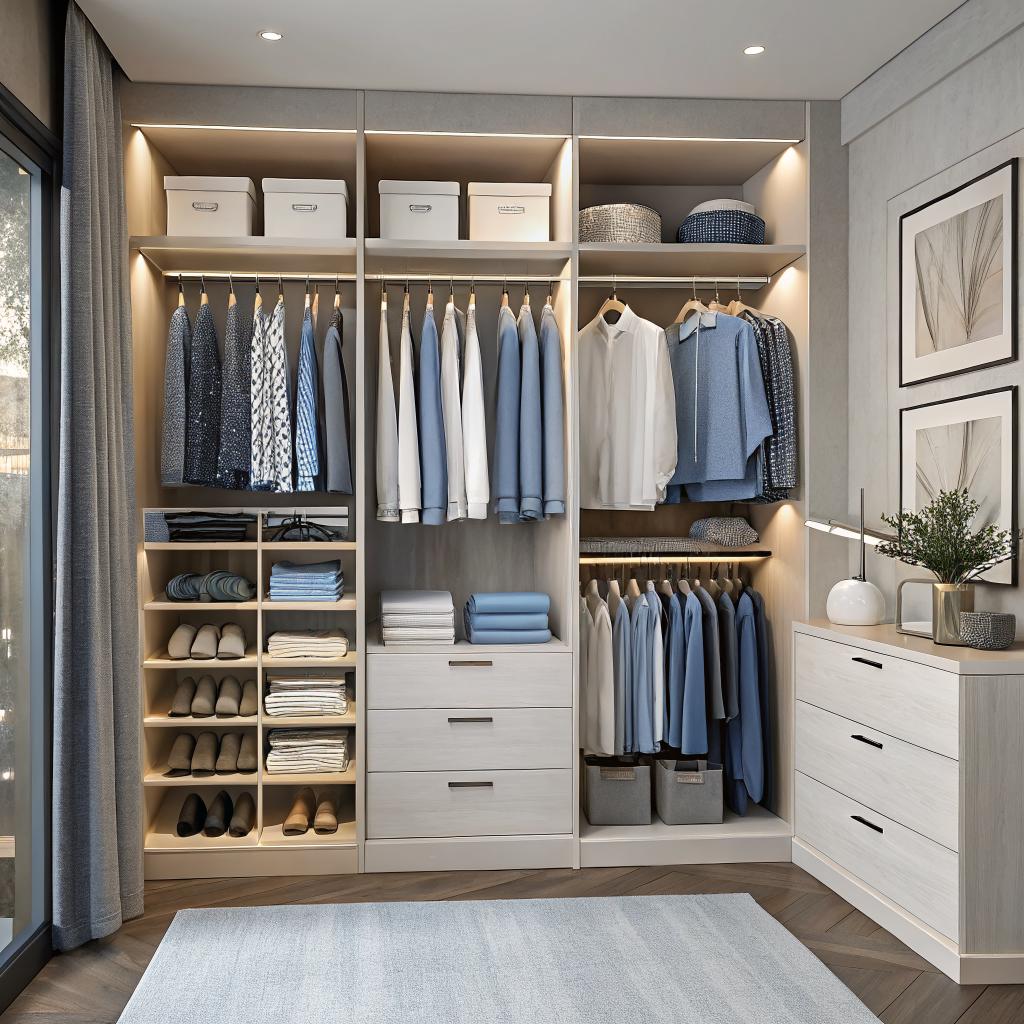
| Secret | What It Does | Stress Level Impact |
|---|---|---|
| Clear system for what stays and what goes | Reduces daily choice overload | High relief |
| Zones built around your real life | Makes getting dressed almost automatic | High relief |
| Consistent hangers and labels | Calms visual clutter and saves time | Medium relief |
| Capsule-style planning for key routines | Cuts decision fatigue on busy days | High relief |
| Quarterly mini-resets | Keeps chaos from building back up | Medium relief |
| Clear “incoming” rules | Prevents overbuying and clutter creep | High relief |
A stress free wardrobe is not really about pretty shelves or rainbow hangers. A good Dallas closet organizer will quietly rebuild how you make decisions every morning, which is why an organized closet usually improves not just your space, but your energy, your time, and honestly, your patience with everyone around you. If you run a business or you are focused on growth, this matters more than people think, because your closet is where your first decisions of the day happen, before email, before meetings, before anything that brings real returns.
Why your closet stress is a business problem in disguise
If you are reading a blog about business and life growth, your schedule is probably tight. Mornings carry a lot. You are already thinking about numbers, people, maybe investors, maybe kids. Then you open your closet and feel that small internal sigh.
It looks harmless. A few extra shirts. Too many black pants that are all slightly different. Shoes you once thought you would wear for dinners that somehow never happened. But that quiet clutter has a cost.
Every extra item asks a question:
“Do I still wear this?”
“Is this good enough for the client meeting?”
“Does this still fit or am I just pretending?”
You may not say those out loud, but your brain feels them. And it is already tired before 8 a.m.
There is research that shows more choices can drain mental energy. You probably know that from your own work. Oddly, we accept that in business, then tolerate chaos in the one place that starts our day.
The real secret of a calm closet is not organizing what you own, it is deciding what decisions you never want to make again at 7 a.m.
When organizers in Dallas work with clients who are founders, executives, or just very busy people, they are not only solving a storage problem. They are building a personal system that protects decision power. That is why some of their habits are worth copying, even if you never plan to hire anyone.
The starting point: define the role of your wardrobe
Most people skip this part and jump straight into buying bins or more hangers. That is one reason closets keep sliding back into chaos.
Ask yourself a blunt question:
“What job should my wardrobe do for my current life, not my past or imaginary life?”
Your answer will be different depending on your season. A startup founder living in hoodies and investor meetings needs something different from a corporate lawyer, or a working parent doing school drop offs on the way to the office.
I once sat with a client who had three clear “lives” in one closet:
– Corporate suits from a job she had left 4 years earlier
– Gym clothes for a routine she hoped to start
– Comfortable, present day outfits she actually wore
The stress came from the disconnect between the life she lived and the life her closet displayed.
If most of what you see in your closet reflects who you used to be or who you think you should be, you will feel behind before your day starts.
You do not need deep journaling here. Just write down on a simple note:
– What you do most weekdays
– What you do most evenings
– What your usual weekends look like
Then ask: “Does my closet clearly favor these three areas?” If the answer is no, that is your first signal. Your wardrobe is not supporting your real calendar.
The non-negotiable rule: everything must earn its space
Professional organizers in Dallas use different words, but nearly all of them use some version of this idea: space is a boundary, not a suggestion.
You can use a simple approach that I have seen work again and again. It is not fancy, but it is honest.
The 3 question filter organizers secretly rely on
Stand in front of your closet and pick one category to start with. Shirts, pants, dresses, shoes. Do not do the whole closet in one marathon session if you are already busy. That sounds efficient, but it drains you fast. Better to work in 30 to 45 minute blocks.
For each item, ask only three questions:
1. “Have I worn this in the past 12 months on a regular day, not just once to prove I still can?”
2. “If I saw this in a store today, would I buy it again at full price?”
3. “Does this piece fit my next year of life, not my last year of life?”
If you get two or more “no” answers, the item is a guest, not a resident.
You do not have to toss it all. That would be wasteful in many cases. But label it for what it is. An extra, a backup, or a memory.
Here is a simple table to make the decisions faster when your answers feel fuzzy.
| Your Answer Pattern | What It Usually Means | Preferred Action |
|---|---|---|
| Yes / Yes / Yes | Active, relevant piece | Keep in prime closet space |
| No / Yes / Yes | Out of rotation, but still good | Move to “secondary” zone or storage |
| No / No / Yes | Guilt or habit, not love | Donate or sell |
| No / No / No | Pure past life item | Let go or archive as a memory |
| Yes / No / Yes | Comfort piece, not aligned with taste | Limit how many of these you keep |
Notice there are gray areas. That is fine. If something has deep sentimental value, put it in a separate memory box. Just do not let your daily closet become a museum.
The zoning trick: build your closet like a high performing workspace
Think about the best offices you have worked in. Good workspaces usually keep the most used tools close, reduce steps, and make the routine feel easy.
Your closet can work the same way. But here is where many people get it slightly wrong. They arrange by type only. Pants here, shirts there, dresses there. It looks logical, but it does not match how you think.
You do not wake up and say, “I am going to wear a shirt today.” You say, “I have back to back meetings” or “I am working from home and picking up kids later.”
So instead of thinking only in types, think in zones by routine.
Map your real life into closet zones
Take that list of your main routines and build zones around them. For example:
– “Meeting ready” zone
– “Work from home” zone
– “Workout” zone
– “Weekend casual” zone
– “Events / formal” zone
Then, within each zone, you can still group by type, but the main logic is routine.
Your closet should answer the question “What kind of day is this?” faster than it answers “Where is my blue shirt?”
Place the most used zone at eye level, in the easiest reach. The rarely used zones can move higher, lower, or further to the sides.
If we simplify it:
| Zone | Best Placement | Comment |
|---|---|---|
| Everyday work / main routine | Eye level, center | This is your “automatic” zone |
| Workout / errands | Eye or hand level, near door | Fast access for early mornings |
| Special events / formal | Upper rod or side section | Visible, but not front and center |
| Rarely used or seasonal | Higher shelves or storage bins | Out of your daily line of sight |
This reduces the tiny daily frictions that secretly exhaust you. It sounds small, but when the right items almost present themselves, your mornings feel different.
The hanger rule: why visual order matters more than you think
Some organizers talk a lot about matching hangers. It can sound like pure aesthetics, almost like a magazine trick. I used to think it was overhyped, to be honest.
Then I saw a closet where the only change was: same hangers, same spacing, and items grouped by sleeve length and color. No new shelves, no renovation. Just that.
The client walked in and said, without any prompt, “I feel like I can breathe.”
What happened was not magic. It was simple pattern clarity. Your brain processes fewer irregular shapes, so it calms down. That calm is incredibly useful when you are about to face a day full of more serious complexity.
If you want one quick win that works for most people:
– Pick one style of hanger for most tops and pants (thin velvet or slim wooden are common options)
– Use a different clear style for coats or heavy items
– Face all items in the same direction
Is this required? No. But it helps. And if your work hours are long, every small source of calm is worth considering.
Capsule thinking: do not shrink your whole closet, just key routines
There is a lot of talk about capsule wardrobes. The classic version says you should have a tiny, tightly curated set of items you mix and match. For people who enjoy variety or have shifting roles, that can feel too harsh.
I do not think you need a full capsule. You can, but you do not have to. A lighter and more realistic version is “capsule by routine.”
Pick one area of your life that causes the most wardrobe stress. Maybe:
– Client meetings
– Speaking events
– Travel weeks
– School drop off plus office days
Then build a small capsule just for that context. The goal is to reduce decisions for the highest pressure part of your week, not every part.
How to build a simple routine capsule
Say your toughest block is client meetings. Instead of staring at everything each time, prepare a mini system for “meeting days.”
You could aim for something like:
– 3 to 5 tops that feel strong on camera and in person
– 2 to 3 pairs of pants or skirts that fit correctly now
– 1 blazer or layer that works with at least 3 of those pieces
– 2 pairs of shoes that you can stand or walk in for hours
Pull those items into a clear section. You do not need to label it if that feels silly, but mentally treat it as your meeting zone.
Now, when you have a big day, you look at a filtered version of your closet. Your brain relaxes. Decision time drops.
I know a founder in Dallas who takes this further for travel. She keeps a mini travel capsule always ready in one part of the closet. When a trip comes up, she almost packs on autopilot. That extra calm before a flight is not dramatic, but she swears it changes how she starts the trip.
Bins, shelves, and the trap of buying storage before systems
It is very tempting to go straight to the store and buy bins, baskets, and drawer dividers. They look like solutions. Sometimes they help, but without clear rules, they just hide the problem.
A simple rule that many organizers follow:
Buy products last, after you have sorted, grouped, and measured. Containers should serve decisions you already made, not avoid them.
Here is a basic layout that tends to work well in many closets:
Upper shelves
Use these for:
– Off season items
– Occasion specific pieces
– Backstock like extra linens or spare handbags
Keep them in labeled boxes or clear bins so you are not guessing what is in each one. Labels do not need to be fancy. Masking tape and a marker work.
Eye level and mid section
This is prime real estate. Reserve it for:
– Your main routine zone
– Key capsule sections
– Daily shoes, if your closet allows it
If possible, avoid stacking too many folded items here. Tall stacks fall, and once you create a mess, you will not want to reach for anything.
Lower section
Great for:
– Shoes
– Workout clothes in drawers or bins
– Bags and backpacks
Short pull out bins are useful for things like scarves, belts, smaller items that create visual noise when they float around.
The key is to connect every product with a clear rule. For example:
– “This bin holds workout bottoms only.”
– “This shelf holds only jeans that currently fit.”
– “This rail is only for meeting outfits.”
When something new comes in, you ask, “Where does this live?” If it does not clearly belong to any zone, that is your early warning that you are slipping back into random accumulation.
Dealing with emotional clutter: guilt, money, and identity
Physical space is easy compared to the emotional part. The hardest items are rarely the oldest ones. They are the most expensive, or the most symbolic.
You may have:
– A suit from a job that represented a big step up
– A dress from a time you felt your most confident
– Shoes that hurt but look good and cost a lot
The conflict comes from this tension: your current life does not use them, but your memory of a past self is hooked into them.
Here is a practical way to handle this without turning your closet into therapy.
Create a “museum of me” box
Give yourself one box or bin. Label it clearly. It is not for everyday wear. It is for identity pieces. Inside, you might keep:
– That first promotion blazer
– A wedding dress or outfit from a big win
– A jersey from a race you trained hard for
You are not required to be minimal about your memories. Just honest about location. Daily closet space has a job. Memory space has a different job. The confusion happens when they mix.
For expensive items that you do not wear but feel guilty letting go of, ask two blunt questions:
1. If this disappeared overnight, would my actual life tomorrow be worse in any real way?
2. Is this item keeping me attached to a version of myself I am quietly already leaving behind?
These are not comfortable questions, but they are useful. And business growth always involves this kind of identity friction anyway. Your closet just reveals it on a smaller stage.
How busy people in Dallas keep their closets from backsliding
You can do one big closet reset and feel amazing for a week, then watch the slow slide back into clutter. That is normal. Real life does not pause for perfect maintenance.
The difference between people whose closets stay calm and those who constantly “reorganize” is not discipline. It is a few small rituals.
The 10 minute weekly reset
Pick one time of week. Sunday afternoon, or Friday evening, or any time your brain is not fried.
Set a timer for 10 minutes and do only this:
– Return stray items to their zones
– Put laundry away, fully
– Pull out anything damaged or stained and place it in a visible “fix or decide” spot
Do not deep clean. Do not start sorting everything again. This is a reset, not a reinvention.
The point is rhythm. The same way your business needs regular check ins, your closet needs them on a small scale.
The 1 in, 1 out rule, slightly adjusted
The classic version says that whenever one new item comes in, one must leave. In reality, most people do not follow that strictly.
A more realistic version:
– For any 3 similar items you buy, plan for 2 items of that category to leave within a week
So, if you buy 3 new shirts, pick 2 older shirts that do not earn their space anymore. That keeps your total volume from creeping up again.
The quarterly review
Every three months, look at your zones through the lens of your real calendar.
Ask yourself:
– Did my routines shift?
– Did a certain zone go unused?
– Did a new type of day appear? (more travel, more speaking, more remote days)
Adjust your zones. Some seasons of your work might need more formal wear, others more smart casual. If your closet does not follow your actual life, it will start to feel wrong again.
Connecting wardrobe calm to business clarity
At first glance, closet organizing can seem almost trivial compared to revenue targets or strategy. But it shares some patterns with good business operations.
– Clear roles
– Boundaries around resources
– Regular review cycles
You probably already apply those ideas in your work. Bringing them into your personal space tightens the feedback loop between how you live and how you lead.
Think about a typical high stress week. If your mornings begin with even small confusion:
“Where is that shirt?”
“Do these pants still fit?”
“Why did I buy this, again?”
You start in a reactive mode. Your mind is already on defense before you reach your first meeting. Over time, that shapes how you show up, even if you do not notice it right away.
There is also a quieter gain. When your clothes reflect your current direction, not just your history, you signal to yourself that your next stage is real. That matters. People talk about mindset, but then live in spaces that constantly pull them back into old stories.
Every time you open your closet, you are running a tiny review of your past decisions. The more aligned those decisions feel with your present, the more energy you have for what is ahead.
Frequently asked questions about building a stress free wardrobe in Dallas
What if I have very limited closet space?
If you live in a smaller place or your home simply does not have large closets, the system matters even more.
You can:
– Rotate by season more aggressively. Keep only current season items in your main closet and move the rest to under bed storage or another cabinet.
– Cut duplicates. If you have 8 versions of similar jeans and truly wear 2, keep 3 or 4 at most.
– Use vertical space with hooks and over the door racks, but still keep zones logical so it does not become visual noise.
The question is not “How do I fit more?” but “How do I lower my daily decisions with the space I have?”
How do I handle weight changes or life transitions?
Body changes are normal across a career. The stressful part is when your closet becomes a daily reminder of goals you have not hit yet.
One useful approach:
– Keep one small section for “near future” pieces that are realistically close to fitting
– Pack away items that are more than one size away into a sealed bin with a clear date on it
– If you do not reach for that bin within a year, reevaluate whether those items still match who you are becoming
This keeps your current closet kind while still giving you options if your body changes again.
Is it worth hiring a professional organizer, or can I just do this myself?
You can absolutely do this yourself. The “secrets” are not mystical. They are mostly clear decisions, repeated over time.
Hiring a professional helps in three ways:
1. They are not emotionally attached to your clothes, so they ask sharper questions.
2. They bring structure, so you do not stall in the middle of the process.
3. They often see space solutions you would not notice, just from doing this many times.
If your schedule is very full or your closet feels overwhelming, bringing in help for one focused project can move you through the hardest part. After that, the weekly and quarterly habits are much easier to keep on your own.
How do I know when my wardrobe is “good enough” to stop tweaking?
You do not need perfection. A good test is simple:
– You can get dressed for your main type of day in under 5 minutes.
– You rarely grab something and then put it back because it “does not feel right.”
– You can list your favorite 5 outfits easily without staring at everything.
If those are true, your system is serving you. The rest is just refining, which you can do slowly as your life and work keep evolving.
So, if you opened your closet tomorrow morning, what part of it would make your day smoother if it were just 20 percent calmer and more intentional?