| Topic | Quick Answer |
|---|---|
| Why gutters matter in Oregon | They move heavy rain away from your roof, walls, and foundation so you avoid rot, mold, and structural damage. |
| Best gutter style | K-style or half-round aluminum gutters with strong hangers and correctly sized downspouts. |
| Key risk areas | Roof edges, fascia boards, siding, crawl spaces, basements, and walkways where water can pool or freeze. |
| Maintenance frequency | 2 to 4 times per year in Oregon, more often near big trees or heavy moss. |
| DIY vs pro | DIY works for small fixes and cleaning; hire pros for full installs, complex roofs, or sagging sections. |
| Average lifespan | Aluminum: 20+ years with care, steel: 15–20 years, copper: 40+ years. |
If you live in Oregon and you want to protect your home, your gutters are not a side project. They are one of the main systems that keep your roof, walls, and foundation from slowly falling apart in the rain. The short answer is simple: you protect your home by installing correctly sized gutters, making sure water drains away from the house, and keeping everything clear and secure year round. That is the basic idea behind good Oregon gutters, but the details are where things usually go wrong.
I learned this the hard way with a small leak that turned into a soft, spongy section of subfloor near my own back door. Nothing dramatic. No storm headline. Just water that kept dripping in the same place from a clogged downspout, week after week. That is why the data in the table matters. If you handle gutters casually in a wet state, you often do not notice the cost until years later when a painter or inspector pulls back a board and you hear the word “rot.”
So let’s walk through what actually protects your home, what is overkill, and where people often waste money or ignore obvious risks.
Why gutters matter so much in Oregon’s climate
Oregon is not one single climate. You have coastal rain, valley drizzle, mountain snow, and drier east side conditions. But in most populated areas, you have repeated wet months, lots of organic debris, and temperatures that go above and below freezing.
That mix is rough on buildings.
If your gutters do not control the water, the water will find its own path, and it rarely chooses a path that is good for your house.
Here is what unmanaged roof water can do over time:
- Soak the soil around your foundation until it moves or cracks
- Splash mud and water on siding and trim, which leads to peeling paint and rot
- Pool near walkways and steps, then freeze and cause slips
- Back up into the roof edge, causing leaks into the attic or walls
- Feed moss, algae, and insect activity near the structure
A lot of that damage develops slowly. You might not see a clear “failure moment.” You just see more repairs and strange moisture issues.
So if you are thinking about business and life growth, it might sound strange to focus on gutters, but this is part of the same mindset. You want systems that quietly protect your time and money in the background. If your house is constantly pulling cash and attention away from your main goals, you feel it.
How gutters actually protect your home
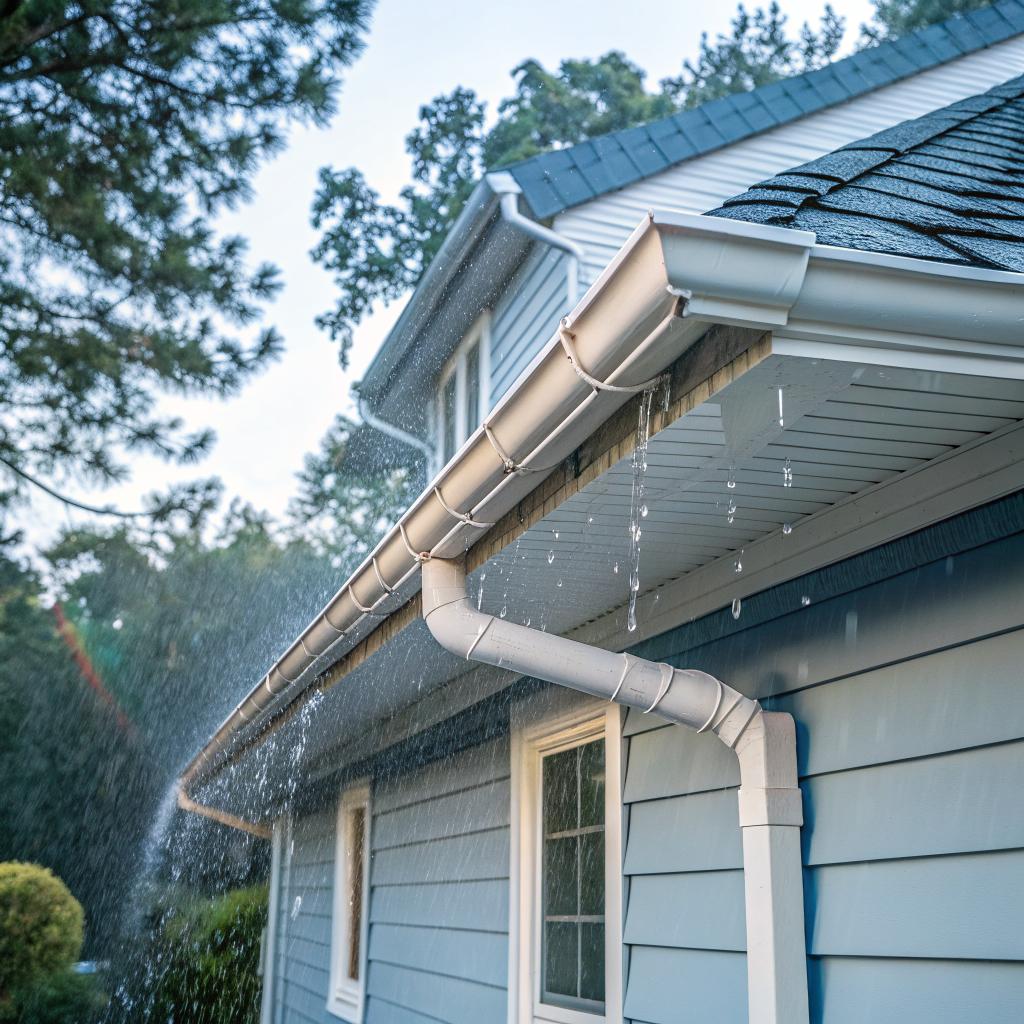
At a basic level, a gutter system is simple: it collects water from the roof edge, moves it into downspouts, and drops it at a safe distance from the house.
But in practice, there are several parts that need to work together.
Key parts of a typical Oregon gutter setup
| Component | What it does | Common Oregon issues |
|---|---|---|
| Gutter sections | Catch roof runoff and hold it temporarily | Clog with needles, sag under wet debris, corrode if metal is poor |
| Hangers / brackets | Support gutters along the fascia | Pull out of softened wood, spaced too far apart |
| Downspouts | Move water from gutters to ground level | Clog at elbows from leaves and roof grit |
| Outlets & elbows | Connect gutter bottom to downspout and direct flow | Small openings that plug fast, especially on tall fir-lined lots |
| Splash blocks / extensions | Carry water safely away from foundation | Forgotten, misaligned, or crushed by foot traffic or lawn mowers |
| Gutter guards (optional) | Reduce debris in gutters | Installed poorly, oversold, still need cleaning |
Each piece can fail on its own. Usually, you see a combination of small issues.
For example, maybe the gutters are fine, but the downspouts pour water right at the corner of your house. Or the system works for light rain, but a real Oregon storm overloads a small outlet and you get sheet water over the edge.
So when you think about “protecting your home,” it helps to zoom out and ask a simple question:
Where does every gallon of water from my roof end up during a heavy storm?
If you cannot answer that clearly, you probably have blind spots.
Choosing the right gutters for Oregon conditions
I think people overcomplicate gutter choices or trust marketing too much. You do not need the most expensive system on the market. You do need something that matches your roof size, local weather, and your own willingness to do maintenance.
Common gutter materials and what makes sense
| Material | Pros | Limitations | Fit for Oregon |
|---|---|---|---|
| Aluminum | Light, does not rust, many colors, affordable | Can dent from ladders or branches | Good all-purpose choice for most homes |
| Galvanized steel | Stronger, resists impact better | Can rust over time if coating fails | Works, but needs more monitoring for corrosion |
| Copper | Very durable, long life, high-end look | High cost, sometimes overkill for simple homes | Great for long-term custom projects if budget allows |
| Vinyl (plastic) | Cheap, easy to buy in sections | Prone to cracking, sagging, UV damage | Usually a weak choice for wet, long winters |
If your goal is to protect your home in a straightforward, cost-conscious way, quality aluminum gutters usually give you a good balance. Copper has a nice story and impressive lifespan, but if you are trying to grow a business or invest elsewhere, tying up money in premium metals may not be the smartest first move.
Gutter shapes and sizes that handle Oregon rain
Most houses in Oregon use one of two shapes:
- K-style gutters, which look like crown molding from the front
- Half-round gutters, which look like a smooth half pipe
K-style tends to carry more water for the same width, which helps during heavy storms. Half-round looks clean and traditional, and it sheds debris slightly better because of the smooth shape.
Size is where people often cut corners. Common sizes are 5 inch or 6 inch. A small house with a simple roof can usually manage with 5 inch gutters and 2×3 inch downspouts. Larger or complex roofs may need 6 inch gutters and 3×4 inch downspouts.
If you are on the edge between sizes, I lean toward going one step larger. Oregon gets long, soaking rains, and clogging is more likely. Extra capacity gives you more margin before water spills.
Designing gutter flow around your house
Once you pick material and size, the real protection comes from layout.
This is where the thinking part matters. Do not let someone just “follow the eaves” and call it a day.
Mapping roof sections and high-flow areas
Walk around your house during a real storm if you can do it safely. Watch where the water runs off.
Questions to ask:
- Where are the longest roof planes that catch the most water?
- Do two sections of roof drain into one small valley?
- Are there inside corners where water rushes into a tight space?
- Does water pour directly over entry doors, decks, or frequently used paths?
Those concentrated areas need special care, such as:
- Larger downspouts
- Extra outlets in the gutter
- Splash guards at roof valleys
- Stronger hangers where flow hits the gutter hard
If you ignore those high-flow spots, that is where you see gutters rip loose or pour over like a waterfall.
Directing water away from the foundation
Collecting water in the gutter is only step one. You also need a plan for where it goes after the downspout.
Many Oregon homes sit on clay-heavy soils that hold water. Others have crawl spaces or basements that are very sensitive to moisture.
Some simple but often skipped basics:
- Downspout outlets should drop water at least 4 to 6 feet from the foundation
- Extensions should slope away from the house, not level or back toward it
- Yards should have gentle grading so water does not pool against walls
- French drains or dry wells can help if space is tight or soil is poor
If water from your gutters ends up soaking the dirt along your foundation line, you are only halfway protected.
I know this sounds basic, but I have seen expensive gutter systems that empty into a shallow depression right against the house, basically feeding water into the crawl space.
Common Oregon gutter problems and what to watch for
It might help to treat gutter issues like early warning signs in business. Catch them early, fix them cheaply. Ignore them, and you pay more later.
Here are frequent problems that show up in a wet climate.
Clogging from trees, moss, and roof grit
Oregon has a lot of:
- Fir and pine needles
- Maple leaves
- Moss growth on shady roofs
- Grit from asphalt shingles
These do not look dangerous, but they form dense mats in gutters and downspouts.
Signs of clogging:
- Water spilling over edges during storms
- Plants literally growing in your gutters
- Staining lines on the outside of the gutter from overflow
- Downspouts that barely trickle in heavy rain
If you see any of that, cleaning is not optional. Waiting for “one more season” tends to be where boards start to rot and fascia pulls away.
Sagging gutters and loose fasteners
When gutters stay full of water and debris, they become heavy. Over time, this weight pulls on the hangers and screws.
Look along the gutter line from the side of your yard. You might see:
- Wavy sections where the line should be straight
- A corner that leans outward
- Standing water left in the gutter long after a storm
Standing water is a sign of poor slope or sag. A good gutter has a slight pitch so water flows to the outlets. It does not have to be obvious, but it should not hold water long term.
Leaks at seams, corners, and end caps
Older systems often have many seams. Each joint is a potential leak point.
You might see:
- Water drips from the middle of a gutter run
- Stains on fascia boards beneath a corner joint
- Peeling paint or swollen wood under an end cap
Some of these are simple caulking jobs. Others show deeper trouble with the fascia, such as rot from long-term moisture. That is where repair costs climb.
Ice, snow, and winter effects
Parts of Oregon see snow and freeze-thaw cycles. When gutters are blocked or drain poorly, water can freeze inside them. This increases weight and can widen joints.
You may also see ice forming on walkways where downspouts drain. That is a safety issue, not just a maintenance note.
A small change like redirecting a downspout away from a path can prevent falls.
How often should you clean and inspect gutters in Oregon?
People often ask for a perfect schedule. I do not think there is one rule that works for every house.
That said, some simple guidance helps.
General cleaning schedule
Use this as a starting point:
- Near tall firs or heavy tree cover: 4 times per year
- Mixed trees and shrubs: 2 to 3 times per year
- Few trees, mostly open roof: 1 to 2 times per year
Good checkpoints are:
- Late fall after most leaves and needles drop
- Late winter or early spring before heavy spring rain
- Mid-summer check, especially if moss is growing
You can adjust after a year or two when you see how fast your system fills up.
What to look at during each check
During cleaning or an inspection, try to check:
- Are hangers secure and spaced roughly every 2 feet or so?
- Are corners sealed and dry, with no peeling paint under them?
- Do downspouts run clear if you flush them with water?
- Is there soil erosion at downspout outlets?
- Do you see gaps between gutters and fascia?
A 15 minute visual check two or three times a year is cheaper than one surprise water damage claim.
Cleaning is not just about leaves. You are looking for patterns and small failures that show up before they become larger projects.
Gutter guards in Oregon: helpful or hype?
This is a touchy topic. Some people swear by guards, others regret installing them. The truth sits in the middle.
Gutter guards can help if:
- You have lots of broad leaves that sit on top and blow off easily
- You are willing to still inspect them and clean them sometimes
- The product matches your roof type and pitch
They are less helpful if:
- You have many small needles that wedge into small openings
- You think “no maintenance” is realistic
- You choose the cheapest clip-on covers from a big box store
Costs also matter. Some guard systems approach the cost of full gutter replacement. That might make sense if you plan to stay in the home for a long time and tree cover is extreme. But it is not always the smart first spend.
A practical approach:
- Clean your gutters for one full year on a normal cycle
- Track how often they clog and where
- Then decide if guards will solve the real problem or just feel like a shortcut
I am personally cautious of any product that promises zero maintenance, especially in a wet, tree-heavy state.
DIY gutter work vs hiring pros
Some parts of gutter care are very realistic for a homeowner. Others are not worth the risk or learning curve.
When DIY makes sense
You can usually handle:
- Basic cleaning from a safe ladder with a spotter
- Clearing visible clogs at downspout openings
- Flushing downspouts with a hose from the top
- Small sealant repairs on minor leaks you can reach safely
- Attaching or adjusting downspout extensions
If you are steady on a ladder and you take real safety precautions, these tasks are straightforward.
When a professional is worth it
It is better to bring in help when:
- You have a two or three story home with steep roof lines
- Gutters are badly sagging or pulling away from fascia
- You suspect hidden rot behind gutters
- You want to replace most or all of the system
- You see leaks on interior ceilings or walls near roof edges
In those cases, the damage potential goes beyond a simple gutter issue. There could be sheathing, framing, or insulation involved. A pro can open things up properly and put them back together.
I think about it like this: if a mistake could seriously hurt you or create structural problems, it is not a good “learning project.”
How gutters tie into overall home resilience
If your focus is business and life growth, there is a mental shift that helps here. You can treat your home like a long-term asset with systems, not just a place you react to when something breaks.
Gutters fit into that larger system with:
- Roof health
- Siding and paint condition
- Soil and drainage setup
- Basement or crawl space moisture control
If water management is weak in one area, it tends to show up elsewhere. For example:
- Poor gutters raise the moisture load on your crawl space
- That raises humidity, which can affect insulation and indoor air
- Over years, that can lead to mold or higher energy bills
This sounds dramatic, but it is just chain reactions. Good gutters are one of the first links in that chain.
You also avoid mental clutter. Few things break focus faster than a sudden leak or a contractor bill you did not plan for. Quiet, boring systems are underrated.
Budgeting for gutter protection like a long-term investor
Thinking as a business-minded person, it helps to see gutters as a recurring line item, not a one-time fix.
Typical cost buckets
You can think in three layers:
- Installation or replacement cost
- Annual cleaning and inspection
- Periodic repairs, upgrades, or changes in layout
Spreading these costs in your planning is less painful than waiting until everything fails at once.
For example, you might:
- Plan for full gutter replacement every 20 to 25 years for aluminum
- Set a small annual budget for cleaning and minor touch-ups
- Reserve for tree trimming that helps protect the system
Tree care is underrated here. Trimming branches away from your roof reduces debris, moss shade, and branch impact during storms. That saves money on both roofs and gutters.
When is upgrade spending reasonable?
You do not need the “ultimate” gutter setup. But there are times when spending more actually prevents bigger costs:
- Switching from undersized 2×3 downspouts to 3×4 in heavy flow zones
- Adding extra outlets in long gutter runs that often overflow
- Replacing failing spike-and-ferrule systems with modern hidden hangers
- Re-routing downspouts away from known wet corners or basement walls
Each of these changes has a cost, but they directly reduce the risk of rot, erosion, or foundation problems. That is different from paying for cosmetic upgrades that do not change performance.
Seasonal gutter tips for Oregon homeowners
Timing work with seasons makes the job easier and safer.
Fall
- Do a full clean after most leaves and needles have fallen
- Check slope visually and correct any obvious sagging
- Make sure downspouts are clear ahead of winter storms
- Confirm extensions are in place and aimed correctly
Winter
- Watch for ice forming where downspouts drain onto sidewalks or driveways
- Check indoors for any new stains near ceiling edges or exterior walls
- Look from the ground for heavy snow or ice buildup in gutters
Avoid climbing icy ladders. If serious ice forms often, consider getting advice on insulation and attic ventilation as well, since heat loss can cause ice dams.
Spring
- Clean out winter debris, including roof grit
- Inspect paint, fascia, and soffits for early rot or peeling
- Make minor repairs before spring growth hides problems
Summer
- Consider moss treatment for roofs, which reduces debris in gutters
- Trim branches that hang over roof lines
- Plan larger projects or replacements in drier months
Summer is often the safest and least stressful time for major gutter work.
Questions homeowners often ask about Oregon gutters
Q: Do I really need gutters on every side of the house?
A: Not always. Some roof edges empty over areas that can safely absorb water, like a well-sloped yard away from structures. But any edge that drains near doors, decks, driveways, walkways, or foundations should usually have gutters. Skipping them on those sides often leads to damage or slippery surfaces.
Q: Are gutter guards worth the money in Oregon?
A: Sometimes. They can cut down on large leaf debris, but they do not remove the need for inspection and cleaning. With heavy fir needles or moss, many guard styles clog too. If cleaning is difficult or you have severe tree cover, they might help, but you should test expectations against real debris patterns on your roof first.
Q: How can I tell if poor gutters are already hurting my home?
A: Look for these signs:
- Soil washed away under roof edges or at downspouts
- Water stains or streaks on siding directly under gutters
- Mushy spots or musty smells in crawl spaces or basements after storms
- Peeling paint, soft wood, or green growth around roof edges
If you see two or more of these, it is worth investigating your gutter system closely, maybe with a contractor you trust.
Q: Is it better to repair old gutters or replace them?
A: If you just have a few loose hangers or one leaking joint, repair makes sense. But if the gutters sag in many places, have multiple rusty seams, or match a roof that is also near the end of its life, replacement may be smarter. The cost per year of service can actually be lower with a clean, well-installed system than with constant patching.
Q: What is the most protective thing I can do this week?
A: Walk your property during or right after a real rain. Watch where water flows off the roof and where it lands. Take notes on overflow, pooling, and staining. Then tackle the worst spot first, either by cleaning, adding an extension, or getting a quote for repair. One focused fix in the highest risk area often gives you more protection than buying new gadgets for the whole house.