| Scratch Type | DIY Friendly? | Typical Cost Range | Time Required |
|---|---|---|---|
| Clear coat scuff (surface only) | Yes | $10 – $40 (materials) | 15 – 60 minutes |
| Light paint scratch (can feel with nail) | Sometimes | $30 – $120 DIY / $100 – $300 shop | 1 – 3 hours |
| Deep scratch (down to primer/metal) | No (for most drivers) | $250 – $800+ | 1 – 3 days |
| Multiple scratches / panel damage | Rarely | $400 – $1500+ | 2 – 5 days |
| DIY gone wrong (rework) | No | 30% – 60% higher than original repair | 2 – 5 days |
If you just want the short answer: most tiny scuffs and many light scratches can be handled at home with some patience, but deeper damage, color matching, and anything you see from a few steps away is better handled by a pro autobody shop such as auto scratch repair. The real secret is not a magic product. It is knowing when to stop, when to pay, and how to avoid turning a $100 fix into a $700 repaint.
Why scratch repair matters more than it seems
A lot of drivers shrug off scratches. The car still drives, right? The problem is, small damage affects more than your mood when you walk up to your car.
Scratches touch money, time, and how people read you professionally. That sounds dramatic, but think about the last time you bought a used car. You noticed chips and marks. You started asking yourself: Did this person maintain anything else? The same thing happens in business meetings when you pull up in a car that looks tired.
Tiny scratches are small signals about how you treat your tools, your time, and sometimes yourself.
There is also the boring but real side. Deep scratches can expose primer or bare metal. Over time, you get rust, peeling clear coat, and wider damage. That one parking lot scrape can spread into a full panel repaint later. So dealing with scratches early is less about vanity and more about basic risk management.
Secret 1: Learn the “fingernail test” before you do anything
The first secret is simple. You need to know what you are looking at.
The 3-second test that tells you your next step
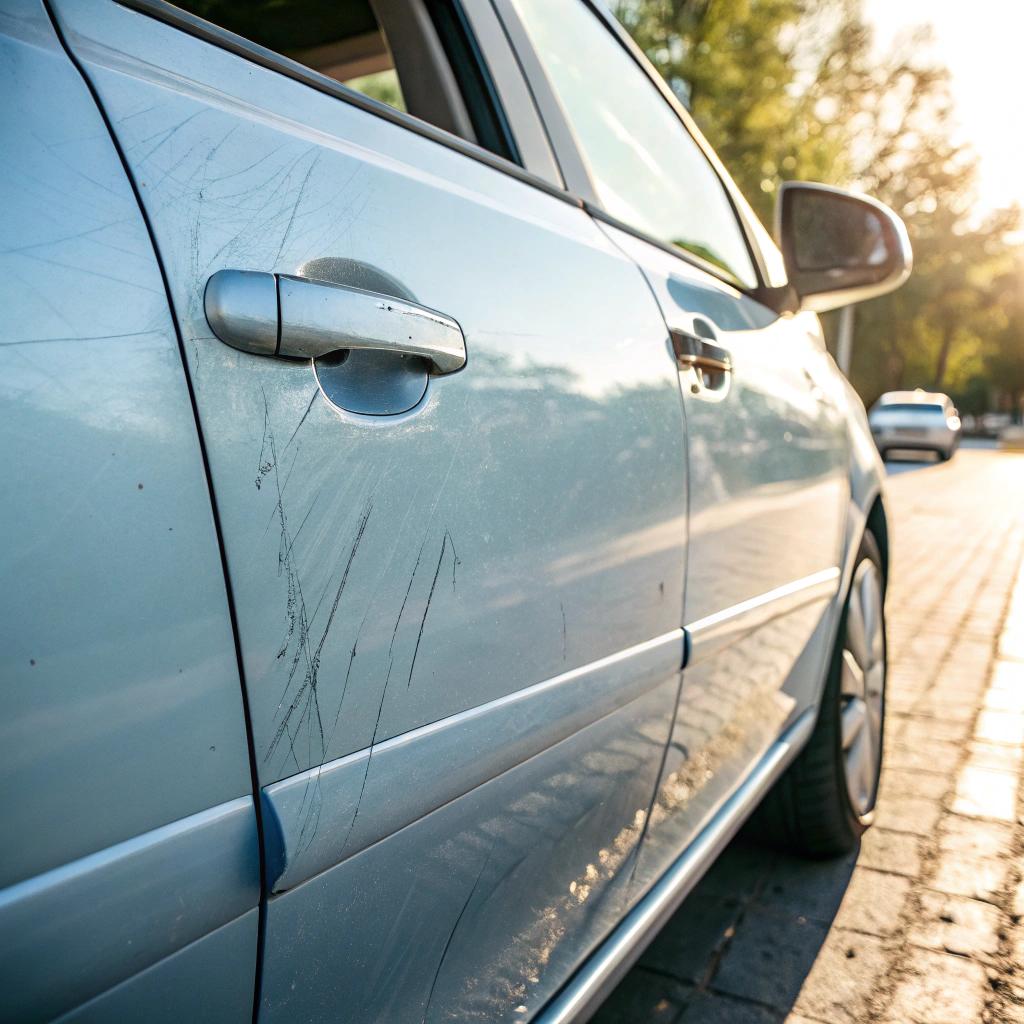
Run a clean fingernail gently across the scratch, straight across it.
| What you feel | What it usually means | Best approach |
|---|---|---|
| No catch at all | Scrape on the clear coat or transfer from another object | DIY polish or scratch remover |
| Very slight catch | Light scratch into clear coat | Careful DIY if you are patient, or quick pro job |
| Strong catch, feels deep | Through clear coat, maybe into paint/primer | Professional repair if you care about looks or resale |
| Can see metal or plastic, or color missing | Through paint layer | Professional repaint or spot repair, not a simple DIY |
This test sounds almost too basic. Still, it is where most people go wrong. They jump to a product before they understand the damage. In business, you would not repair a falling revenue chart with a random tool. You would diagnose first. Same idea here.
Before you buy anything, decide which layer of the paint you are dealing with: clear coat only, color coat, or all the way to primer/metal.
Secret 2: The truth about “miracle” scratch pens and kits
Scratch repair products are sold with a lot of promises. Some are fair. Some are not. If you look at it like a business decision, a $20 kit that claims to fix “any scratch” should raise some doubts.
What cheap pens and kits actually do
Most cheap scratch pens are clear coat in a pen. They do one main thing. They fill and seal very small scratches in the clear coat. That is it. They do not change color. They do not repaint metal. They do not fix dents.
Even the more expensive multi-step kits often play the same game. Sand a bit, polish a bit, then apply some compound. For shallow marks, these kits are fine. For deeper scratches, they just hide the edges and make the damage less obvious from far away.
Are they useless? No. They just have a smaller job than the marketing suggests.
When a cheap fix becomes an expensive mistake
The risk is not in the product itself. The risk sits in overconfidence. A few common mistakes show up again and again:
- People use heavy cutting compound on a new car with thin clear coat.
- They sand too wide, so the “repair” area is many times bigger than the scratch.
- They do not mask edges, so they dull sharp body lines that are hard to restore.
- They pile up too much paint from a pen, causing uneven blobs that need rework.
Once you burn through the clear coat, there is no polish that can bring it back. You are in repaint territory. So the secret is to treat cheap kits like trial tools, not final answers. Start small, test on an area that is not obvious, and only then move to the visible scratch.
If a “miracle fix” costs less than lunch, expect it to help with appearance, not restore the car to showroom condition.
Secret 3: Scratch repair has a simple business logic
Scratch repair looks like a car topic, but it behaves a lot like a business problem. You are trading among three things: money, time, and quality.
The scratch repair triangle
| Approach | Money spent | Your time spent | Quality / resale impact |
|---|---|---|---|
| Ignore small scratches | $0 today | 0 minutes | Slow decline, possible rust, worse resale |
| DIY on minor damage | Low to medium | Medium to high | Good if you are careful, uneven if rushed |
| Professional repair for visible areas | Medium to high | Low | Consistent finish, better long term value |
In business terms, a scratch is a small leak. You can ignore it for a while. Still, it affects brand and value. At some point, you either invest or accept a lower return later.
What helps is to set a personal rule before the damage happens. For example:
- “Anything I can only see from one meter away, I ignore.”
- “Anything I see every time I walk to the car, I fix.”
- “Anything with metal showing goes to a pro, no debate.”
That rule acts like a budget. It saves you from emotional decisions on a bad day or a busy week.
Secret 4: Quick wins you can safely handle yourself
Not every scratch repair needs a shop. There are a few things almost any driver can do without much risk, if you move slowly.
1. Remove paint transfer and surface scuffs
You tap a painted pole in a parking garage. Now there is a white streak on your dark bumper. Often, the streak is not your paint missing. It is the pole’s paint sitting on top of your clear coat.
Simple process:
- Wash the area with car shampoo and water. Dry gently.
- Use a small amount of automotive rubbing alcohol on a microfiber cloth. Test a small hidden spot first.
- Rub the mark lightly in one direction, not back and forth like you are polishing shoes.
- If the transfer starts to fade, switch to a mild scratch remover or polish to clean it up.
This alone can remove “scratches” that looked far worse than they really were.
2. Refresh dull clear coat marks
Keys brushing against a door handle, bags scraping near the trunk, or automatic car washes can leave spider web marks. These are usually in the clear coat only.
For light marks, a fine polish with a foam pad can improve the look quickly. You do not need a machine polisher for very small jobs. Hand polishing is slower but safer for beginners.
General tips:
- Work in the shade, not in direct sunlight.
- Use clean microfiber towels, not old t-shirts that hold grit.
- Apply light pressure; let the polish do the work.
- Check often, do not keep rubbing one spot for a long time.
3. Protect repaired spots with wax or sealant
Any time you polish, you thin the clear coat a little. It is normal. To protect the area, finish with wax or a paint sealant. This step helps with gloss and gives some protection from UV and moisture.
Think of it as closing the loop. You clean, correct, then protect. Skipping the last step is like fixing a chipped tooth and not brushing after. You have done the hard part. Do not stop one step early.
Secret 5: When professional repair quietly becomes the cheap option
There is a point where DIY stops making sense. This is not about skill. It is about scale and risk.
Signs you are past the DIY line
- The scratch crosses a body line or sharp crease in the panel.
- You see primer (often gray) or bare metal/plastic.
- The damage spreads across a large visible area, like the middle of a door.
- There are multiple layers of old, failed repairs in the same spot.
- The car is leased or under a return inspection program.
I know a business owner who tried to fix a deep scratch on a leased SUV with a paint pen the night before turn-in. He rushed, the color did not match, and the area looked blotchy. The inspector charged for a full panel repaint, and the rework cost more than a quiet shop repair would have a month earlier.
That story is common. The real cost was not the scratch. It was the timing and the rushed shortcut.
How to talk to a body shop so you do not overpay
Many people feel uncomfortable walking into a body shop. They expect to get overcharged because they do not speak the “language.” You do not need to know every technical term. You just need a few clear questions.
When you visit, you can ask things like:
- “Would you handle this as a touch-up, a spot repair, or a full panel repaint?”
- “Can you show me on the panel how far you would blend the color?”
- “Is this something my insurance should be involved in, or is it better to pay out of pocket?”
- “What is the risk if I leave this as is for a year?”
Watch how the shop explains the choices. A good shop will talk about options, not push only the highest ticket repair. And if they can show you before/after photos of similar jobs, that is even better.
Secret 6: Protecting your car from future scratches without becoming paranoid
You cannot avoid every scratch. Parking lots exist. So do kids on bikes and shopping carts. But you can reduce both the number and the impact without babying your car.
Better parking habits that actually work
Some habits cost almost nothing in time:
- Park slightly farther from store entrances where there are fewer cars.
- Avoid parking next to cars that are very close to the line or already dented on the doors.
- When parallel parking, leave a small extra gap in front and behind if you can.
- Choose end spots where one side of your car is protected.
These are small choices, but over years they prevent a lot of door dings and scrape damage.
Paint protection strategies that make sense
There are several levels of paint protection:
- Regular waxing or sealant every few months to protect the clear coat.
- Ceramic coatings that last longer and resist minor marks and chemical damage.
- Paint protection film (PPF) on high-risk areas such as front bumper, hood edge, mirror caps, door edges.
PPF and professional ceramic coatings cost real money, so they are not for everyone. But for high mileage drivers, or people who keep cars for a long time, these options can save both time and stress later.
The key here is perspective. You are not trying to keep the car perfect. You are aiming for “well cared for” without being consumed by every mark.
Secret 7: Viewing your car like a business asset, not a disposable tool
If you are into business and growth, you already think in terms of assets, depreciation, and brand. Your car is one of the most visible assets you own, even if it is modest.
The financial side of scratches and small damage
When you sell or trade in your car, buyers look for cues. A car with many small scratches, scuffed bumpers, and faded clear coat tells a story. Buyers assume there may be hidden problems. They offer less.
Fixing a few key areas before sale often pays for itself. For example:
- Repairing a large scratch on the driver’s door that everyone sees first.
- Cleaning up a scraped front bumper.
- Polishing cloudy headlights along with scratch repair.
These items change the first impression, which affects the price people feel is fair. It is similar to cleaning up your office before a meeting. The work itself is simple. The impact is larger than the effort.
Your car as part of your personal brand
I remember meeting a consultant who arrived in a ten year old sedan. The car was not new, but it was clean, panels were straight, and there were no major scratches. It matched how he presented himself: reliable, detailed, not obsessed with flash.
Another time, I rode with a manager whose car had old bumper damage, deep scratches on both doors, and trash inside. Each week he gave talks about standards and excellence. It was a small disconnect, but I noticed. Others did too.
None of this means you need an expensive car. It just means that how you care for whatever you have is noticed. Scratch repair plays into that picture more than most people admit.
Secret 8: The real process professionals follow (and what you can copy)
Understanding how pros think can help you make smarter decisions, even if you never plan to spray paint yourself.
How a shop decides on a repair method
In simple terms, a good body shop usually follows this thinking pattern:
- Identify depth of damage: clear, color, primer, or metal.
- Check size and location: middle of panel, near edges, on a body line.
- Consider panel material: steel, aluminum, plastic, composite.
- Review paint code and condition: age of paint, fading, previous repairs.
- Pick a method: touch-up, spot repair, or full panel repaint.
They balance cost, appearance, and long term durability. For example, a small but deep scratch near the edge of a door may be repaired locally, while a similar scratch in the middle of a hood might require blending over a larger area to avoid visible color differences.
What you can apply from that as a driver
You do not need a paint booth to think like this. Before you decide how to fix a scratch, ask yourself the same questions:
- “How deep is this really?” (Use the fingernail test.)
- “Where is it? Do people notice it immediately?”
- “Is the panel already faded or previously repainted?”
- “If this repair fails, what is my backup plan?”
Just that small pause often prevents bad impulse buys and rushed fixes the night before a big meeting or trip.
Secret 9: A simple home routine that keeps scratches from piling up
Scratches often show up in groups. Most cars do not get one scratch. They get several, slowly. A small routine at home can keep things under control.
A monthly 15-minute check
Once a month, maybe on a weekend, walk around your car in good daylight. Look closely at:
- Door edges and handles.
- Bumpers, especially corners.
- Trunk or hatch loading area.
- Lower panels behind wheels.
Keep a small kit in the garage:
- Car wash soap and bucket.
- Microfiber cloths.
- Mild polish or scratch remover.
- Wax or sealant.
When you see a new light scratch, decide on the spot: clean, repair, or ignore. That small rhythm keeps damage from stacking up until it feels overwhelming. It is the same logic people use in business when they review numbers weekly instead of every six months.
Secret 10: Accepting “good enough” so you do not lose your mind
There is a strange line here. Caring for your car can be part of caring for your larger life. But it can also cross into obsession.
Every driver needs a personal definition of “good enough.” Something like:
- “I want the car to look clean and professional from a few steps away.”
- “I am okay with tiny marks that only show up when you stare.”
- “Major damage, rust, or obvious scrapes are not okay for me.”
That standard helps you decide where to spend time and money without guilt. Otherwise, you risk overcorrecting. I once knew someone who would spend entire Saturdays chasing micro-scratches on a daily commuter car. Their stress over minor marks was worse than the marks themselves.
Growth in life and business usually comes from focusing on the right problems, not every problem. Scratch repair belongs on the list, but not at the very top.
Common questions drivers ask about scratch repair
Q: How do I know if I should fix a scratch or just leave it?
A practical filter is:
- If you see bare metal or plastic, fix it.
- If the scratch catches your eye every time you approach the car, and you can afford it, fix it.
- If you only see it when you kneel or under special light, live with it.
Also think about timing. If you plan to sell the car soon, fixing visible damage often pays back at sale time.
Q: Can I really make a scratch “disappear” at home?
For clear coat scuffs and very light scratches, yes, you can get close. With patience, many surface marks become almost invisible. For deeper scratches into color or primer, home repairs are more about hiding and protecting than perfect restoration.
Q: Is repainting a panel bad for my car’s value?
A quality repaint done properly usually helps value compared to leaving obvious damage. Where people get in trouble is with cheap, rushed jobs that do not match color or peel early. If you use a reputable shop and keep records, a well done repair is rarely a problem. In some cases, buyers are happy to know the damage was handled correctly.
Q: Does insurance cover scratch repair?
Comprehensive coverage often covers keyed panels, vandalism, or some parking lot damage. The question is whether the repair cost is higher than your deductible and if a claim will raise your long term premium. For small jobs around a few hundred dollars, many drivers pay out of pocket to avoid a record of claims. For large damage, insurance can make sense.
Q: What is the single smartest thing I can do today about scratches?
Do a quick walk around your car in good light and run the fingernail test on the worst mark you see. Decide, right now, if it belongs in the “fix soon,” “can try DIY,” or “ignore for now” category. Then set a calendar reminder for the fix you pick, so it does not drift for another year.
If you treat scratch repair as a normal part of caring for your tools, not a crisis, it becomes simple. How will you treat the next scratch your car gets: as an annoyance, or as a small chance to practice better decisions with your time, money, and attention?