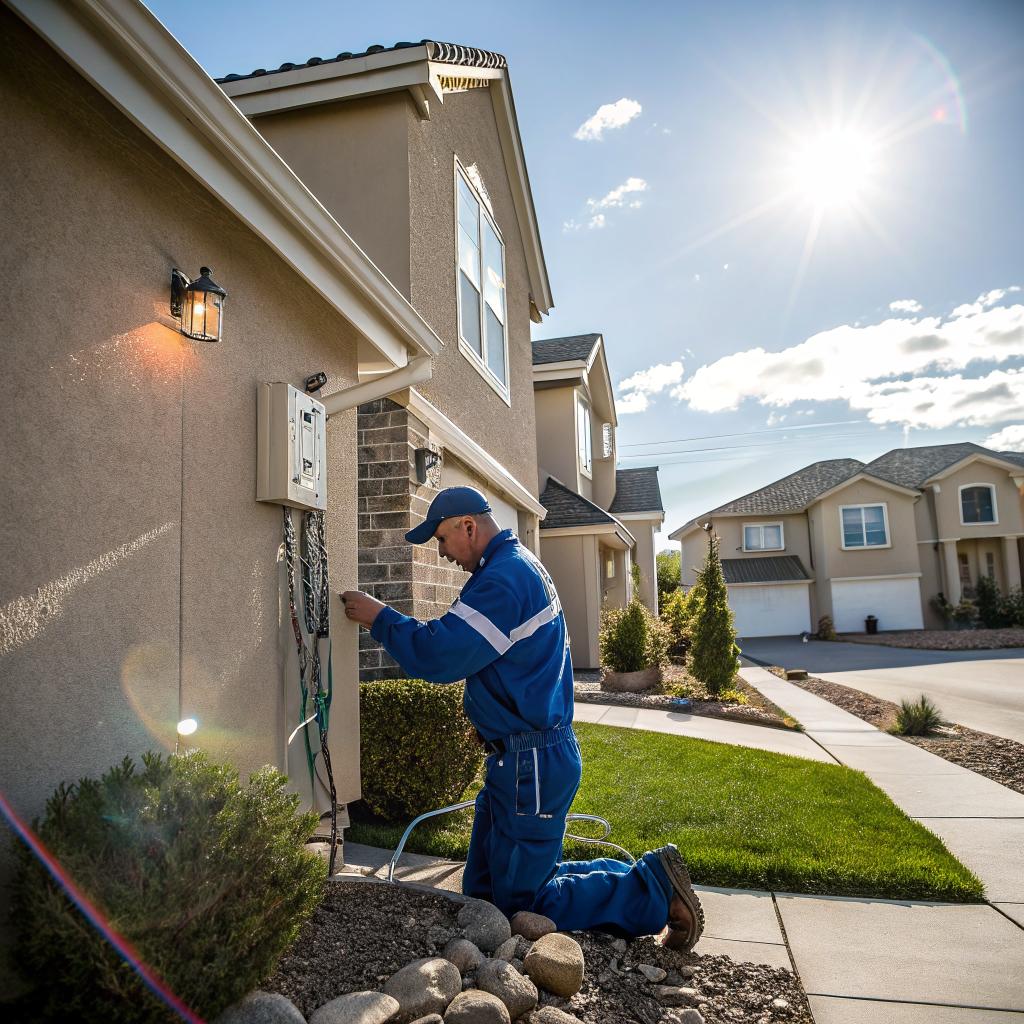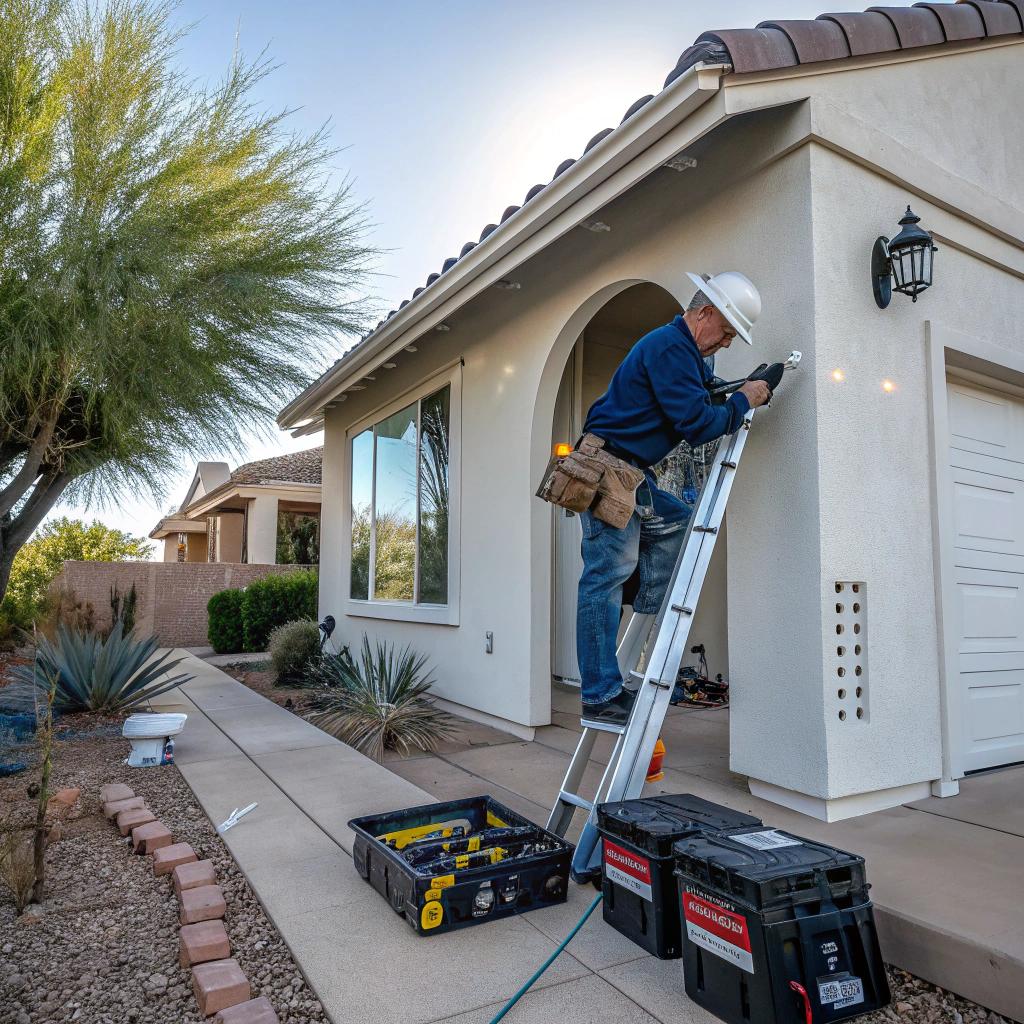
| Topic | Quick Answer |
|---|---|
| Do you really need a licensed electrician? | Yes. For safety, insurance, and code compliance, licensed and insured is non‑negotiable. |
| Average cost for common jobs in Scottsdale | $150–$300 for small repairs, $400–$1,500 for panels, $100–$250 per EV charger circuit (labor only) |
| Best time to call vs DIY | Anytime panels, wiring, burning smells, or repeated breaker trips are involved. |
| What makes a “trusted pro” | Clear pricing, real reviews, local presence, permits pulled, long-term support. |
| Where to start your search | Use a local licensed pro such as an electrician Scottsdale service with residential experience. |
A trusted electrician is one of those people you do not think about until something breaks, flickers, or pops. Then it suddenly becomes a big topic. If you own a home in Scottsdale, having a reliable expert for your electrical system is less a luxury and more like basic risk management. Your panel, wiring, lights, EV chargers, and home office gear quietly decide how safe and functional your daily life is. That sounds dramatic, but once you have sat in a dark house waiting for an emergency call back, it feels pretty accurate.
Why your Scottsdale home needs a real pro, not a quick fix
A lot of homeowners treat electrical work as an afterthought. Paint colors, flooring, cabinets, those get planning and Pinterest boards. Electrical gets attention when there is a burning smell or a breaker will not reset.
The problem is simple. Electricity does not care if you are busy, successful, or good with tools. It just follows physics. And physics can be unforgiving.
Electric issues rarely stay “small” for long. They either get fixed correctly or they quietly grow into safety hazards, system failures, or expensive rework.
Think about how much of your life runs through your wiring:
– Your home office and internet gear
– All your devices, from phones to laptops
– Security cameras and smart locks
– Air conditioning in Arizona heat
– EV charging, if you drive electric
– Fridges, freezers, and anything holding food
One loose connection, one undersized circuit, or one overloaded panel can interrupt all of that. Not every problem means an emergency, of course. But many “annoying” issues are early warnings.
Common electrical issues Scottsdale homeowners see
A lot of homes in Scottsdale are in two groups: older builds that have seen several remodels, or newer places packed with devices and smart tech. Both can have problems, just different ones.
In older Scottsdale homes
You might see:
– Two prong outlets with no ground
– Extension cords everywhere, used as permanent wiring
– Lights dimming when AC kicks on
– Warm light switches or outlets
– Breakers that trip when you run a hair dryer and something else
These are clues that the wiring and panel were never designed for modern loads. Sometimes you also have past handyman work layered in, and that can be its own headache.
In newer or remodeled homes
You may instead notice:
– A panel that is technically “big enough” on paper, but fully stacked in real life
– Not enough circuits for home office setups or gaming rigs
– EV chargers sharing power awkwardly with other major devices
– Flicker with LED recessed lighting on dimmers
– Smart switches that keep disconnecting or acting odd
Here, the issue is not age, it is planning. The house might look modern but the electrical map behind the scenes is more minimal than your lifestyle.
If your lifestyle advanced faster than your electrical system, you are going to feel it in tripped breakers, hot outlets, or constant workarounds.
How to tell when you must call an electrician
Some things you can safely troubleshoot yourself, like replacing a light bulb or resetting a clearly labeled breaker once.
Some things should push you toward the phone right away.
Red flag signs you should not ignore
- Repeated breaker trips on the same circuit, especially under normal use
- Buzzing or crackling sounds from outlets, switches, or the panel
- Warm or discolored outlets and switch plates
- Lights that brighten and dim randomly, not just a minor flicker
- Burning or plastic smells near outlets, appliances, or your panel
- Sparks when plugging in or unplugging normal devices
- Shock or tingling when touching an appliance or metal surface
Any of these can point to loose connections, overloaded circuits, or wiring problems. And those are not “wait and see” items.
Projects that are not DIY friendly
You might be handy with other trades. Electrical feels tempting if you like tools and YouTube. Still, there are jobs that are far riskier to attempt yourself:
- Panel upgrades or service upgrades
- Adding new circuits for EV chargers, hot tubs, or outdoor kitchens
- Rewiring older rooms or converting old wiring types
- Work inside junction boxes you did not install yourself
- Anything that needs a permit or inspection
The risk is not just immediate shock. A mistake can sit inside the wall for years and reveal itself as heat damage or a fire later. That is not a scare tactic, it is what electricians actually see when they open walls.
What “trusted pro” really means for an electrician in Scottsdale
People toss around the word “trusted” a lot. For electrical work, it should mean some specific things.
Core checks before you hire
Here are the basic filters that matter more than marketing slogans:
| Factor | What to look for |
|---|---|
| License | Arizona contractor license in good standing, with the right classification for electrical. |
| Insurance | Liability coverage and, for companies with staff, workers compensation. |
| Permits | They are comfortable pulling permits where required, not trying to avoid the process. |
| Experience | Real residential work in Scottsdale and nearby cities, not only commercial or new builds. |
| Communication | Written estimates, clear scope, no vague “we will see” pricing for basic work. |
| Reviews | Patterns of feedback from local homeowners, not just one or two perfect ratings. |
You do not need perfection. Contractors are still human. A couple of imperfect reviews with honest responses can actually be a good sign. It shows how they handle problems, because sooner or later, something on a job goes sideways for everyone.
Signs the electrician fits your home, not just the job
Sometimes two electricians are both competent, but one is a better match for how you live.
Ask yourself:
– Do they listen before they start pitching solutions?
– Do they ask about your future plans, not only the issue in front of them?
– Are they willing to explain options at different price points, not just the most expensive one?
– Do they take safety concerns seriously, even if you are not panicked about them yet?
If the answer is yes to most of those, you probably found someone who thinks like a long term partner instead of a quick repair shop.
A good electrician is not only fixing what is broken, they are designing so you do not run into the same stress again a year from now.
The Scottsdale context: climate, power loads, and life patterns
Scottsdale is not a generic suburb. The heat, the AC load, the mix of older and newer neighborhoods, and the way people work from home all shape what you need from an electrical system.
Heat and air conditioning load
High heat means:
– AC units drawing heavy current during long stretches
– Pool pumps working hard and often
– Outdoor lighting and landscape systems running late into the night
If your panel is marginal, those loads show up as dimming lights, tripped breakers, and sometimes noise at the panel. A trusted electrician will look not just at the single circuit that failed, but at how your whole service handles summer.
Remote work and home offices
Many Scottsdale homeowners now work from home at least part time. That puts more strain on certain rooms:
– Multiple monitors, computers, chargers, printers
– Networking racks, routers, modems
– Audio gear and camera setups
You might also be running a AC unit harder during the day when older homes expected to be mostly empty.
When an electrician plans circuits today, they should account for that. A room that used to be a spare bedroom might now behave like a small office.
EV chargers and new tech
The spread of EVs, induction cooktops, and battery storage is changing what “normal” looks like for residential loads. In Scottsdale, EV chargers on 40 or 50 amp circuits are now common. Combine that with a large AC unit and other heavy appliances, and your older 100 amp or 125 amp service can start to feel cramped.
A trusted pro will check:
– Your service size (e.g., 100A, 150A, 200A)
– What heavy loads you already have
– Whether load calculations allow new circuits safely
This is where experience really matters, because the math and the real-world usage both count.
Typical residential electrical jobs and what to expect
Let us walk through some common projects and give a general sense of what happens. Prices vary by company and scope, so treat this as a range, not a quote.
1. Panel upgrades
If your panel is undersized, old, or has known problem brands, upgrading can be one of the best long term upgrades.
Common reasons:
– You are adding an EV charger or hot tub
– Your AC upgrade needs more capacity
– You have a fuse box or a panel model with a history of failures
– The panel is rusted, corroded, or clearly past its prime
Typical process:
– Site visit and load calculation
– Plan and permit
– Power shutoff, panel replacement, inspection
– Power restoration and final testing
You might be without power for several hours on the main workday, so planning is key.
2. Adding outlets and circuits
Often homeowners start with a simple ask: “Can you add a couple of outlets in this room?”
Sometimes that is straightforward. Other times, the electrician finds that the existing circuit is already loaded near its safe margin.
Expect them to:
– Check the panel for space
– Check what is already on the circuit
– Propose either tapping into a nearby suitable circuit or pulling a new dedicated one
This is where a good electrician will explain not just how, but why one option is better for safety and long term use.
3. Lighting upgrades
Lighting is one of the more visible changes you can make, and it affects mood and productivity.
Common projects:
– Recessed LED lighting in living or work areas
– Under cabinet lights in kitchens
– Exterior security and landscape lighting
– Smart switches for scenes and schedules
Good electricians in Scottsdale often advise on:
– Color temperature that fits the room
– Dimmer compatibility with LED fixtures
– Placement patterns so rooms feel balanced, not patchy
It seems like a simple “swap and go” job, but poor installation shows up as flicker, humming, or short lamp life.
4. EV charger circuits
EV chargers are now standard in many garages. A dedicated circuit is usually required for Level 2 charging.
Your electrician will typically:
– Confirm your service capacity
– Check the charger requirements (40A, 50A, 60A etc.)
– Plan a route from panel to mounting spot
– Install the circuit, breaker, and either a hardwired charger or a 240V receptacle
Here, cutting corners is tempting. People sometimes use existing dryer circuits or share circuits in ways that break code. A trusted pro will tell you frankly if your panel can handle it or if a panel upgrade is smarter.
Balancing safety, cost, and timing
You probably do not have an endless budget for home upgrades. So how do you prioritize?
Ranking projects by urgency
Here is a rough way to stack issues, from “do it now” to “plan it out.”
| Priority | Examples | Why it matters |
|---|---|---|
| High | Burning smells, warm outlets, visible arcing, repeated breaker trips | Direct safety risk, potential fire or damage to electronics. |
| Medium | Panel nearing capacity, older panel models, regular nuisance trips | Rising risk and daily frustration, but not an emergency yet. |
| Planning | EV chargers, extra office circuits, smart home upgrades | Quality of life and future proofing, can be scheduled. |
A good electrician will help you separate what is urgent from what is nice to have. If they treat every small thing as a crisis, that is a red flag. Fear sells, but it is not honest.
How business-minded homeowners can think about ROI
Since many readers here care about growth and business thinking, let us look at electrical work through that lens.
You can ask:
– Does this project reduce risk in a measurable way?
– Does it remove a recurring problem that wastes my time or focus?
– Does it support income generating work from home by improving reliability?
– Does it raise the practical value of the property, not just its look?
A panel upgrade that prevents outages and supports a home office might quietly protect thousands of dollars in productivity and gear over years. That is not as visible as a new countertop, but the payoff can be larger, just in a quiet way.
Building a long term relationship with your electrician
You probably already have “your” dentist, maybe “your” accountant, and maybe even “your” mechanic. Having “your” electrician is the same idea.
Why one-off hiring is tiring
If you call a different electrician every time something comes up, you:
– Repeat your house history again and again
– Get inconsistent solutions and parts
– Have no long term plan for upgrades
And every visit starts with basic detective work that could have been saved if someone already knew your panel, wiring quirks, and past issues.
What an ongoing relationship looks like
You do not need a subscription or anything complex. It can be as simple as:
– Using the same licensed company for most projects
– Keeping a list of what they did and when
– Asking their opinion on future plans before you remodel
Over time, they build a mental map of your house. That saves time, avoids conflicting fixes, and usually means better pricing and scheduling because you are a known client.
Electrical work compounds in value when it is part of a plan, not just a series of isolated repairs.
That is not a flashy idea, but it lines up with how you grow a stable business: consistent systems, not constant patching.
Questions to ask before you say yes to any electrician
Here are some direct questions that help you filter fast. They are simple, but the tone and depth of the answers will tell you a lot.
Key questions
- “Are you licensed and insured in Arizona, and can you share your license number?”
- “Have you done this type of work often in Scottsdale homes like mine?”
- “What are the main options for solving this, and how do the costs and risks compare?”
- “Will this project need a permit, and will you handle that?”
- “What could go wrong or add cost once you open things up?”
- “How long will the work take, and will power be off for any part of it?”
- “Do you stand behind the work if a problem shows up later?”
You are not looking for perfect answers. You are looking for clear, honest ones. A pro is not afraid to say “There might be surprises once we open the wall, here is how we handle that.”
How electrical reliability supports your personal and business growth
It might feel like a stretch to connect an electrician to your growth in life or business. Still, look at your average weekday.
If you:
– Run part of your work from home
– Rely on stable internet and power for meetings
– Charge devices and backup gear overnight
– Keep personal records and projects on hard drives
Then electrical reliability is a quiet partner in your productivity. Every outage, glitch, or fried gadget is a drag on your focus.
A planned electrical system:
– Lowers downtime from nuisance trips or power issues
– Protects gear through proper grounding and surge protection
– Lets you add equipment as your work grows without panic
That affects how calm your workdays feel. You are not watching the lights or listening for odd panel sounds while trying to think.
You also model something simple for your own growth: you treat the “invisible” infrastructure with the same care you give the visible parts of your life and business.
Frequently asked questions about Scottsdale electricians
Q: How often should I have my electrical system inspected?
A: For most homes, every 5 to 7 years is reasonable, or after major changes like a remodel, new AC, or adding an EV charger. If your home is older than 25 years and has not been checked in a long time, sooner is better.
Q: What is the biggest mistake homeowners make with electrical work?
A: Trying “temporary” fixes that become permanent. Extension cords, power strips stacked together, and DIY junction boxes that never get corrected are very common. They seem harmless until they are not.
Q: Are whole-home surge protectors worth it?
A: Often yes, especially if you have a lot of electronics, smart devices, or a home office. They do not replace good wiring, but they help protect against spikes that can shorten the life of your gear.
Q: How do I know if my panel is out of date?
A: Visible rust, crowding, hard-to-read labels, frequent trips, or an original panel in an older Scottsdale home are signs you should at least have it evaluated. Certain brands and models also have a history of failures; a local electrician can point those out.
Q: What is one smart first step if I am not sure where to start?
A: Ask a trusted local electrician to do a walkthrough and prioritize issues into “urgent”, “next 12 months”, and “nice to have”. Then ask yourself one last question:
Which upgrade would remove the most stress or risk from your day-to-day life right now?