| Aspect | What Matters Most in Bellevue Remodeling |
|---|---|
| Biggest Cost Driver | Structural changes, kitchen and bathroom fixtures, and hidden repairs |
| Fastest Visual Upgrade | Paint, lighting, flooring, and hardware changes |
| Most Common Mistake | No clear scope, weak budget buffer, and wrong contractor choice |
| Best ROI Areas | Kitchens, bathrooms, and well-planned storage or flex spaces |
| Realistic Timeline | Small room: 2–4 weeks; kitchen or main floor: 8–16 weeks |
| Planning Priority | Define why you are remodeling before choosing finishes |
If you want the short answer, a successful home remodel in Bellevue comes down to three things: a clear reason for the upgrade, a realistic budget with a real buffer, and a contractor you trust more than your paint color. Pick those well and your project will feel like a smart move, not a long, expensive headache. This is true whether you are doing a modest refresh or a full home remodeling Bellevue project with new layouts and custom work.
Why remodeling in Bellevue feels different
Bellevue is not a low-cost market. You already know that. Labor is pricey, materials run higher than in many other cities, and expectations for finish quality are often higher too.
So a remodel here is not just about making things prettier. It is about:
– Protecting a high-value asset
– Matching the neighborhood without overspending
– Improving your daily life so the cost actually feels justified
If you treat the project like a random weekend upgrade, it will probably feel chaotic. If you treat it like a small business project with clear goals, it tends to go better.
Before you pick tile or paint, decide what problem this remodel should solve: comfort, resale, space, or some mix of the three.
Start with purpose, not Pinterest
I know it is tempting to begin with mood boards and inspiration photos. Those are fun. But they can also distract you from what your home really needs.
Try answering three questions, honestly, even if your answers feel a bit messy.
1. What is actually not working right now?
Be specific:
– Morning traffic jam in one bathroom
– No good space to work from home
– Kitchen bottleneck where everyone crowds the same 3 feet of floor
– Awkward entry with shoes and coats everywhere
If you cannot connect a design choice to a real daily frustration, there is a good chance it turns into expensive decor instead of a smart upgrade.
2. Where do you spend the most time?
Many people in Bellevue want to upgrade everything at once, then end up spreading their budget too thin.
Ask yourself:
– Which 2 rooms see the most waking hours?
– Where do guests actually spend time?
– Which space stresses you out every time you walk in?
That is your priority list. The rest can wait.
3. Are you remodeling to stay or to sell?
This one changes everything.
If you plan to stay 10+ years, you can shape the home for your routines, even if some choices are a bit personal.
If you might move in 3–5 years, spend more on fundamentals:
– Layout that feels open and logical
– Decent storage
– Neutral finishes with one or two personal touches
You do not need to make every choice “resale friendly,” but you should at least ask if a future buyer will see clear value.
If you are not clear on whether this is a “forever home” or a “for now home,” plan as if you will sell and then layer in a few personal upgrades just for you.
Budgeting for a Bellevue remodel without lying to yourself
Most people underestimate cost and overestimate their tolerance for stress. That combination is rough in remodeling.
You will see wide ranges online, but for Bellevue, you can think in rough tiers.
Typical cost ranges by project type
| Project Type | Basic Range (Bellevue) | What That Usually Includes |
|---|---|---|
| Cosmetic refresh of a room | $5,000 – $20,000 | Paint, lighting, minor electrical, flooring, simple built-ins |
| Bathroom remodel | $25,000 – $70,000+ | New fixtures, tile, vanity, lighting, possible layout tweaks |
| Kitchen remodel | $50,000 – $180,000+ | Cabinets, counters, appliances, lighting, possible walls moved |
| Whole main-floor remodel | $150,000 – $400,000+ | Layout changes, systems upgrades, major finishes across zones |
| Home addition | $250,000 – $600,000+ | New foundation, exterior, interior finishes, systems extensions |
Are these numbers perfect? No. But they are closer to what homeowners around Bellevue actually see than the national averages you find on big websites.
How to stop your budget from exploding
Here is where many projects go sideways: no buffer.
– Set your target budget.
– Then add 15–20 percent as a contingency.
Not as “optional extra,” but as part of the plan.
That buffer covers:
– Hidden damage in walls or floors
– Small layout changes after demolition
– Fixture backorders forcing substitutions
If you do not use all of it, great. But pretending surprises will not happen will not make them disappear.
A remodel without a contingency is not lean, it is fragile; one surprise can force bad decisions just to stay afloat.
Choosing the right areas to upgrade in Bellevue
You do not need to touch every room for the house to feel new. You just need to pick the right levers.
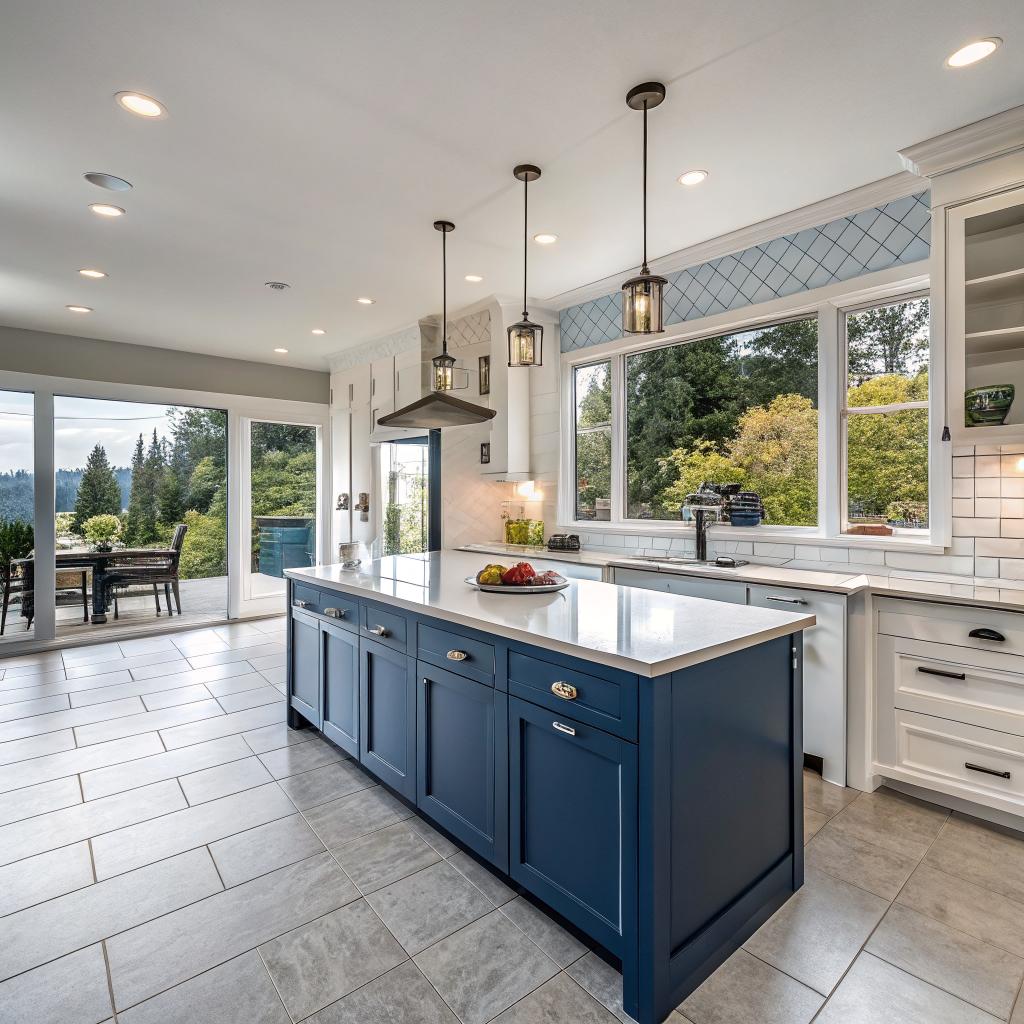
Kitchens: the daily work zone
In many Bellevue homes, the kitchen is the main stage. People cook, work on laptops, help kids with homework, all in that same area.
Think about:
– Flow: Can two people cook without colliding?
– Zones: Prep, cooking, cleaning, and serving each have clear space?
– Light: Are you relying on one ceiling fixture, or is there layered lighting?
A few targeted changes can go a long way:
– Replace tired upper cabinets with a mix of open shelving and taller storage.
– Add undercabinet lighting to make counters actually usable.
– Improve ventilation so cooking smells do not spread all over.
You do not always need a full gut. Sometimes a partial remodel, like new counters, better lighting, and a layout tweak, has 80 percent of the impact.
Bathrooms: small footprint, big impact
Bathrooms look simple on paper, yet they hide a lot of work: plumbing, waterproofing, ventilation, tile.
In Bellevue, common goals are:
– Turning an older tub into a walk-in shower
– Adding storage without making the room feel cramped
– Better lighting that is not harsh but still practical
If you want the room to feel like a real upgrade, do not just swap fixtures. Look at:
– Vent fan performance and ducting
– Waterproofing behind tile, not just the visible surfaces
– Floor heat in key bathrooms for daily comfort
You might not need all of that. But ignoring the unseen layers just to save a bit often turns into regrets.
Living areas: from “room” to “usable space”
Living rooms and family rooms in Bellevue homes are often fine structurally, but a bit bland or awkward.
Think about:
– Where does seating naturally gather?
– Do you have a sensible spot for a TV or screen, if you use one?
– Is there a good place for a small desk or reading nook?
Small moves that change the feel:
– Built-in shelving around a fireplace
– Smart storage along one wall to hide clutter
– A simple change in lighting layout from one ceiling fixture to recessed lights plus a few accent fixtures
You do not need to stuff the room with features. You just want it to support how you actually live.
The Bellevue factor: codes, permits, and neighbors
Home remodeling in Bellevue is not just about finishes. The city has rules, and your neighbors have opinions, even if they never say them out loud.
When you will likely need permits
You usually need permits when you:
– Move or add walls
– Change structural components
– Alter plumbing locations or add new lines
– Modify electrical circuits in a significant way
– Add square footage or build an addition
Small cosmetic work like paint or simple fixture swaps may not require permits, but once you start moving walls or plumbing, expect plan reviews.
A good contractor will handle permitting, but you still need to plan the time for it. That can be weeks before any wall comes down.
HOAs and neighborhood expectations
Some Bellevue neighborhoods have very clear rules about:
– Exterior changes
– Window styles
– Colors and materials
– Noise and work hours
Ignoring those does not just create tension; it can slow the whole project.
Ask yourself:
– Do I really know what my HOA will allow, or am I guessing?
– Have I shared rough timing with neighbors, especially for noisy phases?
This is not about being overly polite. It is about avoiding unnecessary friction that can delay work.
Choosing a Bellevue contractor without losing sleep
This is where many people rush and later wish they had not.
You do not need the cheapest contractor. You need one whose process and communication style fits how you make decisions.
Red flags to avoid
If you hear or see these, pause:
- Quotes that are much lower than two or three others for the same scope
- Pressure to sign quickly “before prices go up” without clear breakdowns
- Vague or missing scope details, like “kitchen remodel” with no line items
- No clear explanation of how change orders work
- Hard to reach even during the sales process
The “too good to be true” number almost always leads to change orders that bring you back to market price, plus frustration.
Signs of a contractor who might fit you
Look for:
- A clear process from first visit through finish, written down
- Realistic timelines that leave room for inspections and delays
- Itemized estimates that show where money goes
- References from recent projects, not just old ones
- Comfort discussing tradeoffs between cost and finish level
Ask them how they handle these situations:
– A material is delayed. What happens to your schedule?
– You want to change something after demolition. How is that priced?
– There is unexpected damage in a wall. How do they communicate it?
Their answers will tell you more than their marketing.
Planning your remodel like a business project
If you think about your remodel the way you think about a key business project, your odds of success go up.
Define scope clearly
Scope creep is not just a phrase. It is what happens when you keep saying “we might as well” during construction.
Try writing a simple scope list:
– Must haves
– Nice to haves
– Future phase items
When you are tempted to add something, look at your list. Does it move from “future” to “must have” for a good reason, or are you just in the moment?
Decisions before demolition
Many delays come from late decisions on:
– Cabinet layout and style
– Countertop material
– Plumbing fixtures and finishes
– Tile choices
– Flooring type and color
– Lighting locations and fixture types
The more you choose before demolition, the less you will scramble later.
If you feel decision fatigue, pace yourself:
– Pick major items first: layout, cabinets, flooring.
– Then choose supporting items: fixtures, hardware, tile.
– Leave small decor details for the end.
Too many concurrent decisions will wear you down and may lead to choices you later regret.
Design tips that work well in Bellevue homes
Every house has its own character, but some patterns show up again and again in this area.
Light, neutral bases with a few strong accents
Because many days are cloudy, a bright interior helps. That does not mean everything must be white.
You can:
– Use warm, light neutrals on walls
– Add color in rugs, art, or a single accent wall
– Keep major fixed pieces like cabinets and floors in enduring tones
This helps your remodel age well. You can swap out accents without a full redo.
Natural materials where they matter
In higher-value homes, surfaces like counters and floors matter more than small decor.
If your budget is limited, prioritize:
– Quality counters in the kitchen
– Durable main-floor flooring
– Solid, comfortable bathroom fixtures
Then scale back on expensive decorative tile or trendy extras that date quickly.
Storage as a quiet hero
A beautiful kitchen with nowhere to put anything loses its appeal fast.
Think through:
– Pantry space, even if it is a cabinet-based pantry
– Drawer storage instead of only doors
– Hidden charging and tech zones
– Entry storage for shoes, coats, and bags
A remodel that quietly solves clutter problems often feels more luxurious than one that simply adds expensive finishes.
Scheduling and living through a remodel
This part is often underestimated. The stress of living in a construction zone can change how you see the whole experience.
Plan around real life, not a perfect calendar
Construction rarely fits neatly between holidays, school breaks, and work projects. But some planning helps.
Ask yourself:
– Do you want major demolition during the school year or summer?
– Will anyone in the home be doing remote work or study during loud phases?
– Is there a time of year when being without a kitchen is easier?
Be realistic, not optimistic. If you think you will “barely notice the dust,” you may be kidding yourself.
Decide on temporary living arrangements
For large projects, you have three basic paths:
| Option | Pros | Cons |
|---|---|---|
| Stay in the home | No extra housing cost, closer oversight | Noise, dust, limited kitchen/bath access, stress |
| Short-term rental | Quieter, more normal routines, faster work in some cases | Extra cost, moving belongings, less day-to-day oversight |
| Stay with family/friends | Little or no housing cost | Less privacy, possible strain on relationships |
There is no perfect answer. But pretending you will be comfortable without a kitchen for 10 weeks when you know you will not is a setup for frustration.
Common remodeling mistakes in Bellevue and how to avoid them
No project is perfect. But some problems are more common than they need to be.
1. Chasing trends that age quickly
Trendy finishes can look fresh now, then feel dated in just a few years.
If you love a bold choice, that is fine. Just keep it easy to change:
– Use trend colors in paint, not tile that runs behind all your cabinets.
– Use a bold pendant over an island, not overly stylized cabinet doors.
That way, you can refresh the look later without tearing out expensive work.
2. Underestimating the “boring” upgrades
Things like insulation, wiring, plumbing, and HVAC placement are not glamorous. But they change how the house feels every day.
In older Bellevue homes, you may face:
– Aluminum wiring or mixed electrical work
– Old plumbing that is near the end of its life
– Weak insulation that makes rooms cold or hot
If walls are already open, this is the best time to fix these. Deferring them to save a bit can end up more expensive later.
3. Ignoring long-term flexibility
Work patterns, family size, and hobbies change.
When planning, ask:
– Could this room serve more than one purpose?
– Is there a way to add a small workspace, even if I do not need it now?
– If my mobility changes later, will stairs or narrow passages cause trouble?
You do not need to design for every possible future. But thinking a little about future you is not a bad idea.
How to keep your project emotionally manageable
Remodeling is not just a financial or logistical decision. It affects your daily mood and relationships.
Set expectations with everyone in the home
Before work starts, have a real conversation:
– How long will core parts of the house be out of use?
– What are “quiet hours,” if any?
– Where will people work, study, or relax?
Small annoyances can snowball if no one talked about them upfront.
Create small “finished” zones early
If possible, try to protect or finish one area early where you can relax without seeing construction.
Maybe:
– A bedroom that stays untouched
– A temporary living room with comfortable seating
– A small outdoor space with a simple setup
It sounds minor, but having one calm area you can retreat to makes a long project more bearable.
Thinking about return on investment without obsessing over it
In a market like Bellevue, remodeling is often both a lifestyle choice and a financial one.
Where ROI tends to be stronger
Historically, in higher-value areas:
– Kitchens with good layouts and quality finishes hold value well.
– Bathrooms that feel clean, bright, and updated help resale.
– Added usable square footage, when done thoughtfully, can make a real difference.
But ROI is not just resale value. It is also:
– Time saved by better layouts
– Stress reduced by more storage
– Energy saved by better systems
You can ask a simple question about any upgrade: “Will this give daily value for the next 5 years?” If the answer is no, maybe it belongs in a future phase.
Simple planning checklist before you sign anything
This is not meant to be perfect, just practical. Before you commit, try to be clear on:
- Your top 3 goals for the remodel, written down
- Your real budget plus a 15–20 percent buffer
- Which rooms are in scope now and which are not
- Whether you will stay in the home or live elsewhere during work
- Who in your household has final say on design decisions
- How you will handle disagreements about cost or style
- What you will sacrifice if costs rise: scope, finish level, or timeline
If you cannot answer those yet, it might be early to start demolition, but it is the right time to start conversations with potential contractors and maybe a designer.
Q & A: Common Bellevue remodeling questions
Q: Is a full home remodel worth it in Bellevue, or should I just move?
A: It depends on your neighborhood, your mortgage, and how attached you are to your current location. If your lot, commute, schools, and community all work, remodeling often beats moving costs, higher property taxes, and the hassle of a new purchase. If your current house needs structure changes that nearly match the price of buying a better-fit home, then moving might be smarter. You are not wrong to ask the question; just run real numbers, not guesses.
Q: How long will a typical Bellevue kitchen remodel really take?
A: For a full remodel with new cabinets, counters, lighting, and some layout changes, 8 to 14 weeks is common, from demolition to final touches. Material lead times, inspections, and change orders can stretch that. Anyone promising 3 weeks for a full custom kitchen should raise questions.
Q: Can I manage the project myself to save money?
A: You can, but it is not always a net savings. Acting as your own general contractor means you coordinate trades, inspections, materials, and scheduling. If you already manage complex projects for a living and have flexible time, it might work. If not, the time cost, mistakes, and delays often offset any direct savings. This is one area where many people underestimate the workload.
Q: Do I need a designer, or can I just work with the contractor?
A: For small cosmetic projects, a contractor plus your own planning can be enough. For larger remodels, especially kitchens, bathrooms, and full floors, a designer often prevents costly missteps and coordination issues. People sometimes skip design to save money, then regret layout or finish choices when it is too late to change easily.
Q: What is the first step I should take tomorrow if I am serious about remodeling?
A: Not collecting more pictures. Sit down and write one page that covers why you want to remodel, what is not working, rough budget range, and any hard constraints like timing or must-keep features. That one page will make your conversations with any contractor or designer much clearer and will help you avoid a scattered, stressful process.