| Aspect | Good Kitchen Reno | Weak Kitchen Reno |
|---|---|---|
| Function | Clear workflow, smart storage, safe layout | Cramped movement, clutter, awkward appliances |
| Cost vs Value | Budget tied to goals, strong resale appeal | Random spending, poor return, dated finishes |
| Style | Timeless base with a few bold choices | Trendy overload that dates in a few years |
| Daily Life | Faster cooking, easier cleanup, less stress | More mess, more steps, everyday frustration |
| Business & Life Impact | More mental space, better routines, higher energy | Distraction, friction at home, drained focus |
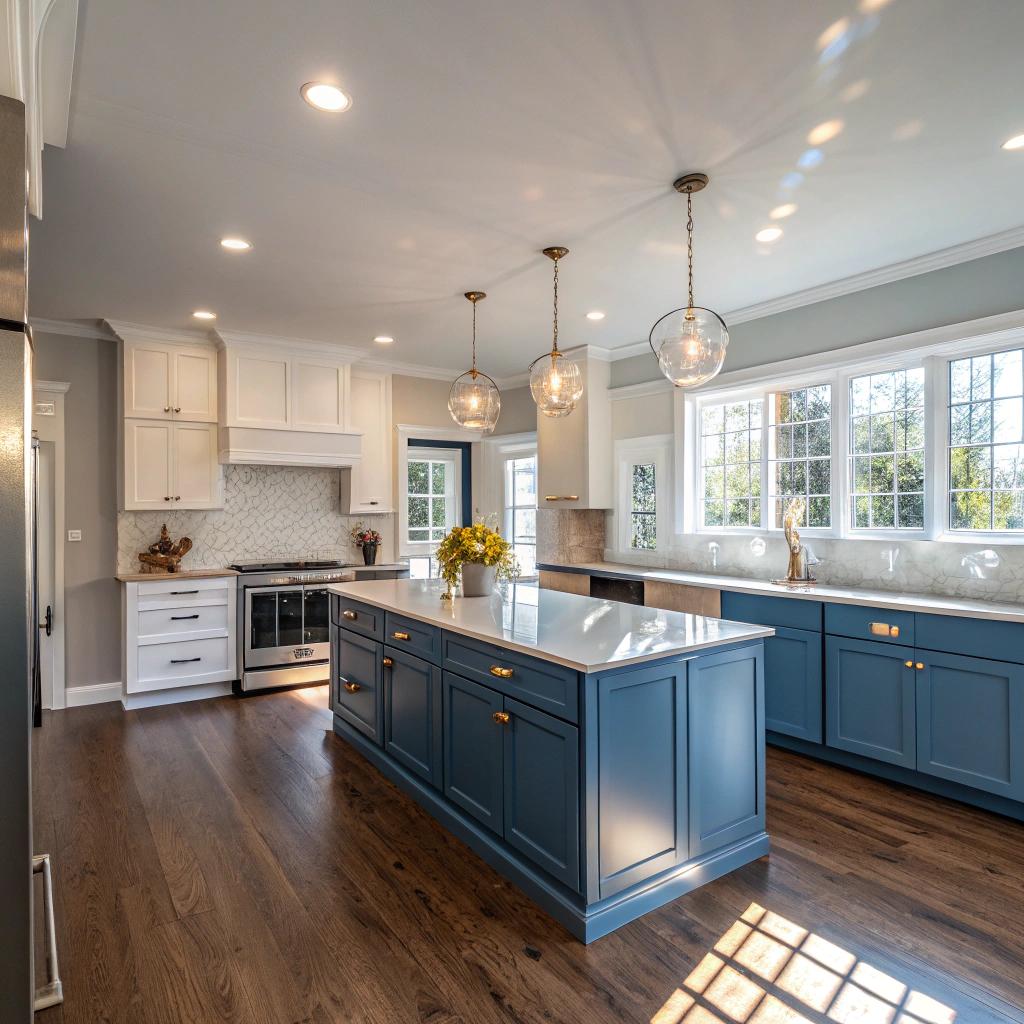
A practical way to think about a kitchen renovation in Belleville is simple: done well, it makes your life easier every single day and quietly raises the value of your home; done poorly, it drains money and attention. If you want a fast, local route, a focused project like a kitchen renovation Belleville can hit that balance between personal comfort and long term value without turning your whole home into a construction site. The rest of this guide walks through ideas, tradeoffs, and a few mistakes I see people make when they chase glossy inspiration photos instead of planning for how they actually cook, work, and live.
Why your kitchen matters more than you think
If you care about business and personal growth, your time and energy are your main resources. Most people think about productivity apps or a new routine. But the room you walk into three to ten times a day has more influence than you might admit.
You are in that space when you start your morning, grab a snack between calls, or eat late after a long shift. A kitchen that works with you instead of against you:
A good kitchen trims small bits of friction from your day. Those minutes and micro-annoyances add up, for better or worse.
When the layout is clumsy, you waste steps. When storage is messy, you waste attention. When lighting is poor, you feel tired earlier. It sounds minor, almost picky, until you track it over a year.
If you think in terms of ROI, the kitchen is not just about cabinets and tile. It becomes a tool that:
– Reduces daily decision fatigue
– Supports better food choices
– Makes hosting easier, which can help business relationships as well as your social life
So yes, the paint color matters, but not as much as the way you move from fridge to sink to stove every day.
Start with the real goal of your Belleville kitchen project
Before talking about islands or quartz or the latest hardware finish, you need a blunt question:
What do you actually want this renovation to change in your life?
Not what Pinterest says. Not what a neighbor did. Your own answer.
You might want:
– Faster weekday breakfasts for kids
– A cleaner look that helps you feel calm
– More space to host clients or colleagues at home
– Better function for meal prep because you are trying to eat out less
Write it down. One or two sentences only. If you cannot state the goal simply, the design will probably drift and the budget will follow.
If your renovation goal is fuzzy, the quotes you receive will be fuzzy, and so will the final result.
I know it sounds a bit strict, but I have watched people spend thousands trying to solve a problem they never clearly defined. They ended with a beautiful kitchen that still felt awkward.
Common goals people do not admit out loud
Sometimes there are quieter reasons for renovating. These matter too, even if you feel odd saying them.
For example:
– You want your home to reflect the level of success you are aiming for in business. Not to show off, but to feel congruent.
– You are planning to sell within 3 to 7 years and want a kitchen that helps your listing stand out.
– You feel stuck in other areas of life and a physical change at home feels like a fresh start.
None of these are wrong. They just need to be acknowledged, otherwise the design will miss them.
Layout first, finishes later
Most people start with finishes: white cabinets, black hardware, light oak floor. It is fun to choose those. It is also a trap if you start too early.
The layout will affect your life much more than the door profile on the cabinets.
Think about three big layout questions:
1. How do you move when you cook?
Try this for a week: every time you cook a real meal, notice how many steps you take between:
– Fridge
– Sink
– Stove or cooktop
If those points are spread too far, you lose time and energy. If they are too tight, the space feels cramped, especially with two people in the kitchen.
A good test is to imagine two people working without bumping into each other. One might be chopping, the other washing dishes or loading the dishwasher. If that sounds impossible in your current layout, you have a layout problem, not a decor problem.
2. What absolutely needs to stay where it is?
Moving plumbing or gas lines can grow costs quickly. Sometimes it is worth it. Many times it is not.
Ask yourself:
– Is the sink in the worst possible spot, or is it just not ideal?
– Does the stove location cause hazards, like kids brushing by hot pans?
– Does moving the fridge even one cabinet over improve flow a lot?
You might discover that small shifts and better storage solve 80 percent of your frustration. No need to tear the whole room apart.
3. Where do you drop things when you walk in?
This part is often ignored. Most of us drop keys, laptops, mail, and bags on the nearest surface. Over time, that becomes clutter that eats at your focus.
You can plan for this with:
– A shallow cabinet or shelf near the entry to the kitchen
– A small drawer for daily items like keys and chargers
– A charging area for phones and tablets, ideally hidden behind a door
Little zones like this keep your work and life gear under control, which indirectly supports your focus when you sit down to work.
Storage that respects how you actually live
Storage is where design meets real life. Too many kitchens look good on day one, then turn into chaos within months because the storage did not match how the family functions.
Here are a few specific storage ideas that work well in Belleville homes that are not huge, but not tiny either.
Drawers vs doors
Lower cabinets with doors are hard on your back and your patience. You kneel, reach, and forget what is back there.
Deep drawers let you see everything from above. Pots, pans, mixing bowls, containers; they all work better in drawers.
If you are renovating, strongly consider:
– Drawers for most lower cabinets
– One deep drawer near the stove for pots
– One or two drawers near the fridge for food containers and wraps
You can keep a couple of standard door cabinets for large items, but fewer than you probably have now.
Zones for work and life
If you work from home or run a business, the kitchen often doubles as:
– Coffee station between Zoom calls
– Quick snack stop during late nights
– Backup desk when the home office feels too quiet
So think in zones:
| Zone | Main Use | Helpful Features |
|---|---|---|
| Prep Zone | Chopping, mixing, everyday meals | Big clear counter, knife drawer, cutting boards |
| Cooking Zone | Stove, oven work | Spice drawer, utensils, pan storage, good vent |
| Coffee / Break Zone | Morning and mid-day drinks | Small counter, mugs, coffee machine, outlets |
| Drop Zone | Mail, keys, devices | Shallow drawers, charging ports, small shelf |
| Hosting Zone | Serving snacks, drinks | Open counter edge or island, nearby glasses |
You do not need a big kitchen to define these zones. You only need to decide where each activity feels natural and then build storage around it.
Lighting that supports focus and mood
Good lighting is one of those things that feels like a luxury until you have it. Then you cannot imagine going back.
In a kitchen that supports a focused life, lighting has three layers:
1. General lighting
This is the main light in the room. Many older Belleville homes still run a single ceiling fixture that leaves corners dark.
For a renovation, recessed or surface-mounted lights spaced across the ceiling do a better job. Aim for even coverage so there are no gloomy spots near the sink or fridge.
2. Task lighting
This is the light that makes you stop squinting over a cutting board.
Under-cabinet lighting is the most practical upgrade here. LED strips or small pucks under the upper cabinets give you clear light on the counters where you chop and prepare food.
If you work early or late, these lights let you use the kitchen without blasting the whole room.
3. Accent and mood lighting
This part is more personal, but it matters for how you feel at home.
Pendants over an island, a small light inside a glass cabinet, or even a dimmable strip on a toe kick can make late-night tea feel calmer and hosting feel more intentional.
For people who carry heavy mental loads during workdays, being able to adjust brightness in the evening helps wind down. It is not just “nice to have”. It can affect sleep and stress.
If your brain is always on, lighting that can shift from “work bright” to “evening soft” is a quiet gift you give yourself.
Material choices that balance style, cost, and sanity
You will see a lot of strong opinions about which countertops or cabinets are “right”. Some are helpful. Some are just trends.
The key is to match material choice with:
– How you cook
– How tidy you are actually, not in theory
– How long you plan to stay in the home
Countertops
A quick, honest breakdown:
| Material | Pros | Drawbacks | Good Fit For |
|---|---|---|---|
| Quartz | Low maintenance, stain resistant, many colors | Higher cost, not perfect for very high heat | Busy households, resale focus |
| Granite | Natural look, unique patterns, long lasting | Needs sealing, patterns can feel busy | People who like natural stone |
| Laminates | Lower cost, wide range of patterns | Can scratch, lower resale appeal | Strict budgets, rentals |
| Butcher Block | Warm look, easy to refinish | Needs regular care, sensitive to water | People who like a softer, homey feel |
If your main goal is better daily function and you want strong resale value, quartz often wins. If you love a natural look and do not mind a bit of upkeep, granite can be a solid choice.
Cabinets
Here the range is wide: from big-box stock to full custom. The truth is, many people overpay for details they do not need.
Think through:
– Do you actually need every interior gadget? Pull-outs, spice racks, corner solutions can help, but they add cost.
– Are you okay with slightly less perfect drawer gaps if it saves you thousands?
– Will a solid mid-range cabinet line achieve your goals? Often yes.
For Belleville homes, a good strategy is to invest more in:
– Drawer hardware that will be opened dozens of times a day
– Soft-close hinges so the kitchen stays quieter
– Moisture resistant materials near the sink and dishwasher
And to be a bit more practical with decorative extras.
Color and style choices that age well
Trends are not evil, but they can date a kitchen quickly. That bright, unusual color that looks fresh today might feel tired in five years.
If you care about both personal enjoyment and resale, you can set up your style in layers.
Timeless base, flexible accents
A simple approach:
– Keep the main surfaces calmer: cabinets, major tile, countertops
– Bring personality into lighting, stools, small appliances, even a feature wall
That way, when styles shift or your taste changes, you swap accents instead of ripping out tile.
For example:
– White or light gray cabinets, warm wood floors, subtle backsplash
– Then add color through art, a painted island, or bar stools
If you love bold color, you do not have to avoid it. Use it where it can be repainted or replaced without a contractor.
How much contrast is too much?
High contrast kitchens, like black and white, photograph well. In real life, they can feel harsh if overdone.
Think about:
– One strong contrast element, such as dark lower cabinets with light uppers
– Softer contrast between counters and cabinets
– Warm metals or wood to break up large blocks of color
This keeps the space interesting but not visually loud, which supports calmer focus in daily life.
Budgeting with both math and emotion in mind
Talking about money in renovations often turns vague. People either avoid it or try to copy someone else’s budget.
You need your own numbers.
Range, not a single number
Instead of saying “I will spend 40,000,” think in a range, like 30,000 to 45,000, with clear tradeoffs along that range.
Then decide:
– What must be included within that lower number
– What you will only add if the higher range stays realistic
This gives you structure when quotes arrive and when surprises show up, which they often do.
Where spending more makes sense
Certain choices tend to give better long term value and quality of life:
– Layout corrections, even if they add a bit of cost
– Good lighting, because it affects your mood and function daily
– Quality installation, so cabinets line up, drawers glide, and the room feels solid
Saving money on these can feel smart in the short term but costs you in annoyance later.
On the other hand, you can often save without much pain on:
– Super high-end cabinet lines
– Very complex backsplash patterns that raise labor costs
– Overbuilt pantries that look impressive but are used badly
The trick is to be honest about your habits. If you rarely cook, spending heavily on pro-level appliances is not rational. If you cook every day, that same spend can be very sensible.
Timing and disruption: planning for real life
A kitchen renovation will interrupt your routine. No way around that. The question is how much and for how long.
For people who work long hours or run a business, this disruption can spill into work if not handled well.
Create a temporary “micro kitchen”
Before work starts, set up a small, functional spot somewhere else in the house:
- Mini fridge or cooler
- Microwave and kettle
- Basic dishes, cutlery, and a cutting board
- Simple foods that do not require much prep
This does not replace a full kitchen, of course, but it helps you avoid takeout overload and keeps your energy more stable.
Think about your work rhythm
Noise, dust, and questions from trades can affect deep work.
If you flex your schedule, try to:
– Plan heavy focus tasks for hours when work on site is lighter
– Use noise cancelling headphones when possible
– Batch decisions with your contractor so you are not pulled in multiple times a day
If your job does not allow that flexibility, consider house-sitting, co-working, or spending more hours at an office or client site while major demolition is happening.
Belleville specific considerations
Every city has its quirks. Belleville is no different.
You may be dealing with:
– Older homes with less insulation and sometimes uneven floors
– A mix of smaller post-war homes and larger newer builds
– Weather that makes timing for certain work more sensitive
A few points that often come up:
Older homes and hidden surprises
In older Belleville homes, opening walls can reveal:
– Old wiring
– Plumbing that does not meet current standards
– Uninsulated exterior walls behind cabinets
This does not mean you should avoid renovating. It does mean you need a realistic contingency in your budget, not wishful thinking.
A common range is 10 to 20 percent of the project cost reserved for surprises. If you do not need it, good. If you do, you will be glad it is there.
Energy use and comfort
While you are working in the kitchen, it can be a smart time to address:
– Drafts near windows
– Poor insulation behind exterior walls
– Old appliances that eat power
Newer appliances can lower utility bills and reduce noise. Better insulation behind cabinets can make winter cooking less chilly and help your home feel more controlled.
Connecting your kitchen to the rest of your life
Renovations often focus only on looks and function inside the room. There is another angle worth thinking about: how the kitchen supports your wider life goals.
Food, health, and energy
If your aim is better focus for work, your food habits matter more than many people like to admit. Your kitchen can help or hinder them.
Consider:
– Do you have a clear spot for healthy snacks to live, not buried behind chips and random jars?
– Is there enough counter space to meal prep one or two times a week?
– Is the fridge organized enough that food does not vanish and go bad at the back?
Even simple changes, like one dedicated shelf at eye level for healthy staples, can influence daily choices without you having to “try harder”.
Work-life boundaries
If you work from home, the kitchen can feel like a constant distraction. Especially if the table doubles as a desk.
Some ideas:
– Define a clear visual end to your workday. For example, once dishes are done, laptop goes away. Not back to the island.
– Keep work gear stored out of sight when you are cooking or eating. A single, well-placed cabinet for chargers, notebooks, and small tech can help.
– Use lighting shifts as cues: brighter during working hours if you use the space for breaks, softer in the evening to signal rest.
These are small, almost invisible habits, but they help your brain separate work and home, even if they share square footage.
Working with pros without losing control
If you hire a contractor or carpenter in Belleville, you gain expertise, but you should not give up decision making.
Questions to ask before you sign
You do not need to become a construction expert. You do need to ask clear questions:
- What parts of the work will you do and what will be subbed out?
- How do you handle changes if we decide to adjust something mid-project?
- What is the expected schedule, and on which days will no one be on site?
- How will we handle dust control and cleanup during the project?
If answers stay vague, that is a signal to slow down. A good pro might not promise perfection, but they should give you a clear picture of how they work.
Where homeowners sometimes go wrong
You asked me not to agree with everything, so here is one common misstep.
Many people think, “If I pick every detail myself, I will save money and avoid mistakes.” That is only partly true.
You should control the big choices: layout, key finishes, budget priorities. But for technical details, experienced trades often know tricks that save time and headaches.
Micro-managing every screw placement can slow the project and strain relationships, which in the end affects quality. The better approach is:
Stay close to the vision and big decisions, but let specialists handle the technical means of reaching that vision.
If you sense tension between your ideas and practical limits, talk it through instead of forcing it. Some ideas that look great online are hard to live with or maintain in real homes.
Practical idea list tailored for Belleville kitchens
Just to ground this in some clear, specific ideas, here are several that tend to work well in local homes without going overboard.
Ideas that usually pay off
- Switch lower cabinets to drawers in the main prep and cooking zones.
- Add under-cabinet lighting connected to a dimmer.
- Include at least one tall pantry cabinet with adjustable shelves.
- Place the dishwasher next to the sink, not across from it.
- Install one outlet in a cabinet for a hidden charging station.
- Use a pull-out trash and recycle unit near the prep area.
- Plan one clear stretch of counter at least 36 inches wide for prep.
Ideas that sound good but often disappoint
- Very open shelves everywhere, if you do not enjoy constant styling and dusting.
- Very dark counters with poor lighting, which show every crumb and streak.
- Imported tile that takes months to replace if a few pieces crack.
- A giant island that makes the rest of the room hard to move around.
- High-end appliances in a layout that still feels cramped.
None of these are always wrong, but they are higher risk. They need more thought and honest self-awareness before you commit.
Bringing it all together
If you step back, a strong kitchen renovation in Belleville connects four threads:
– How the space works for cooking and daily life
– How it supports your energy and focus for work and personal goals
– How it looks and feels when you walk in, alone or with guests
– How the numbers hold up in both cost and long term value
When these pull in roughly the same direction, the result feels calm and intentional instead of flashy or patched together.
And no, it does not have to be perfect. Real homes are lived in. There will be a junk drawer somewhere, a chip in the paint, and a week where dishes overflow the sink. That is normal.
The point is not to create a showroom. It is to build a space that makes your version of a good life in Belleville easier to maintain.
Common questions about kitchen renovation in Belleville
Q: How much should I realistically budget for a full kitchen renovation in Belleville?
A: It varies with size and choices, but many full projects land in a band from the mid five figures upward. A small cosmetic refresh with paint, counters, and lighting can be far less. The smartest move is to start with your must-haves on paper, get at least two detailed quotes, and reserve 10 to 20 percent for surprises.
Q: Is a kitchen renovation worth it if I plan to move in 3 to 5 years?
A: Often yes, especially if your current kitchen is clearly dated or awkward. Buyers notice kitchens quickly. The key is to avoid very personal or extreme choices and aim for a clean, functional, broadly appealing design. You get several years of better daily life plus a stronger listing when you sell.
Q: Where should I start if I feel overwhelmed by choices?
A: Start with three things only: your main goal in one or two sentences, a rough budget range, and a simple layout sketch of your current kitchen. Once those are clear, decisions on materials and style become much easier. If even that feels heavy, walk your current kitchen with a notebook and list what bothers you in a normal week. That list is often the best design brief you will ever write for your future kitchen.