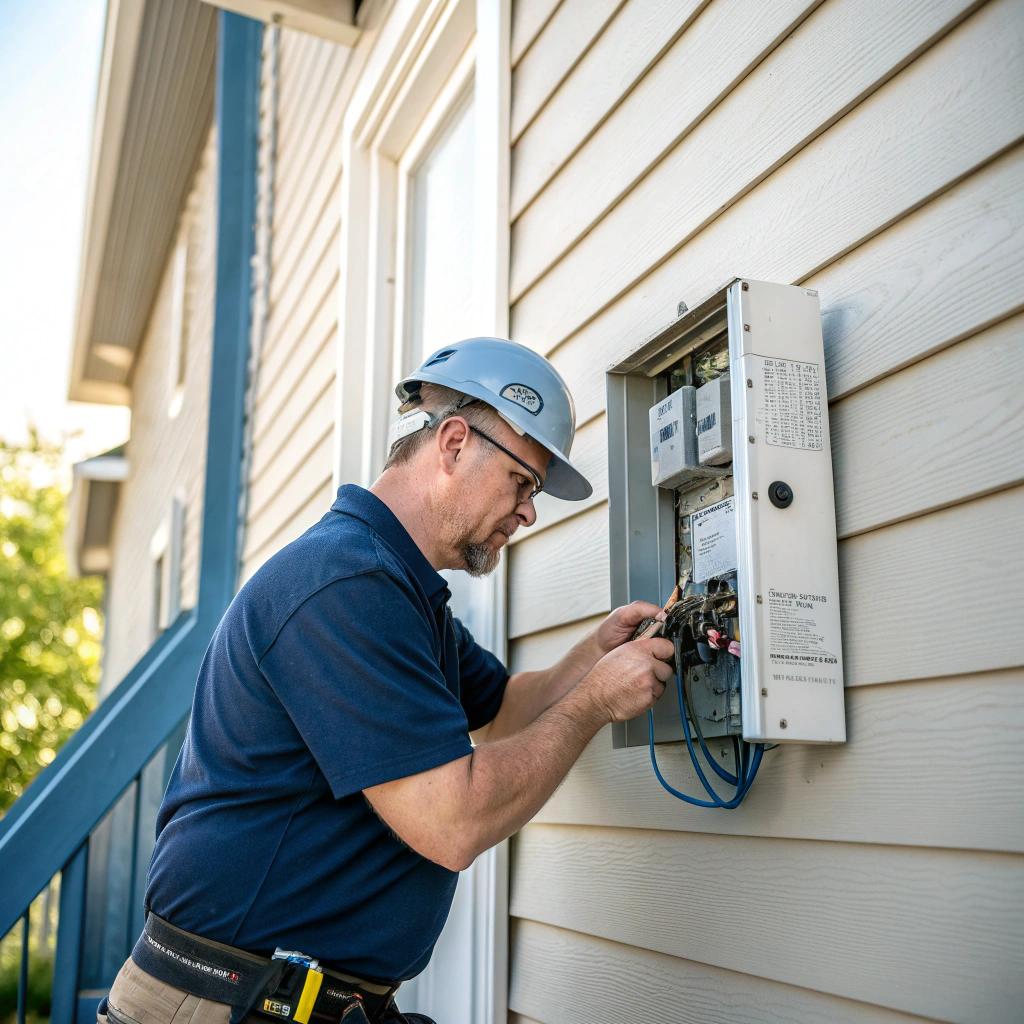
| Factor | What Top Rated Residential Electricians Offer | What Average Electricians Often Miss |
|---|---|---|
| Safety & Code Knowledge | Deep familiarity with NEC and local codes, permits handled correctly | Surface level knowledge, guesswork on permits and inspections |
| Communication | Clear pricing, explains options in plain language, respects your time | Vague estimates, technical jargon, no real project timeline |
| Problem Solving | Finds root causes, not just quick fixes; offers long term solutions | Break/fix mindset that leads to repeat visits for the same issue |
| Professionalism | Clean work, shows up when promised, protects your home | Messy wires, inconsistent scheduling, minimal cleanup |
| Future Readiness | Guides you on EV chargers, smart homes, energy planning | Focuses only on immediate repairs, little future planning |
If you just want the short answer, the top rated residential electrician Indianapolis homeowners tend to trust is the one who treats your home like a long term project instead of a one time job, has a clear track record with local clients, communicates well, and is willing to explain things in plain language. If you can find a [residential electrician Indianapolis](https://rinderelectric.com/) locals already recommend to friends and family, who also understands modern needs like EV charging, smart home upgrades, and aging electrical panels, you are already ahead of most people in the city who are still gambling with guesswork and quick online searches.
Why the electrician you choose matters more than the wiring itself
Electric work feels invisible until something goes wrong.
You do not see the breaker rating when you plug in the space heater. You do not think about the gauge of the wire when you run your air fryer, microwave, and coffee maker at the same time. You just expect everything to work.
That expectation is where the real risk hides.
A good electrician is not only someone who can pull wire and install outlets. The person you let into your home is shaping how safe and flexible your house will be for the next 10 to 30 years. That sounds dramatic, but if you talk to anyone who has had a small electrical issue turn into a major repair, they will tell you it felt like a slow chain reaction.
Maybe you already know this. Maybe you had a breaker that kept tripping for months, and you put it off, and then one day half your kitchen went dark while you had guests over. That is usually when people start searching for Indianapolis electricians in a hurry and wish they had done their homework earlier.
The real goal is not just to find someone who can fix a problem today, but to find someone you are comfortable calling for every future change in your home.
If you think about your electrician like you think about a primary care doctor, the decision starts to feel more serious. It should.
What “top rated” actually means for Indianapolis homeowners
Ratings can be tricky.
You search for “electrician Indianapolis” and you see long lists of 5 star companies. At first glance, they look the same. Similar logos. Similar slogans. All “trusted” or “reliable” or “family owned.”
So what separates a truly top rated residential electrician from a company that just has a decent website and a few good reviews?
1. Reputation that extends beyond review sites
Online reviews matter, but they are not the whole story. In Indianapolis, the best electricians tend to have a presence in at least three places:
- Online reviews with detailed comments, not just “great job”
- Word of mouth in neighborhoods and local groups
- Consistent work with repeat clients, sometimes across generations
If a company wired a parents older home, and then years later their kids call the same company for a new build or a remodel, that says more than a lot of 5 star reviews ever will.
You can ask neighbors, check neighborhood forums, or even ask a contractor you already trust. Many remodelers and HVAC companies in Indianapolis have a short list of electricians they prefer to work with because those are the people who show up on time and fix problems without drama.
2. Breadth of residential experience
Residential work in Indianapolis covers more ground than people think.
There are older homes near downtown with knob and tube wiring still hiding behind plaster. There are ranch homes from the 70s and 80s with panels that are full, or sometimes panels that are now considered unsafe. Then there are new builds in areas like Westfield, Noblesville, or Fishers that are already thinking about EV chargers, whole home surge protection, and smart switches.
A top rated electrician is comfortable across that whole range. That means they should be able to:
- Work on older homes without causing damage to finished walls
- Handle service upgrades to 200 amps or higher
- Plan for EV charging, home offices, and possible future additions
- Work with local inspectors and utilities without delays
If, during the first visit, the electrician sounds confused about your panel or seems unsure about local requirements, that is a red flag.
When you talk to a strong residential electrician, you usually feel calmer at the end of the first visit, even before any work is done.
That calm feeling often comes from them explaining your situation clearly and giving you options that make sense.
3. Clarity with pricing and scope
This is where many people get frustrated.
An electrician shows up, looks around for a few minutes, and throws out a price with no written breakdown. Or worse, they start the work and then you learn about “unexpected” add ons when you get the final invoice.
Good Indianapolis electricians handle this differently.
You should expect:
- A clear explanation of what is included in the quote
- Where costs could change, such as hidden damage behind walls
- What is a “must do” for safety and what is “nice to have”
You do not need a detailed engineering report, but you do need enough clarity to make a decision without guessing.
If an electrician is annoyed when you ask for detail, or they give you vague answers, that is usually a sign to keep looking.
Key services a top residential electrician in Indianapolis should handle
Electricians can specialize, but for a residential expert in this city, there are some services that come up again and again.
Service panels and capacity upgrades
This is the hidden backbone of your home.
Many older Indianapolis homes still run on 60 or 100 amp services. That was fine years ago. Things are different now. Air conditioning, multiple TVs, computers, charging stations, kitchen appliances, and EV chargers all stack up.
Signs your panel is behind your lifestyle:
- Breakers trip often, especially when using multiple appliances
- You have double tapped breakers or labeled “spares” that are actually in use
- The panel looks crowded or has obvious rust or corrosion
A strong residential electrician will not just replace your panel and walk away. They will ask about your long term plans. Maybe you are thinking about finishing a basement, adding a workshop, or buying an electric car in a couple of years.
It is usually better to plan for those now than to do another upgrade in a few years.
Lighting design and upgrades
Lighting is where function and comfort meet.
Many homes in Indianapolis were built with minimal lighting. One ceiling fixture in the center of a room and maybe a lamp or two. That is fine for a while, but if you are working from home or spending more time indoors, better lighting changes how you feel in your own space.
A good electrician helps with:
- Recessed lighting layouts that avoid shadows and glare
- Under cabinet lighting for kitchens
- Dimmers and separate zones to control mood and energy use
- Outdoor lighting for security and evening use of patios or decks
Some homeowners think lighting is purely cosmetic. It is not. Poor lighting can make a room feel smaller and strain your eyes over time.
Rewiring and safety corrections
If your home is older, this may be the least fun topic but maybe the most important.
You might have:
- Old cloth covered wiring
- Aluminum branch circuits from certain decades
- Unreliable connections hidden in junction boxes
A careful electrician does not just say “you need to rewire everything” and walk away. They should walk through your home, identify the highest risk areas, and help you prioritize.
Maybe you start with the kitchen and bathroom circuits. Then plan for bedrooms next year. Spreading the work into stages is often more realistic and less painful for your budget.
A good electrician understands that most families cannot replace every wire in the house at once, so they help you build a practical roadmap.
Ground fault and arc fault protection
GFCI and AFCI protection are two of those things that sound technical but matter a lot.
GFCI helps prevent shocks in wet areas like bathrooms, kitchens, garages, and outside. AFCI reduces the risk of electrical fires from arcing faults in wiring or devices.
Top residential electricians will:
- Check that GFCI outlets are installed where code requires
- Test them to be sure they trip properly
- Explain where AFCI breakers make sense in your panel
If you are in a newer Indianapolis home, you probably already have some of this. In older homes, it is common to find missing protection, or devices installed long ago that no longer work correctly.
Surge protection and sensitive electronics
Modern homes are full of electronics.
TVs, gaming systems, routers, smart speakers, cameras, computers. Lightning storms and power grid fluctuations can send surges through your home wiring.
Top electricians often recommend a two layer approach:
- Whole home surge protection at the panel
- Quality plug-in surge strips for key devices
Whole home protection is not a magic shield, but it can reduce the stress on everything in your house. For many Indianapolis homeowners, one good panel mounted device costs less than replacing a TV and a few small electronics after a bad storm.
How electrical planning ties into your growth and lifestyle
Since you mentioned that many readers think about business and personal growth, it helps to see your home wiring as part of that bigger picture.
You make long term decisions in your career and in your business. You plan investments, education, maybe coaching or training. Your home should support that growth, not fight against it.
Here are some quiet ways an electrician can support that.
Home office reliability
If you work from home at all, power stability is no longer just a comfort issue. It affects income, meetings, and deadlines.
Questions to consider:
- Does your office share a circuit with heavy loads like a space heater or window AC?
- Is your internet equipment protected by a UPS and surge protection?
- Do you have enough dedicated outlets for your equipment, without daisy chained strips on strips?
A thoughtful electrician can set up a dedicated circuit for your office, clean up messy wiring, and advise you on surge and backup solutions.
It might feel like overkill until the day a storm hits and everything keeps running smoothly.
Smart home, but not just for convenience
Home automation sometimes sounds like a toy, but it can be more than controlling lights with your phone.
When done well, it can:
- Help you manage energy by automating temperature and lighting
- Give you clear information about what is running and when
- Improve security and peace of mind, especially when you travel
The challenge is that smart devices are easy to buy and hard to integrate cleanly. A top residential electrician who understands smart switches, smart panels, and structured wiring can keep your system from becoming a fragile mess of random gadgets.
If you know you want some level of automation, mention this early when you talk to an electrician. It can shape how they design your circuits and device locations.
EV charging and future vehicles
Electric vehicles are not rare now. Even if you do not own one yet, there is a good chance you will consider one in the next few years.
Preparing your home for it is not only about installing a charger. It is about panel capacity, wiring routes, and sometimes trenching for detached garages.
A forward thinking Indianapolis electrician will at least ask:
- Where do you usually park?
- Is that location practical for an EV charger?
- How far is it from your main panel?
If you are already renovating a garage or driveway area, that is often the best time to pre-run conduit or wiring paths, even if you do not install the charger yet.
Red flags when choosing an Indianapolis residential electrician
It is easy to talk about what “good” looks like. It is just as useful to know what to avoid.
Here are some warning signs that should make you pause.
Vague or missing proof of licensing and insurance
Any legitimate electrician should be willing to share:
- License numbers
- Proof of insurance
- Basic warranty terms on their work
If you ask and they dodge the question, or they say “we do not really need that,” that is a risk you do not need to take.
Pressure tactics or rushed decisions
Electrical issues can feel urgent, but you should still be given space to think.
Be cautious if:
- You are pushed to sign on the spot for a major project
- You are told “this offer is only good if you decide right now”
- Upgrades are presented using fear without clear explanations
Sometimes there truly is a serious safety issue. In that case, a calm electrician can show you exactly why, maybe even with photos or meter readings, and walk you through your options.
Messy work habits and poor cleanup
This might sound small, but it rarely is.
If someone cannot keep track of their tools, leaves scrap wire on the floor, or does not protect flooring and furniture, what does that say about what is happening inside your walls?
Top rated electricians usually:
- Cover floors and surfaces when drilling or cutting
- Clean up debris, dust, and packing materials
- Label panels and circuits neatly
You pay not just for power that works, but for a home that feels respected.
Questions to ask before you hire
Sometimes people feel awkward interviewing tradespeople. That is understandable, but you are inviting someone to change the core systems of your home. A few practical questions can protect you and set the tone for the whole relationship.
Here are questions that tend to reveal a lot:
| Question | What you want to hear | Why it matters |
|---|---|---|
| “Have you worked on homes like mine in this part of Indianapolis?” | Examples of nearby projects, maybe similar age or size homes | Shows local experience and familiarity with neighborhood quirks |
| “How do you handle surprises inside walls or panels?” | A clear process for change orders and updated pricing | Protects you from unpleasant last minute cost jumps |
| “Who will actually do the work in my home?” | Names, roles, and whether apprentices will be supervised | Lets you know who is walking through your door |
| “What is your typical warranty on workmanship?” | Specific time frame and what it covers | Signals confidence in their own work |
| “How do you protect my home during the job?” | Details about coverings, cleanup, and dust control | Shows respect for your living space |
You do not need perfect answers, but you do need honest ones. If something feels off during this conversation, it probably will not get better after you sign.
What separates a “good” electrician from a long term partner
Let me be blunt here.
Many electricians in Indianapolis can fix a broken outlet or change a light fixture. That is not rare skill. The difference between “someone who can fix that” and “someone I trust for the long haul” is usually found in a few quiet behaviors.
They educate without talking down to you
When you ask why a panel needs replacement, do they give you a wall of jargon, or do they pull the cover off, point to the problem, and explain it in normal language?
When someone takes time to teach you how your home works, they are doing more than selling a job. They are lowering your long term risk.
They think in phases, not just single tickets
Life and budgets rarely line up with perfect timing. A strong residential electrician understands that.
If they say something like, “If we do the panel now, we can plan for a future EV circuit and basement finish, so we do not have to open this again later,” that is someone thinking beyond today.
They are consistent on the small stuff
Do they:
- Arrive within the window they promised, or call if they are running late
- Send estimates when they say they will
- Respond to follow up questions without making you feel like a bother
These small habits add up. A company that cares about those details usually cares about what is going on behind your drywall too.
How to balance cost, quality, and your own risk tolerance
You probably care about price, and you should. Electric work is not cheap, and the numbers can climb fast.
At the same time, chasing the lowest price can cost more in the long run, not only in repairs, but in stress and time.
Here is a simple mental model that might help. Imagine three dials:
- Cost today
- Quality and safety
- Future flexibility
You can slide each dial up or down, but not all of them can be on “low cost, high everything else.” For example:
- If you choose the lowest bid with minimal explanation, you are sliding “cost” down and probably sliding “quality” and “future” down too.
- If you choose a mid range bid from someone who explains options and plans for the future, you are probably balancing all three.
The honest part is admitting where your risk tolerance sits. Some people want absolute safety and redundancy because they have kids, home offices, or health devices. Others are comfortable staging work over several years.
There is no perfectly right answer, but pretending cost is the only factor is usually a mistake.
A quick example of a realistic upgrade path
To make this less abstract, imagine a typical Indianapolis homeowner in a 1980s house on the north side.
Problems:
- Panel is 100 amps and often near full capacity
- Kitchen outlets trip when using multiple appliances
- Garage has only one outlet, stacked with power strips
- Thinking about an EV within 3 years
A top rated residential electrician might propose stages like this:
-
Stage 1: Safety and capacity
Upgrade panel to 200 amps, clean up double tapped breakers, and add whole home surge protection. -
Stage 2: Critical circuits
Add dedicated circuits for kitchen appliances and a separate circuit for the home office. -
Stage 3: Garage and EV readiness
Add a 240V circuit to the garage, sized for a future EV charger, plus a few standard outlets. -
Stage 4: Comfort and quality of life
Improve lighting in the family room, add outdoor security lighting, and bring GFCI/AFCI up to modern standards.
You might spread this over 1 to 3 years. That is realistic for many families. The key is that the electrician is thinking like a planner, not just a repair person.
How your mindset as a growth focused homeowner fits into this
If you read about business and personal growth, you already understand concepts like:
- Investing early for future payoff
- Reducing hidden risks
- Building systems instead of reacting to emergencies
Your electrical system is, in a way, one of your home systems. It is easy to ignore because you cannot see it. But it affects almost everything you care about daily: comfort, productivity, safety, and even the feel of your space.
There is also a quieter emotional side. A house where you trust the wiring and layout feels different than a house where you are always a little nervous when you plug something in.
If you have ever hesitated before running the microwave and toaster together, you know what I mean.
A short Q&A to pull this together
How do I know if I really need a “top rated” electrician and not just the cheapest one?
If the work is minor, like swapping one light fixture for another, then you might not notice much difference. Once you are dealing with panels, rewiring, kitchens, bathrooms, or EV chargers, the gap in skill and judgment shows up fast. The more permanent and hidden the work is, the more it pays to choose carefully.
What is one practical step I can take this week?
Walk through your home with a notepad and list every electrical issue or annoyance, even small ones. Tripping breakers, flickering lights, outlets that feel loose, dark areas that bother you. Then, when you talk to an electrician, you share the full list instead of calling only about one problem at a time. This gives them a better picture and often leads to smarter planning.
Is it better to ask for a quote by phone or in person?
Rough ballpark numbers over the phone are fine for very simple jobs, but for meaningful work in an Indianapolis home, an in person visit is usually worth it. A serious electrician will want to see your panel, wiring, access points, and the layout of your rooms. If someone offers a firm price on a complex job without a visit, that is a concern.
What should I do if two electricians give very different opinions?
This happens more often than people think. Instead of guessing who is right, ask each one to explain why the other approach might be risky or incomplete. You are not trying to start a fight; you are looking for who can explain the differences clearly and calmly. The electrician who can teach you the tradeoffs usually understands the work more deeply.
How will I know when I have found the right residential electrician in Indianapolis?
You will feel it in the way they explain your options, respect your budget, and still insist on safety where there is no room to cut corners. The conversations will leave you feeling more informed, not more confused. And when they finish a job, you will not only see new outlets or lights, you will feel more at ease in your own home.