| Aspect | What Paramount Knox Brings | Why It Matters For You |
|---|---|---|
| Outdoor Design | Custom patios, walkways, fire features, retaining walls | Creates a space that fits how you actually live and work |
| Material Quality | Concrete, pavers, stone, and masonry built to last | Less maintenance, fewer repairs, better long term value |
| Business Value | Higher property appeal, better client and team experience | Supports brand image and can raise perceived worth |
| Life Value | Better spaces for rest, family, thinking, and hosting | Makes it easier to protect your time and mental energy |
| Investment Level | Medium to high, project based | Not cheap, but can rival returns from many “business upgrades” |
If you want a straight answer: a well designed outdoor space from Paramount Knox can do more for your daily focus, stress levels, and long term property value than yet another software subscription or productivity system. It gives you a physical environment that supports how you think, rest, and host others, instead of fighting against it. That might sound a bit strong, but if you have ever tried to do deep work or relax in a cluttered, ugly, or half finished space, you already know why this matters.
Why outdoor space matters more than people admit
We talk a lot about habits, routines, and discipline in business and growth circles. That has its place. But there is a gap in that conversation. You can have great habits and still feel drained if every space you use sends the wrong signal to your brain.
A dead, cracked patio or patchy backyard quietly says:
– “This is temporary.”
– “You do not really live here yet.”
– “You are still in waiting mode.”
After a while, that seeps into how you think about your work and your future.
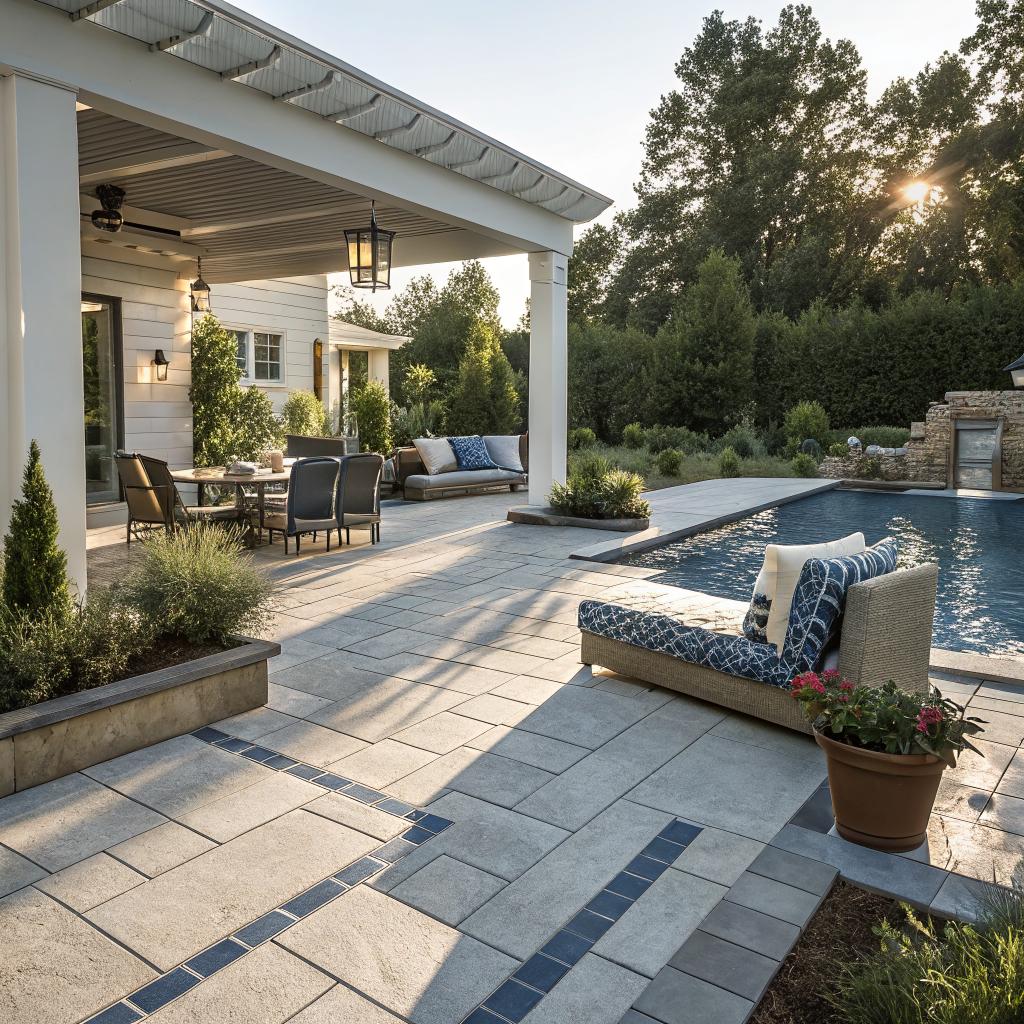
On the other side, a simple but well thought out patio, a clear path, solid retaining walls that frame the yard, and a corner for a fire pit or small table tell a different story. They say:
– “This is your base.”
– “You are building for the long term.”
– “People belong here.”
Outdoor space is not just about plants and stone. It is about the story your environment keeps telling you, even when you are not paying attention.
That quiet story has real impact on your decisions. Where you host partners. Where you decompress after a long day. Where you think about the next move without staring at another screen.
If that sounds a bit dramatic, try this: think about the last time you had a hard call, and you took it while walking outside. Chances are, you felt clearer than if you had stayed at your desk. The setting supported the decision.
Good hardscape work just makes that outdoor “thinking space” more comfortable, more available, and more inviting.
What Paramount Knox actually does outdoors
A lot of companies in the construction space try to sound impressive with buzzwords. Paramount Knox is focused on something simpler: build outdoor spaces that look good, feel solid under your feet, and support daily life.
From raw yard to intentional layout
Most properties start from one of three places:
– A blank, dirt heavy space with no structure
– A yard with builder grade concrete and a tiny slab
– A mix of random add ons from previous owners
None of those are bad, they are just not planned around how you live now.
Paramount Knox looks at basic questions:
– Where do you walk all the time?
– Where does the sun actually land in the morning and evening?
– Where would people naturally gather if they were outside?
– Where is water already flowing when it rains?
That last one is not glamorous, but it matters. You can pour a beautiful patio in the wrong spot and spend years fighting water and settling. It looks fine on Instagram and feels bad in person.
Good outdoor design is not about copying a photo. It is about listening to how your property already wants to be used, then building around that.
From that, you get a layout: paths, patio, walls, steps, maybe a fire feature or seating built into the stone. The details come later.
Hardscapes that feel like part of the property, not an add on
A common mistake is the “floating patio” look. A random rectangle of concrete that could sit behind any house or building in any city. It does its job, but it does not feel like it belongs.
Paramount Knox takes a different path. They pay attention to:
– The lines of your building: roof angles, window shapes, door locations
– The slope of your land: where it rises, where it falls, where it flattens
– How close neighbors are: do you need privacy, or open views
When hardscapes fit these things, you stop noticing them as separate. They feel like they belong with the building.
Here is a simple example. If your home or office has a lot of straight, clean lines, a patio with very soft curves can feel off. Your eye keeps trying to straighten it. A more square or rectangular layout, with sharp, honest geometry, matches better.
This is a small design detail that many owners do not think about. But you feel it in your body even if you cannot explain it. You either feel “settled” in the space or slightly on edge.
How outdoor design connects to business and life growth
If you care about growth, you already know that environment shapes behavior. It is why you pick certain coffee shops, why high level events pay attention to lighting and layout, why you move away from noisy desks.
Your outdoor space is another lever. We tend to underuse it.
Better thinking and real rest
You can read books about focus and stress, or you can notice one simple thing: your nervous system needs places that are not charged with screens, tasks, and alerts.
A finished patio, even a modest one, gives you:
– A neutral space that is not “office” and not “couch”
– A clear signal to your brain that you are off the clock, or in thinking mode
– A small ritual anchor: coffee on the patio, end of day check in, morning planning
If your only spaces are “work hard” and “collapse on the couch,” you end up swinging between extremes. A good outdoor area gives you a middle space where ideas can breathe.
You might plan your week outside for 20 minutes and then go inside and work better for hours. That small change is not flashy, but it accumulates over years.
Hosting and relationships
Business and life growth often come down to simple things: who you talk with, how often, and in what setting.
A well set outdoor area makes it easier to:
– Invite a client or partner over without feeling embarrassed
– Host small dinners where conversations go deeper than restaurant talk
– Have casual meetups with your team that do not feel like another office meeting
You do not need a showpiece backyard to do this. A clean, level patio with solid seating and some basic lighting already raises the bar.
Think about how many important decisions actually happen in “informal” settings. On a patio. Near a fire. With some space to think in between sentences.
Property value and long term thinking
There is a more direct angle too. Quality hardscape work increases perceived and real property value. Buyers and tenants react strongly to outdoor areas that feel finished, useful, and low maintenance.
You probably would not mind paying a bit more for a place that already has:
– A solid patio ready to use
– Retaining walls that handle slope cleanly
– Defined spaces for eating, sitting, or a grill
That is not theory. Talk to real estate agents and they will tell you that buyers often decide how they feel about a place based on a few key visual anchors. Kitchens, bathrooms, and yes, outdoor living areas.
If you run a business from your property or own multiple, this matters even more. It is one more way to make the asset work for you, instead of waiting for the market alone.
Retaining walls, slopes, and the stability side of growth
Retaining walls are one of those things you rarely think about until they fail. Then they are all you can see.
For many lots around Knoxville and similar areas, slopes are part of the deal. That slope can be a problem or a resource. It depends how you treat it.
Why retaining walls matter beyond “holding dirt”
Retaining walls do three quiet but important jobs:
1. Protect structure
They keep soil from slowly pushing toward your building, driveway, or patio. That protects foundations, sidewalks, and any nearby structures from slow damage.
2. Shape usable space
They turn a steep slope into a few flat terraces. That gives you zones you can actually use: a seating area, a garden, or a flat spot for kids to play.
3. Handle water
With proper drainage, they guide water where it should go, instead of letting it collect near your house or flood lower parts of your yard.
If you care about growth, there is a clear parallel. Before you worry about fancy features, you make sure the basics do not collapse under pressure.
A cheap or poorly placed wall can look fine for a couple of years. Then you see cracks, bulges, or leaning, and the repair cost often doubles what a solid build would have cost.
How Paramount Knox tends to treat retaining walls
Again, nothing mystical here. Just a few key habits:
– Take slope and soil type seriously, not as an afterthought
– Respect drainage, so water has a path out
– Choose materials based on height and load, not only looks
– Tie the wall design into patios, paths, and stairs
So instead of a lonely wall in the middle of a bank, you might see:
– A lower retaining wall that frames a patio edge
– Steps built into the wall to reach an upper yard area
– Lighting integrated into the wall face for evening use
This kind of integrated design makes the wall feel like part of the outdoor room, not just a fix for a problem.
Concrete, pavers, stone: choosing what fits your goals
Many owners feel stuck here. Concrete? Pavers? Natural stone? What is best? You can get lost in opinions fast, and people often talk like there is one perfect answer.
There is not. There is only what fits your budget, your taste, and how rough your use will be.
Here is a simple comparison to keep your head clear:
| Material | Strengths | Tradeoffs | Good fit for |
|---|---|---|---|
| Concrete slab | Cost effective, clean look, fast install | Can crack, less flexible for future changes | Driveways, simple patios, walkways |
| Pavers | Visual interest, easy spot repairs, flexible layouts | Higher upfront cost, more detail work | Patios, paths, pool decks, accent borders |
| Natural stone | Unique look, high-end feel, timeless | Higher material and labor costs, heavier | Feature areas, premium patios, focal walkways |
I think the smarter approach is to mix materials by zone instead of trying to pick one winner for the entire property. For example:
– Concrete for the driveway and high wear areas
– Pavers or stone for the main patio where design matters more
– Gravel paths where budget is tight or access is low
Paramount Knox often works with this sort of layered approach. It respects budget while still giving you at least one area that feels special.
Design habits that separate a “nice yard” from a real outdoor space
You have probably seen projects that are technically well built but somehow feel flat. Everything is “fine,” but you do not feel pulled outside.
That is usually a design problem, not a construction problem.
Flow and sightlines
Good outdoor spaces:
– Give you clear ways to walk from door to patio to yard
– Keep you from staring at the neighbor’s HVAC unit or trash cans
– Frame at least one nice view, even if your lot is small
This often comes down to a few simple moves:
– Angle a patio just slightly so you face trees instead of a fence
– Add a low wall or taller plant at the edge to block an ugly view
– Place a fire pit or table where people naturally pause
It sounds obvious when you read it, but it is amazing how many spaces ignore these basics. The result is a yard you use less often than you planned.
Zones instead of one big open area
One large open patio seems practical, but in practice, people often cluster into smaller groups.
Breaking the space into soft zones helps:
– A main eating area near the house
– A smaller seating area a bit further out
– A tucked away corner where one or two people can talk
These do not need solid walls. Changes in floor material, a small step, or a low wall can signal “new zone” to your brain.
This design habit mirrors good office layout: quiet zones, meeting zones, open areas. Your outdoor space can follow the same pattern.
Balance between finished and flexible
Some owners want every inch “done” at once. Others leave everything open and then never return to finish it.
Reality sits somewhere in the middle.
A balanced approach might be:
– Finish the core hardscape: patio, paths, main walls
– Leave clear spots where you can add a pergola, hot tub, or outdoor kitchen later
– Run conduit or basic wiring now so adds are easier down the road
This keeps your current project focused and affordable, while your future self has options.
A good outdoor plan respects that your life and business will change. It gives you a solid base now without locking you into a layout you might outgrow.
The cost question: where does the money actually go?
You are probably wondering about budget by this point. That is fair. Outdoor projects can match a car purchase in cost pretty quickly.
The money usually goes into:
– Site prep: grading, removing old concrete, hauling material
– Structure: base layers, drainage, footings, wall backfill
– Materials: concrete, pavers, stone, block, caps
– Labor: skilled work to set grades, lay patterns, build walls, finish surfaces
– Details: steps, lighting, edges, small masonry features
People often try to save the most on the structure and base work, because it is not as visible. That is where many projects fail after a few seasons.
If you think in business terms, the base is your systems and foundations. The visible finish is your logo and website. Skimping on the base looks cheaper early, but it is expensive later.
A more grounded way to think about it:
– Pay for structure and drainage first
– Be honest about how much maintenance you want to do
– Put design dollars into the one or two areas you see every day
Most owners do not regret paying for something they walk on every morning. They do regret paying a premium for a detail they never notice.
How Paramount Knox fits into a bigger growth plan
This might sound odd, but your outdoor project can be part of a broader personal or business reset.
Here is how some owners quietly use it:
– As a marker of a new season
Moving past a hard stretch, a career shift, or a big milestone. A finished space outside feels like proof that life is moving forward, not just on screens but in the physical world.
– As a tool for team culture
If you run a small business, an outdoor area for cookouts, planning days, or casual hangs can do more for morale than another software perk.
– As a filter for your time
Once you have a place you enjoy being, it becomes easier to say “come to my place” instead of always going out. This can actually cut down on default, low quality social events.
Of course, not every patio project has to carry that weight. Sometimes it is just a better place to sit outside. But it can be more, if you want it to be.
Common mistakes to avoid when planning your outdoor space
To keep this grounded, here are some patterns I see that often hurt long term satisfaction.
Chasing photos instead of function
Online inspiration is fine, but your lot, climate, and habits might be very different from the photos you like.
Questions that matter more than the picture:
– How many people are actually outside most days?
– Are you morning coffee, late night fire, or both?
– Do you grill often, or only a few times per year?
– Do you host work events, or is this mostly family use?
A design that fits your reality will beat a “magazine look” that does not fit your daily life.
Ignoring maintenance
Some surfaces need sealing. Some handle falling leaves better. Some soak up stains more. None of this is terrible, but you should know what you are signing up for.
Be honest about your habits:
– If you rarely maintain anything, lean toward simpler finishes
– If you like projects, pavers and stone give you more room to tweak and adjust
There is no right answer here. Just clarity.
Underestimating lighting
People often spend all their energy on day use and forget evening. Then they hang one bright floodlight that kills the mood.
Better outdoor lighting usually means:
– Low, warm lights along paths and steps
– Some softer lighting near seating areas
– Control from inside so you actually turn them on
This is not a luxury detail. It doubles your usable hours outside.
A quick Q&A to bring this down to earth
Q: Is an outdoor project with Paramount Knox actually worth it if I am focused on business growth?
A: If money is extremely tight, you probably focus on direct income first. That is reasonable. But once you are past pure survival, your environment starts to matter more than another small tool or subscription.
A well built outdoor area gives you:
– A better thinking space than most offices
– A hosting spot that supports relationships
– A property that holds value more firmly
It is not magic, but it quietly supports many of the habits that growth minded people say they care about.
Q: My yard is small and sloped. Is it even worth trying?
A: Small and sloped yards can actually lead to better design, because you are forced to be intentional. Retaining walls, small level pads, and tight seating areas can feel more private and focused than a huge open yard.
The key is to accept the constraints. You probably will not get a soccer field and a full outdoor kitchen. You might get a compact terrace with a killer view and calm vibe.
Q: How long should I expect a project like this to last?
A: With proper base work, drainage, and normal care, concrete, pavers, and quality walls can serve you for decades. Which raises a fair question: if you are going to live or work in a place for years, how many of those years do you want to spend walking through a half finished, muddy, or cracked outdoor area?
That is really what this comes down to. You are going to use your outdoor space somehow. The only question is whether it works with you or works against you.