| Category | Why It Matters | Business & Life Growth Angle |
|---|---|---|
| History & Culture | Historic homes, cobblestone streets, museums | Perspective on time, legacy, and patience in work |
| Food & Drink | Lowcountry cuisine, coffee shops, rooftop bars | Slow down, think, and talk through ideas with others |
| Nature & Water | Beaches, marshes, harbor, oak-lined paths | Space to clear your head and reset your priorities |
| Walking & Reflection | Compact, walkable city center | Built-in time for reflection, observation, and planning |
| Social & Networking | Tours, group classes, shared tables | Serendipitous conversations and new ideas |
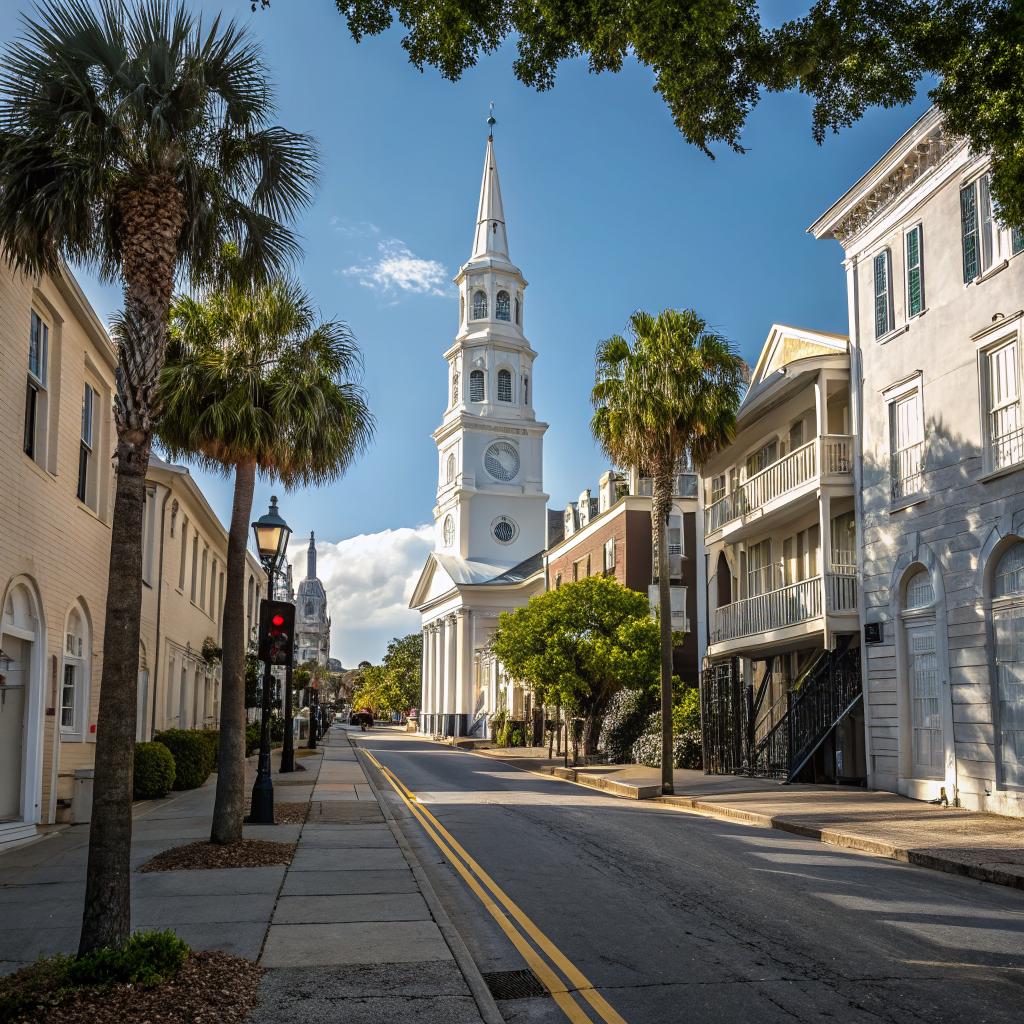
If you want a direct answer first: the best things to do in Charleston are to walk the historic streets on your own, eat your way through Lowcountry food, spend time on the water, and leave free blocks of time where you just wander and talk. Everything else builds on that. Where you stay, by the way, shapes all of this, which is why many people look for central things to do in Charleston SC and then pick a hotel or rental nearby so they can walk instead of drive. The city rewards unhurried days. If you are interested in business and life growth, Charleston is not just a nice background; it pushes you to look at pace, legacy, and how you are using your time.
1. Start With a Slow Walk Along the Battery
If you only had a few hours, I would say: walk the Battery.
This is the waterfront promenade at the tip of the peninsula. On one side you have pastel mansions and quiet side streets. On the other, the harbor and distant forts.
Walk it slowly. No headphones.
You see big houses that took decades to build, some that survived war, storms, and bad decisions. Then there is the water that keeps moving, ignoring all that.
One simple question to carry as you walk the Battery: “What am I racing for that might not matter in 10 or 20 years?”
For business-minded people, this walk is like a physical reminder that real work often takes longer than you want, but resilience pays off in the long run. You can even use the seawall benches as a literal place to write out a small 5-year or 10-year sketch. Not a plan, just a sketch.
2. Explore Rainbow Row and Nearby Side Streets
From the Battery, keep going along East Bay Street and you reach Rainbow Row, the famous set of colorful houses.
You could snap one photo and move on. Or you could look a bit closer.
You see how narrow some of those houses are. How they use small space well. How each one has a slightly different color and detail.
It sounds like a stretch, but it is a nice prompt for work:
Where are you trying to expand instead of working with what you already have?
Take a couple of side streets. Tradd Street, for example, feels quieter and more real. It shows you that the postcards you see online are not the whole picture.
3. Join a Historic Walking Tour With Questions in Mind
Self-guided walks are good, but a guided tour adds context.
Look for small group walking tours rather than big bus tours. A local guide will usually balance history, stories, and a bit of opinion.
While you listen, you can watch how a good guide:
– Reads the group
– Pauses when needed
– Connects one story to the next
There is a small leadership lesson in that. Storytelling is a practical skill, not a soft add-on.
You might also hear the harder parts of Charleston’s past, including slavery and the trade that built many of those houses. It is uncomfortable. It should be. That history makes you think about what your own work supports or ignores.
4. Visit a Plantation or Historic Site and Sit With the Discomfort
Places like Middleton Place, Magnolia Plantation, or Drayton Hall are often high on travel lists. Many visitors focus only on the gardens or architecture.
If you go, give equal time to the stories of the enslaved people who built and worked those grounds. Read the plaques. Take the more serious tours, not just the “pretty gardens” path.
This is not only about education. It is about being honest with impact.
In business terms, you might ask yourself:
– Who is carrying the weight in my work that I am not fully seeing?
– Where am I telling only the part of the story that flatters me?
It is not light entertainment, but growth seldom comes from comfort.
5. Spend a Morning at the Charleston City Market
The City Market is busy, a little crowded, and a mix of tourist items and real craft.
If you walk it slowly, you see:
– Makers explaining their craft
– Sweetgrass basket weavers at work
– Small family businesses selling food and art
Look at how people present their products. Who engages well with strangers. Who has a simple, clear sign that tells you what they do in a few words.
A helpful exercise is to ask yourself: “Could I explain what I do as clearly as this vendor explains their stall in 10 seconds?”
Buy something small. Ask questions. You are not doing a formal study, but you are noticing how people sell value face to face, without slides or buzzwords.
6. Take a Harbor Tour and Let Your Brain Drift
Getting out on the water changes your sense of space. You see the city from a distance. You see Fort Sumter, bridges, and the line of the peninsula.
On a harbor cruise or ferry, the motion of the boat and the wind do one thing well. They pull you out of your head a little.
Instead of checking your phone, try this:
– Pick one work problem that feels stuck
– State it in one short sentence
– Then do nothing about it for the rest of the ride
Your brain often works better when it is not forced. Some people call this idle time. The harbor gives you a clear block of that without you having to schedule it in a calendar.
7. Eat Lowcountry Food With Intention
Charleston is known for shrimp and grits, she-crab soup, oysters, and more. It is very easy to rush through meals and treat them like box-checking.
Try one or two meals where the food is part of how you reflect.
You might:
– Have shrimp and grits at a place that does it well, then write down what “doing fewer things but doing them right” might look like in your own work
– Sit at the bar instead of a table so you can watch how the staff communicate under pressure
Restaurants are live systems. You see:
– Clear roles
– Fast feedback
– Mistakes fixed in real time
Those lessons carry over to any team, even if you work online.
8. Spend Time in a Coffee Shop With No Agenda
Charleston has plenty of good coffee spots. Instead of turning them into your remote office, maybe try one simple rule for at least one visit.
No laptop. Just a notebook or the notes app on your phone.
Watch and listen for a bit. You might:
– Notice how people greet each other
– Hear little fragments of local life
– See people working on all kinds of quiet projects
Then use that time to ask yourself:
– What am I avoiding in my work?
– What am I doing that no longer makes sense?
It sounds small, but having thinking time in a neutral, calm place often leads to clearer choices than another late-night planning session.
9. Visit Museums That Stretch Your View
The Charleston Museum, Gibbes Museum of Art, and other small museums around the city offer a wide mix of exhibits.
Take the Gibbes, for example. It blends local art with broader themes. When you walk through, watch what you notice first. Is it color, story, or technique?
Then ask:
– In my own work, am I focusing only on the surface?
– What parts of the “story” of my work would someone see if they looked at it like a gallery?
Museums reward patience. You cannot rush them without losing the point. That alone is a nice counterweight to the constant rush of digital life.
10. Wander South of Broad With No Fixed Plan
Many guides tell you exactly which streets to walk. You can follow them, but try leaving one morning or afternoon open to simply wander.
Set a rough boundary: stay south of Broad Street, between Meeting and the water. Then just go.
Turn left because you feel like it. Stop when a garden gate catches your eye. Sit on a random bench for ten minutes.
Sometimes the best part of Charleston is the quiet moment when you realize nothing urgent is happening and that is actually fine.
If you run a business or manage people, ask yourself an honest question later that day:
“How much of my schedule is packed so tight that there is no space for any wandering thought at all?”
You may not like the answer, but it is worth hearing.
11. Bike Across the Arthur Ravenel Jr. Bridge
The big white cable bridge you see in many photos is not just for cars. There is a lane for bikes and pedestrians, with views of the harbor and city skyline.
If you walk or bike up, the climb is real. You feel it in your legs. Then you reach the top and the view opens up.
There is a simple growth lesson there that is almost too obvious: effort, then reward. Still, feeling it physically is different from reading it in a motivational quote.
Use the bridge as a place to:
– Mark a decision you have been circling
– Think about one habit you want to build or drop
– Notice how your thoughts change when your heart rate is a bit higher
12. Spend a Few Quiet Minutes in a Church or Graveyard
Charleston has many old churches and graveyards, some dating back centuries. Many are open to visitors for quiet reflection.
You do not have to share the faith to sit in a pew or walk among the headstones and think about time.
Names, dates, short phrases on old markers. That is how lives are summed up in stone.
You can ask yourself:
– If my work was reduced to one line, what would it say?
– Am I proud of how I spend most of my hours?
These are heavy questions, but Charleston is one of those places where they feel natural, not forced.
13. Take a Cooking Class and Work With Your Hands
Look for cooking classes that focus on Lowcountry dishes. You will chop, mix, and watch something come together from simple ingredients.
If your work is mostly digital or abstract, this is a welcome change. You see cause and effect right away.
Here is what tends to happen in a relaxed cooking class:
– People talk more freely
– You see different problem-solving styles
– Small leadership traits show up quickly
You might walk away not only with a recipe, but also a reminder that practice, repetition, and a bit of play matter in skill building.
14. Visit a Bookstore and Talk to the Staff
Charleston has some thoughtful independent bookstores. Step in, browse slowly, and ask the staff one question:
“What book changed how you looked at work or life?”
That simple question often sparks a real conversation. You may discover a title you would never have picked up on your own.
Use bookstores as a filter. Instead of clicking on random recommended lists online, you are talking to people who see what readers actually finish and talk about.
Then pick one book and commit to reading at least a third of it during your trip. Less scrolling, more reading.
15. Walk King Street With Intent, Not Just Shopping Urges
King Street can feel like any other shopping area at first glance. Chains, local shops, food, and people taking photos.
If you are business-minded, try walking it with a small experiment in your head:
– Pick a type of business you understand (for example, cafes or clothing shops)
– Notice how different stores position themselves
– Look at window displays, pricing, and how staff greet customers
Ask yourself what you would change in one store if you owned it. Not in a harsh way, just as a mental game.
Then flip it. Ask what someone walking by your own work (if it existed as a physical shop) would see. Would they understand what you do?
16. Take a Ghost Tour and Think About Storytelling
Ghost tours may sound gimmicky, and some are, but there is an interesting layer here.
A good guide will:
– Use suspense and pauses
– Balance fact and legend
– Read the crowd and adjust the story
That is what you do when you pitch an idea or present a project. You are not inventing ghosts, but you are choosing what parts of the story to highlight.
Watch how your own attention shifts. What keeps you listening? What loses you? Those are clues you can apply to how you share your own work.
17. Spend Time on Sullivan’s Island or Folly Beach
At some point, get out to the beach. Sullivan’s Island feels calmer, Folly a bit more casual. Either way, the ocean gives you space.
Try this simple habit:
– Leave your phone in a bag for at least 30 minutes
– Walk along the waterline
– Let your mind roam without forcing specific thoughts
You might find that some of the loud problems in your head feel a little smaller after a quiet walk by the water. That is not magic. It is what happens when your brain gets a break from constant input.
You do not need a productivity system for this. Just sand and time.
18. Visit Fort Sumter or Fort Moultrie and Think About Conflict
Fort Sumter is known for the first shots of the Civil War. Fort Moultrie has its own stories across different eras.
These places show how quickly disagreements can escalate when people dig into fixed positions.
In your own work, you can quietly ask:
– Where am I clinging to being right instead of being effective?
– Which conflict in my life have I let drag on because I never addressed it early?
History does not give neat answers. It does give scale. That can make certain email arguments feel less important.
19. Join a Workshop or Short Class During Your Stay
Check local listings for short classes. It might be photography, pottery, yoga, or a writing workshop.
I know this sounds like “self-improvement tourism,” which can feel forced, but if you pick one thing that genuinely interests you, it often leads to useful ideas.
Being a beginner for a few hours has value:
– You remember what it feels like to not know something
– You see which teaching styles help you learn faster
– You might get one new idea for how to teach or onboard people in your own work
Plus, you meet people who are not in your normal circle.
20. Watch the Sunrise or Sunset From Different Spots
Sunrise at the Battery. Sunset from a rooftop or a pier. These are simple, low-cost experiences.
What matters is not that the colors look great on camera. What matters is that you give yourself bookends to your day.
Try one day where you:
– Watch the sunrise and set a single intention for the day on your phone notes
– Watch the sunset and write three honest lines about how the day actually went
Not a journal, just a check-in. Over a few days, patterns show up. You might see that your biggest wins do not match what you thought would matter, or that the things that drain you are not where you spend the most time.
21. Take a Carriage Tour and Notice How People React
Carriage tours can be a little tourist-heavy, but they are good for an overview.
Watch the guide and the riders, not only the buildings:
– Who leans in at certain stories?
– Which jokes land and which do not?
– How does the guide handle interruptions or questions?
This is live feedback. In your own business, you may not get that kind of clear reaction often, especially if you work online.
Ask yourself whether you are paying enough attention to how people respond to your work, or if you are just pushing it out and hoping for the best.
22. Use Waterfront Park as Your Thinking Bench
Waterfront Park with its fountains and swings is one of the most photographed spots in the city. It is more than a photo stop.
Find a swing that faces the water. Sit. Do nothing for 15 minutes.
If that feels hard, pay attention to that resistance. Many people say they want “more time to think,” yet when they get it, they reach for a phone within seconds.
Use this bench time to ask:
“What is one thing I can stop doing in the next 30 days that would free energy for what matters?”
Sometimes growth is less about adding and more about subtracting.
23. Schedule a Half-Day With No Plans at All
This might be the single most helpful thing you can do in Charleston for life and business.
Choose one morning or afternoon. Put it in your calendar as “No plans.” Then keep that promise.
Walk, sit, read, talk, or do nothing. See where your attention goes when it is not pre-scripted. You may end up:
– Stumbling into a small gallery
– Having a real conversation with a stranger
– Napping in a quiet square
The point is not the activity. It is seeing what your mind does when you give it space. Many people discover that their best ideas in Charleston come during this kind of unstructured time, not during formal planning.
24. Have One Intentional Conversation Over A Long Meal
Pick one person to share a slow meal with. It could be a partner, friend, colleague, or even someone you met during your trip.
Instead of small talk, bring one honest topic to the table. Something like:
– “I am stuck between two paths in my work right now”
– “I am trying to figure out what ‘enough’ looks like for me”
– “I keep chasing goals I am not sure I want”
Ask them to give you their real thoughts, not just polite feedback. You might feel exposed, but that is where useful insight lives.
Charleston’s pace helps here. The food comes out at its own rhythm. You are not rushed. That space can lead to clarity you have avoided at home.
25. End Your Trip With a Short Personal Retrospective
On your last evening or before you head to the airport, take 20 or 30 minutes to look back.
You can structure it simply:
| Question | Example Answer |
|---|---|
| What surprised me about Charleston? | “The quiet side streets felt more meaningful than the tourist spots.” |
| What small habit did I enjoy here? | “Morning walks before checking my phone.” |
| What is one thing from this trip I want to bring home? | “Building 20 minutes of unscheduled time into my day.” |
| What can I stop doing after this trip? | “Saying yes to every meeting out of habit.” |
Write your own answers in a note. Keep them simple and honest. This way, the trip is not just photos and meals, but a small reset on how you work and live.
Questions You Might Still Have About Charleston
Is Charleston worth visiting if I am focused on business and self-growth?
Yes, if you treat it as more than a sightseeing checklist.
Charleston works well for reflection because:
– It is walkable, which builds in thinking time
– History is everywhere, which puts your own rush in context
– There are many quiet corners to sit, read, or talk
If you only rush through attractions, you miss that. So it depends on your approach, not just the city.
How many days do I need to feel the city properly?
Three full days is a good minimum. Five days is better.
With three days, you can:
– Walk the historic core
– Take one harbor or plantation trip
– Have at least one full block of time with no plans
With five, you can add beaches, more food spots, and maybe a class or workshop.
Is it possible to mix remote work with a visit here?
Yes, but be careful. If you load your schedule with calls, you end up seeing Charleston only from behind a screen.
A better balance might be:
– Plan one focused work block of 3 to 4 hours each day
– Leave the rest for walking, talking, and thinking
– Use early mornings for deep work, then get outside
If you need to recharge or rethink your direction, it might be wiser to lower your work load during the trip rather than trying to maintain normal hours.
What is one habit from Charleston I can keep when I get home?
A simple one is the daily walk without a destination.
At home, pick a 20 to 30 minute walking route that feels safe and calm. No podcasts, no calls. Use it to:
– Check in with yourself
– Notice which worries keep coming back
– Let your attention rest on physical surroundings for a while
It sounds small, almost too simple, but it mirrors the kind of wandering that makes Charleston feel so good for the mind.
How do I avoid turning this trip into another productivity project?
This is a fair concern. If you are wired for self-improvement, you might try to “optimize” every moment.
One way to keep that in check is to set just three intentions before you arrive:
– One thing you want to notice
– One thing you want to question in your life or work
– One thing you want to let go of for a few days
Write them down, then let the rest unfold. Allow some meals, walks, and hours to be plain fun or even boring.
You can grow in Charleston without squeezing growth out of every minute. The city works better when you give it, and yourself, a bit of room to breathe.