| Question | Short Answer |
|---|---|
| Is hiring a pro cabinet painter in Colorado Springs worth it? | Yes, if you care about finish quality, durability, and your time. |
| Typical price range | $2,000 to $6,000+ for a full kitchen, depending on size and condition |
| DIY vs pro | DIY can save cash but often costs time, quality, and resale value. |
| Project length | 3 to 7 days for most occupied homes |
| Best time to paint | Anytime indoors, but schedule before big life events or listing your home |
You should hire a top cabinet painter in Colorado Springs if you want your kitchen or bathroom to look clean, modern, and well kept without tearing the whole space apart. A good pro will bring a spray-smooth finish, smart prep, low stress, and a result that holds up to kids, cooking, and day to day life. If you choose well, the project feels less like a messy chore and more like one focused week that nudges both your home and your mindset forward. A trusted cabinet painter Colorado Springs can help you do that while you keep living your life and managing your work.
Why cabinets matter more than most people think
Cabinets take up a lot of visual space. You feel them before you notice them.
When you walk into a kitchen, your eyes jump to four things: cabinets, counters, lighting, and floors. Paint is the cheapest of those four to change, but it often changes the room the most.
If you care about growth in your career or business, your physical setting starts to matter. Not in a cheesy “your kitchen shapes your destiny” way, but in a simple, practical way. When your space looks clean and intentional, you tend to:
– Host more.
– Eat at home more.
– Feel a bit more organized.
– Think a little more clearly.
I have talked to people who only wanted cabinets painted so they could sell the house. Six months later they were still living there because they liked it again. That happens more than you might expect.
Fresh cabinet paint is one of the few home projects that can raise both resale value and day to day quality of life without tearing your house apart.
So if you are thinking about this, you are not being picky. You are adjusting the space where you spend a large chunk of your mental energy.
DIY vs hiring: what are you really trading?
A lot of people ask the wrong first question: “Can I paint my own cabinets?” Yes, you probably can. A better question is, “Is painting my own cabinets the best use of my time, attention, and money right now?”
The real DIY cost
On the surface, DIY looks cheaper. A rough breakdown for a typical kitchen:
| Item | DIY Cost (Approx.) | Pro Cost Impact |
|---|---|---|
| Primer & cabinet-grade paint | $250 – $450 | Included in project price, often higher-grade products |
| Sandpaper, deglosser, fillers, caulk | $60 – $120 | Included |
| Brushes, rollers, sprayer rental | $150 – $400 | Pros own pro-level gear |
| Plastic, tape, masking tools | $80 – $150 | Included |
| Your time | 40 – 80 hours | Saved, aside from small decisions |
If your time is worth even $25 per hour to you, the “cheap” route starts to look less cheap.
Then there is the quality risk. Brushed doors that show lines, chips around the handles after three months, sticky doors because the paint never cured correctly. Fixing a failed DIY job often costs more than hiring a pro from the start.
What a pro cabinet painter actually brings
Let me be blunt. Not every pro is great. There are painters who treat cabinets like walls and roll them with the wrong paint. You do not want that.
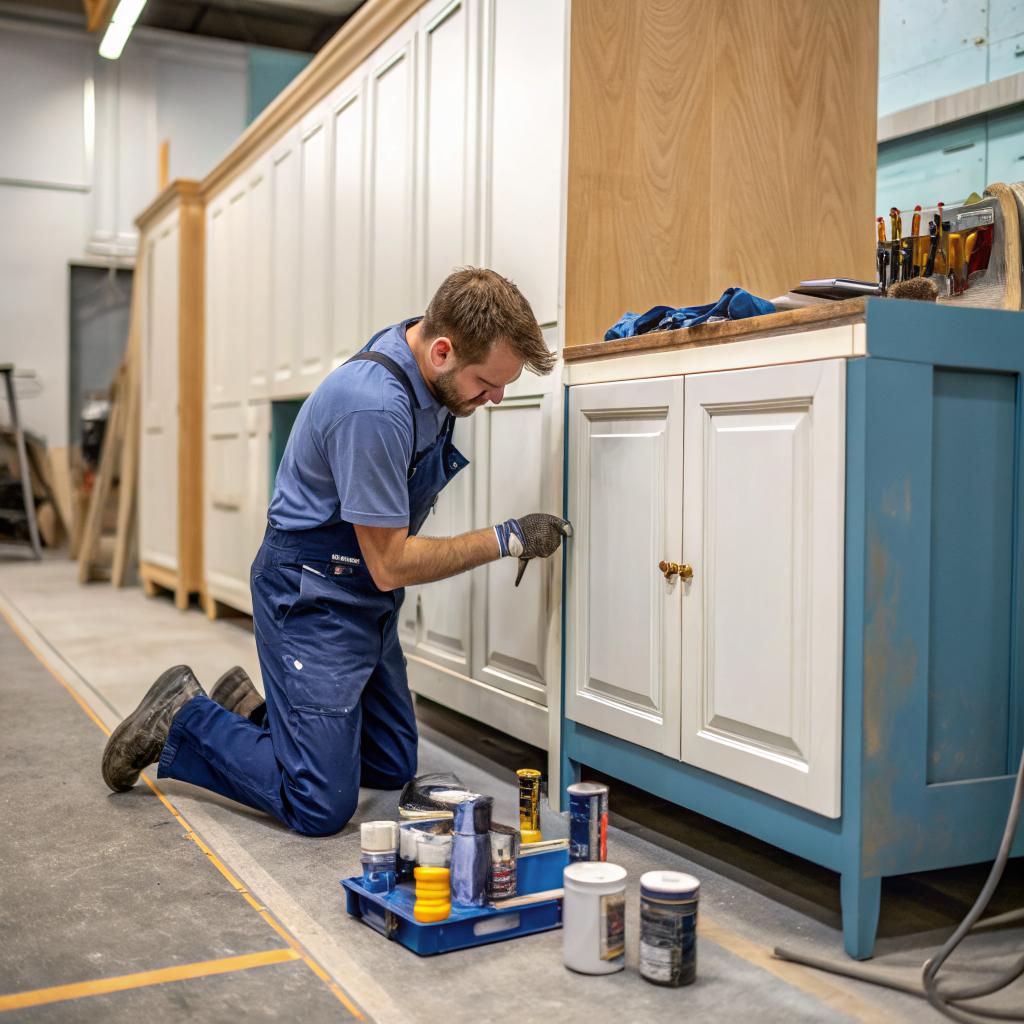
A top cabinet painter in Colorado Springs usually brings three things you probably do not have:
- Systematic prep steps that they repeat on every job.
- Spray equipment and techniques that create a factory-like finish.
- Experience with how local climate affects curing, adhesion, and odor.
The first one matters the most. A clear process is what protects your time, your home, and your nerves.
If a painter cannot describe their cabinet process step by step in plain language, assume they do not really have one.
So can you do it yourself? Yes. Is it the most effective tradeoff for a busy person focused on work and growth? In many cases, no.
What “top” actually looks like in cabinet painting
“Top” sounds like marketing, and I do not like that word very much. Let me break it down in a way that is more practical.
When you think about hiring a cabinet painter, you can judge them on four areas:
1. Prep discipline
This is the boring part. It is also where most of the value is.
A serious cabinet painter in Colorado Springs will usually:
- Label and remove all doors and drawers, then number them logically.
- Degrease every surface, often more than once in kitchens with heavy cooking.
- Scuff sand all surfaces or use mechanical sanding for smoother leveling.
- Repair dings, gaps, and nail holes, and caulk seams that need it.
- Mask off counters, appliances, floors, and ceilings with plastic and paper.
- Set up a spray zone or a temporary booth for doors and drawers.
None of this is glamorous. But it is where adhesion and smoothness come from. Skip or rush these steps and the nicest paint will fail.
2. Product choices that match your lifestyle
There is no single “best” cabinet paint. That idea is a bit lazy.
You want a painter who can explain why they recommend a certain primer, a certain topcoat, and a certain sheen for your situation.
Common factors they should ask about:
- Do you have kids or pets that will slam doors or hit them with toys and bags?
- Do you cook a lot with oils or steam?
- Do you prefer a softer, less shiny look or a high-sheen, almost reflective finish?
- How sensitive are you or your family to paint smell?
If they just say, “We always use this brand, it is the best,” that is not a real answer. You are not buying a label. You are buying fit.
3. Finish quality
A top cabinet painter will chase three main qualities:
- Smoothness: minimal orange peel, no drips, and no heavy brush marks.
- Coverage: no old color bleeding through, no thin spots around edges.
- Consistency: doors and frames match in color and sheen.
You do not need perfection. You do not live in a showroom. But when you stand back and look across the room, the cabinets should read as one calm surface, not a patchwork of brighter and duller panels.
4. Professional behavior
This part has nothing to do with paint, but a lot to do with your stress level.
Simple behaviors separate average from top:
- Clear start and finish dates, not vague “next week” promises.
- Daily cleanup so you can still cook or at least access your kitchen.
- Straight answers about problems instead of hiding or guessing.
I think this is where a lot of frustration comes from. People do not mind a project taking a few days. They mind uncertainty and chaos.
How cabinet painting fits your bigger life goals
If you are reading a blog about business and growth, you might feel odd spending mental energy on something like cabinet color. It might feel shallow.
I do not think it is.
Your environment can help you or fight you. Not in a dramatic way, but in small daily nudges.
Here are a few quiet benefits of well painted cabinets that tie back to your bigger goals:
Less visual clutter, more mental room
Old, yellowed, or peeling cabinets pull attention. You might not notice it consciously, but your brain logs “unfinished project” every time you walk in.
When that visual noise is gone, you do not suddenly become a new person. You just get a tiny bit less friction every day. That adds up.
Better relationship with your home
If you work long hours, it is easy to treat home as a refueling station. Eat, sleep, repeat.
When your kitchen or bathroom looks clean and modern, you tend to treat it with more care. You cook at home more, you linger longer, you invite friends over. Those are small quality of life upgrades that help with stress.
More control in at least one area
Work and business often carry things you cannot control. Markets, managers, clients.
Choosing a color, picking a finish, deciding on hardware, and seeing a project completed gives you a clear “I decided this, and it happened” moment. That might sound minor. To a tired brain, it is very welcome.
Sometimes repainting cabinets is not about the cabinets. It is about proving to yourself that you can change your space, even when other parts of life feel stuck.
You do not have to oversell it. But you also do not need to dismiss it as purely cosmetic.
Colorado Springs specifics: what is different here?
Painting cabinets in Colorado Springs is not the same as painting in a coastal city or a very humid region. The local climate shapes the process more than most marketing blurbs admit.
Dry air and altitude
Our dry air can make paint skin over faster on the surface. That can lead to:
- Visible lap marks if brushing.
- Slight texture from overspray drying mid-air.
- Risk of sanding through if you rush between coats.
A painter who works here regularly will account for this with:
- Adjusted thinning or additives when appropriate.
- Smaller sections per pass when brushing or rolling.
- Longer cure times before heavy use of doors and drawers.
Temperature swings
Even indoors, garages and basements in Colorado Springs can shift temperatures quite a bit across a week.
If your doors are sprayed in a garage that hits 40 at night and 75 during the day, you can see inconsistent curing. A careful painter will either control temperature better or adjust their timeline and product choice.
Sun exposure
Some kitchen cabinets catch strong sunlight through windows for several hours a day. Over time, that can fade or yellow some coatings faster.
A thoughtful painter will ask about which sides of your kitchen get the most sun and may suggest:
- Color choices that age better in UV.
- Products with stronger color retention.
None of this is dramatic science. It is just local knowledge that can prevent small frustrations two years from now.
How much should you expect to pay in Colorado Springs?
No blog can give you a precise quote, and if it pretends to, you should be skeptical. But you can at least get ranges to plan for.
Typical price ranges
| Project Size | Description | Approx. Range |
|---|---|---|
| Small | Bathroom vanity or small kitchenette | $500 – $1,500 |
| Medium kitchen | Standard 10×10 or 12×12 kitchen | $2,000 – $4,000 |
| Large kitchen | Lots of uppers, island, pantry doors | $3,500 – $6,000+ |
Prices change with:
- Number of doors and drawers, not just room size.
- Current cabinet condition and repairs needed.
- Shift in layout, such as adding trim or changing hinge style.
- Type of finish and number of colors.
If a quote is much lower than these ranges, stop and question it. The painter might be skipping prep, using cheap products, or they have not counted the work correctly.
What is usually included
A solid cabinet painting quote in Colorado Springs should cover:
- Protection for floors, counters, appliances, and nearby rooms.
- Cleaning, sanding, and repairs for cabinet boxes, doors, and drawers.
- Priming for stain blocking and adhesion.
- Two or more coats of cabinet-grade finish paint.
- Reinstallation and adjustment of doors and drawers.
If hardware changes are involved, some painters include drilling and install, others treat it as extra. Always ask.
How to evaluate a cabinet painter without knowing paint science
You do not need to understand every product spec. You just need a simple way to separate careful pros from risky ones.
Here is a practical process that many clients use.
Step 1: Ask them to explain their process, in order
You are listening less for the perfect steps and more for clarity and confidence. A good answer might sound like:
“We remove and label all doors and drawers, clean everything with a degreaser, sand thoroughly, fix damage, prime with a bonding and stain-blocking primer, then apply two or three topcoats by sprayer in a controlled area. Frames in your kitchen are prepped and sprayed or rolled and brushed with the same products.”
You should not hear vague lines like:
“We just clean, sand a little, and paint with good paint. It works fine.”
Vague usually means improvised.
Step 2: Look at real, recent projects
Ask for:
- Photos of at least three cabinet projects from the last year.
- Ideally something in a similar style or color to what you want.
Zoom in on corners and edges in the photos. Are there drips? Thick paint around hinge areas? Uneven sheen? It is okay if there are tiny flaws. You are looking for patterns of mess.
Step 3: Ask about problems, not just successes
This question tells you a lot:
“Can you tell me about a cabinet job that did not go as planned, and what you did about it?”
If they say “we have never had problems,” that is not honest. Every painter has at least one project that fought them. A mature answer might mention:
– A stain that kept bleeding.
– A batch of paint that did not cure correctly.
– Unexpected damage under old finishes.
What matters is how they handled it.
Step 4: Pay attention to the small interactions
Do they show up when they say they will for the estimate? Do they respond to messages within a reasonable time? Do they answer directly, or talk around questions?
Those habits will not suddenly improve once the project starts.
Color choices that actually work in real homes
Color can freeze people. There are millions of choices, and most homeowners do not want to repaint in a year because they followed a short trend.
Here are some grounded ideas that fit most Colorado Springs homes without feeling dull.
Warm whites
Warm whites work well with both older oak floors and newer vinyl planks. They soften the dry Colorado light and hide minor dust better than stark white.
Look for whites with a touch of cream or greige. They tend to:
- Make smaller kitchens feel larger.
- Play nicely with stone or quartz counters.
- Age more gracefully than bright, cool whites.
Soft greiges and light taupes
If pure white feels too clean, a greige can add depth without making the space dark.
These tones often work well with:
- Stainless or black appliances.
- Warm wood floors and beams.
- Matte black or brushed nickel hardware.
Deep colors on islands or lowers
Deep blues, greens, or nearly black tones can look sharp on an island or on lower cabinets, especially when uppers are light.
This adds interest without turning the whole room into a cave. Just be honest with yourself about:
– How much natural light you have.
– Whether you might get tired of the color in 3 to 5 years.
Take some time with samples. Look at them in morning light, afternoon, and evening. It is common to change your mind at least once, and that is fine.
Timing your cabinet project around your life
Your cabinets are not the center of your life. They have to fit around your work, family, and other plans. A top cabinet painter should understand that.
When to schedule
Good times:
- Before listing your home for sale.
- Before hosting big events or family visits.
- During a slower work stretch if you have one.
Less ideal times:
- The same week as a kitchen remodel with multiple trades.
- Right before you leave town if you want to approve each stage.
- During your busiest quarter at work if you know noise will bother you.
A cabinet project can usually fit into a single workweek for many homes. Doors might need a bit longer to fully cure before heavy abuse, but you can usually use the kitchen again pretty quickly.
Living at home during the project
You do not need to move out. But your routine will shift a little.
Expect:
- Some days with limited cooking or access to drawers.
- Temporary dishes on tables or in other rooms.
- Plastic and masking that make parts of the kitchen feel like a small workspace.
A good painter will plan phases to keep basic function. For example, leaving some cabinets accessible each night, or timing the most intrusive work when you are at your job.
If you are sensitive to smell, speak up early. Many modern products are low odor, but not all.
Red flags that suggest you should keep looking
You probably will talk to more than one painter. You should. Not all skepticism is negativity. Some of it is just being careful with your money and your home.
Watch for these warning signs.
1. Very low prices
If someone quotes half the price of every other painter, ask yourself what is missing. Possibilities:
- Little to no sanding, maybe just a quick scuff.
- No real degreasing, which matters a lot near stoves.
- Cheap wall paint instead of cabinet-grade coatings.
- No masking of nearby rooms, which risks overspray or dust.
Sometimes a lower price is fair if the project is smaller or the painter has lower overhead. But when it is dramatically lower, something is off.
2. Vague answers
If they cannot clearly explain:
- What products they plan to use.
- How many coats you will get.
- Where they will spray and how they will protect your home.
then your project might turn into the place where they experiment.
3. No written estimate
Handshake deals sound friendly. They often end with confusion about what was promised.
Insist on a simple written estimate that covers scope, products, and payment terms. If the painter resists that, it is a strong signal to walk away.
4. Pushy upselling
If you only want cabinets painted and the painter keeps pushing full interior repainting, expensive add-ons, or unrelated services, it can show that they are more focused on ticket size than fit.
There is nothing wrong with offering extra work. The problem shows up when “no thanks” is not accepted easily.
How to mentally approach this decision
It is easy to get stuck between options. You read reviews, look at photos, price out DIY, talk to friends, and somehow feel less certain.
Here is a simpler lens that often helps.
Ask yourself three questions
1. How much does the current state of my cabinets bother me on a scale of 1 to 10?
2. For the next 6 to 12 months, how busy will my life and work be?
3. In 3 years, will I be more annoyed that I spent money on this, or that I kept living with a space I did not like?
If your cabinets bother you at a 7 or higher, your schedule is already quite full, and you know you will still be in the home in 3 years, hiring a pro usually looks rational, not indulgent.
Spending money on a project that you see and touch every day can be smarter than saving that money but carrying daily annoyance for years.
You can still decide to wait. There is no rush. But at least be honest with yourself about which cost you are choosing: dollars now, or daily irritation over time.
Common questions people ask before they hire
Will painted cabinets really hold up, or will they chip quickly?
Good prep, good products, and gentle use can give you many years of service. You will always be able to chip paint if you hit it hard enough with something sharp. But compared to factory finishes, a professionally painted surface can be surprisingly tough, especially with the right primers and topcoats.
You might need small touch ups every few years in high traffic spots, and that is normal.
Do I have to replace my doors for a modern look?
Not always. If your door style is very dated, like heavy arches, you might want new doors. But flat panel or simple shaker doors often look fresh with just paint and updated hardware.
Many older oak or maple cabinets look almost new once the grain is softened with primer and paint. You do not have to rip them out.
Is it smarter to save for a full remodel instead?
Sometimes yes, sometimes no. If your layout is terrible, your cabinets are falling apart, or you hate your counters and floors, painting might feel like putting lipstick on a problem. In that case, waiting and saving for a full remodel might be more honest.
If your layout works fine and your cabinets are sturdy, painting can delay the need for a full remodel by years. That can free up money for business investments, debt reduction, or other projects that matter to you.
Can I work from home while the painters are here?
Usually yes, with small adjustments. Expect some noise from sanding, sprayers, and vacuum systems. If you have an office with a door, you can usually keep working. If you take calls in the kitchen, you might need to move for a few days.
Many painters will work with your schedule to cluster noisy work into certain hours.
So, should you hire a top cabinet painter in Colorado Springs today?
If your cabinets bother you enough that you are reading this far, you plan to stay in your home for a while, and your schedule is already full, then hiring a strong pro is a reasonable, even practical choice.
If you still feel on the fence, that is normal. Ask yourself one last question: three months from now, what would you rather look at every morning when you make coffee, your current cabinets or a cleaner, calmer version of the same kitchen?
Your honest answer to that might be your best guide.