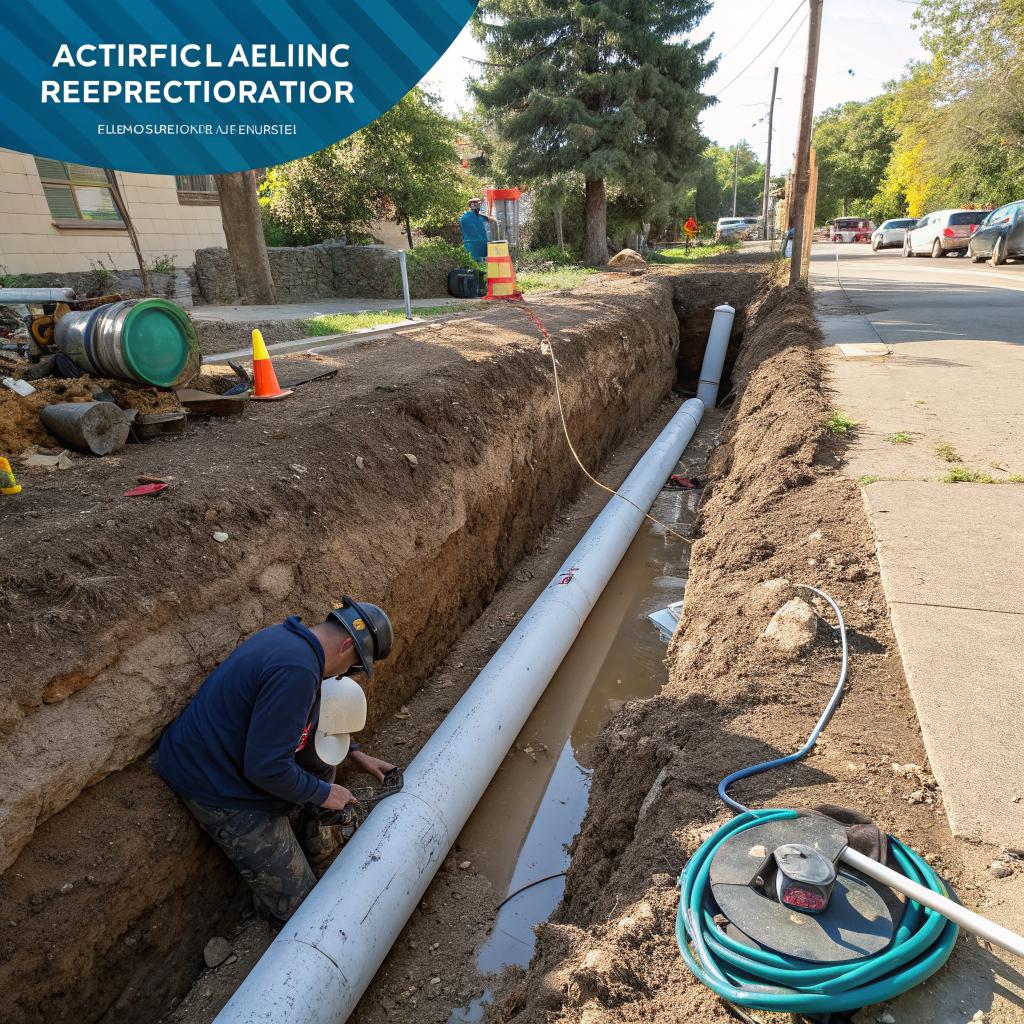
| Option | Typical Cost Range | Best For | Time To Complete | Yard / Landscape Impact |
|---|---|---|---|---|
| Spot Repair | $1,000 – $3,000 | Small, localized breaks or roots | Half day – 1 day | Small trench, limited disturbance |
| Traditional Excavation | $4,000 – $12,000+ | Collapsed or badly misaligned lines | 1 – 3 days | Significant digging, higher restoration cost |
| Trenchless Lining | $3,000 – $10,000 | Pipes that are intact but cracked or leaking | 1 day in many cases | Minimal digging, small access pits |
| Full Replacement | $5,000 – $20,000+ | Old pipe, many problems, long-term solution | 2 – 5 days | Moderate to heavy, depending on length |
If you are just trying to get to the point, sewer line repair that Aurora homeowners can rely on is the kind that starts with a proper camera inspection, offers both trenchless and traditional options, gives you a clear written price before work starts, and is done by a licensed plumber who understands local soil, frost depth, and city codes. A company that treats your home like a real place where your kids play in the yard, not just a job site. For many homeowners, a trusted local provider of sewer line repair Aurora services will walk you through what is going on underground, show you video of your line, and help you choose between repair and replacement instead of pushing the most expensive option every time.
This matters more than most people realize. A sewer issue is not just a plumbing problem, it disrupts your whole life. You might need to leave the house for a bit. You might worry about money. And you almost never see it coming. When you understand how sewer repair works, what it costs, and what choices you actually have, you stop feeling like you are gambling and start feeling like you are making a clear decision about your home and your future.
Why sewer problems hit harder in Aurora than people expect
Aurora is a bit of a mixed bag for sewer lines. You have older neighborhoods with pipes from the 60s and 70s, and then newer developments with PVC. The soil shifts, winters are cold, and tree roots love older clay lines.
So you may have a house that looks perfect above ground, yet the pipe running from your home to the city main is slowly cracking, sagging, or getting choked by roots.
A few reasons sewer lines around Aurora tend to fail:
- Freeze and thaw cycles that move soil and stress older pipes
- Expansive soils that settle over time and create low spots in the line
- Large trees near older clay or cast iron lines
- Past homeowners who flushed things they should not have
- Pipes that were installed to older standards, not modern ones
This is not meant to scare you, only to make the problem feel more normal. If your line is acting up, you are not unlucky or irresponsible. You are just one of many people dealing with aging underground pipes in a city that keeps growing.
Early signs your sewer line is starting to fail
Most people wait too long. They ignore small hints until sewage is backing up into the tub on a Sunday morning. That is an awful way to find out you need help.
Here are warning signs that your line is struggling, even if things still “mostly” work.
1. Slow drains in several fixtures, not just one
If one sink is slow, that might just be a local clog. Hair, food, normal stuff. If your kitchen sink, tub, and basement floor drain are all slow at the same time, the problem is probably deeper.
You might notice:
- Drains speed up for a day after using a store-bought cleaner, then slow again
- Water gurgling in another drain when you run the washing machine
- Standing water in the tub after a shower, even after you clean the stopper
If more than one drain is slow at the same time, act early. Mild symptoms in several drains usually point to the main sewer line, not a single fixture.
2. Gurgling sounds and bubbles in toilets
Toilets tell the truth. If you flush and hear strange gurgling, or you see bubbles in the bowl without flushing, your line might be fighting for air. That can mean partial blockage, roots, or a venting problem.
You might shrug this off once or twice. But if it becomes a pattern, your line is trying to warn you.
3. Sewer smell indoors or near foundation vents
A faint sewer odor that you smell now and then is not something to get used to. It often points to:
- A small leak in the sewer line under the slab or near the foundation
- A vent stack issue on the roof
- Old or damaged seals at cleanouts or floor drains
You do not have to panic, but you should pay attention. Smell is usually the first sense that catches a hidden problem.
4. Patches of very green or soggy lawn
If part of your yard is staying greener than the rest, almost like a stripe or patch that thrives when the rest of the grass struggles, that can be a sign of sewage leaking in that area.
Sometimes you see:
- Soggy soil when other parts of the yard are dry
- Soft ground where you walk, even in dry weather
- Sunken spots along the path where the sewer line runs
Unusual soft spots or lush grass along the path from your home to the street can be an early clue that your sewer line is cracked or leaking underground.
Why Aurora homeowners should not rely on guesswork
The biggest mistake people make is trusting guesswork. A friend says “It is probably just grease.” A general handyman says “We can snake it and see.” A homeowner buys harsher and harsher chemicals.
Sometimes those shortcuts work for a while. Sometimes they make things worse.
For serious sewer line problems, the guess-first approach has a few issues:
- It can damage old pipes with aggressive chemicals or oversized blades
- It can hide problems until your line fully collapses
- It can cost more in the long run through repeat visits and emergency calls
A camera inspection makes a huge difference. You see what is going on. You do not have to keep wondering.
What a proper sewer inspection in Aurora should include
If you want repair you can rely on, you start with information. Plain and simple. A good sewer inspection is not someone peeking into one cleanout and saying “looks ok.”
Here is what a solid process looks like.
Step 1: Talk through the history
A careful tech will first ask you:
- When you first noticed slow drains or backups
- Whether you had prior sewer work or snaking done
- Whether the problem is worse after rain or heavy water use
- How old the home is and whether you know the pipe material
This helps them guess where to start and what to look for on camera.
Step 2: Camera inspection of the full line
They will usually send a camera through a cleanout in the basement, outside, or sometimes from a pulled toilet. The goal is to see:
- Pipe material (clay, cast iron, PVC, etc.)
- Cracks, offsets, or collapsed sections
- Root intrusion points
- Low spots where water and waste collect
- Grease buildup or foreign objects
A trustworthy company will either show you the video as they go or share a copy after. If they will not, that is a red flag.
Step 3: Depth and location check
For repair, it helps to know exactly where the problem sits. The tech will usually locate the line with a receiver that tracks the camera head.
This lets them:
- Mark the yard where digging or trenchless access is needed
- Measure depth, which affects cost and method
- Plan how to avoid sprinkler lines, trees, and other utilities
A complete inspection shows you the problem, where it is, how deep it sits, and what material you are dealing with. Anything less is guesswork and guesswork is expensive.
Step 4: Clear explanation and options
This part is often missing. You should expect someone to sit down for a few minutes and explain:
- What they saw on the video
- Why it happened or is happening
- What options you have, with pros, cons, and costs
This is where a bit of your own thought process matters. Are you planning to stay in this house long term? Are you planning to rent it out later? Are you preparing to sell in a few years? The right choice is not the same for each case.
Repair vs replacement: how to decide
You will face one central question: fix the specific area or replace more of the line.
There is no single correct answer. It really depends on the condition of the rest of the pipe, your budget, and your plans.
Here is a simple comparison.
| Choice | When it makes sense | Pros | Cons |
|---|---|---|---|
| Targeted repair | Single break, rest of line in fair shape | Lower cost today, less digging | Old pipe may fail in another spot later |
| Partial replacement | Several bad sections, but not the whole run | Addresses known weak areas, balanced cost | Still leaves some old pipe in place |
| Full replacement | Very old pipe with many issues | Long-term fix, modern materials, fewer surprises | Higher upfront cost, more disruption |
A simple rule of thumb many plumbers quietly use: if 40 to 50 percent of the pipe is in bad shape or near failing, it is usually wiser to replace the full line rather than keep patching.
You do not have to follow that rule, but it helps frame the decision.
Traditional excavation vs trenchless repair
This is usually where people feel confused. They hear “trenchless” and imagine there is zero digging. Then they see equipment and small pits in their yard and feel misled.
So let us clear it up in simple terms.
Traditional excavation
This is the old-school method. Dig down to the pipe, expose it, remove the bad section, drop in new pipe, connect, backfill, and restore the area.
Pros:
- Plumber can see the pipe directly and inspect the surrounding soil
- Good for severe collapses or when trenchless is not possible
- Often easier near the house foundation for certain repairs
Cons:
- More disruption to lawn, driveway, or landscaping
- Can require more time and equipment
- Restoration costs can add up (concrete, sod, pavers)
Trenchless lining and pipe bursting
Trenchless methods try to repair or replace the pipe from the inside through access points, rather than fully digging along the whole length.
Two common approaches:
- Pipe lining: A flexible liner soaked in resin is inserted and cured to form a new pipe inside the old one.
- Pipe bursting: A head breaks apart the old pipe while pulling new pipe into its place.
Pros:
- Less surface disruption, fewer trenches
- Faster in many cases
- Can extend the life of a line that is still mostly intact
Cons:
- Not ideal if the pipe is fully collapsed in some areas
- Requires certain pipe conditions and access points
- May cost more per foot, though total cost can still be better
If someone refuses to even discuss trenchless options, that is a sign they might be more comfortable with one method than working in your best interest. At the same time, if someone pushes trenchless in a situation where the pipe is clearly collapsed in multiple places, that is also a problem.
Good plumbers in Aurora use both methods and choose based on what the camera shows, not just their favorite tool.
The money question: what sewer repair really costs in Aurora
No one likes this part, but it matters. You do not have to know the exact number, just the range and what shapes it.
Things that affect cost:
- Length of the line that needs repair or replacement
- Depth of the pipe
- Location (under grass, under concrete, under a tree)
- Method (spot repair, full excavation, trenchless)
- Permits and city inspections
Here is a rough breakdown for Aurora style conditions.
| Type of Work | Approximate Cost Range |
|---|---|
| Camera inspection | $150 – $400 (often credited toward repair) |
| Basic snaking / clearing | $150 – $500 |
| Spot repair, shallow line | $1,000 – $3,000 |
| Traditional replacement, 30-60 feet | $4,000 – $12,000+ |
| Trenchless lining or bursting, 30-60 feet | $3,000 – $10,000+ |
These are ranges, not promises. But they give you a frame. If someone quotes you $25,000 for a simple shallow repair, ask more questions. If someone gives you a rock bottom number with no written scope, be careful in the other direction.
How sewer line decisions connect to long-term home and life growth
This might sound odd at first. How does a sewer line repair relate to “growth” in your life or business mindset?
I would argue it does, at least a bit.
Think about it this way. You have big goals: career, family, maybe starting a business or investing in property. All those plans rest on a few quiet supports: stable housing, predictable bills, a sense that your home is not one major surprise away from chaos.
A sewer line is one of those hidden supports.
When you handle it with a long-term mindset, you are doing a few things at once:
- Protecting your future self from emergency stress
- Protecting your property value if you sell or refinance
- Giving your family or tenants a cleaner, safer living space
It sounds like a stretch, but there is a mental skill here. You learn to face an unpleasant problem directly, understand it, choose a plan that fits your goals, and move on without dragging it out for years. That same skill translates to finances, career choices, and business projects.
Many people avoid these decisions until they have no choice. You can treat this as practice in leading your home like you would lead a business: with clear facts, not fear.
What reliable sewer line repair actually looks like in practice
If we strip away all the marketing talk, “repair you can rely on” comes down to a few simple behaviors.
1. The plumber treats your time like it matters
You do not get vague half-day windows with no updates. You get a clear arrival estimate and a call or text if that changes.
Is that a small thing? Maybe. But people who care about your schedule tend to care about their work.
2. The quote is written, clear, and specific
You should see:
- What length of pipe is being repaired or replaced
- What method is used (trenched, trenchless, spot repair)
- What is included (permits, inspections, cleanup)
- Payment structure and any warranties
If the quote is a one-line number, you have no real idea what you are buying.
3. They pull permits and handle inspections
Good companies do not skip permits to “save you money.” That shortcut can backfire later when you sell, or if something fails.
You should expect the plumber to coordinate city inspections and include that in the plan.
4. The site looks like a work area, not a disaster zone
Excavation is messy. There will be dirt piles and equipment. Still, there is a difference between controlled, tidy work and chaos.
You might notice:
- Tarps or boards protecting grass where possible
- Materials stacked in a clear area instead of thrown all over
- Trash and old pipe sections removed, not left behind
5. They walk you through what they did before they leave
When the job is done, someone should explain:
- What was repaired or replaced
- Any changes made to access points or cleanouts
- How to maintain the line going forward
- What to watch for in the next few months
That final conversation is where a lot of trust is built. Or lost.
Common mistakes Aurora homeowners make with sewer issues
Some of these I have seen in person, others are things people admit months later when they are looking back.
Mistake 1: Treating every backup as a simple clog
If you have one backup in ten years, fine, a simple clearing makes sense.
If you are calling for a clog every 6 to 12 months, something deeper is wrong. Maybe roots, maybe a sag, maybe grease buildup. At that point, paying for another quick clear without a camera is like repainting a wall that has water spots without fixing the leak.
Mistake 2: Putting off repair right before selling
Many sellers hope the problem holds off until after closing. Sometimes it does. Other times the buyer does a sewer scope during inspection, sees major issues, and then you are stuck in tense negotiations.
In many cases, addressing the line earlier lets you:
- Market the home as having a newer sewer line
- Avoid credits or price cuts at closing
- Remove a source of anxiety from the selling process
You do not have to fix every small thing before selling, but a main sewer line issue is big enough that it can easily scare a buyer away.
Mistake 3: Accepting the first opinion without questions
Sewer work is expensive and hidden. That gives room for misunderstanding and, sadly, some manipulation.
If you feel rushed, confused, or pressured, pause. Ask:
- Can I see the camera video again, from start to finish?
- What happens if I only do the less expensive option?
- Are there any code issues with that plan?
- Can I get this scope in writing and think about it overnight?
Most honest plumbers will not be offended by these questions. If they are, that is already an answer.
How to think about warranties and guarantees
Warranties sound comforting, but some of them are so limited they do not help much.
Look for clarity on:
- Length: Is it one year, three years, ten years on parts, labor, or both?
- Scope: Does it cover only workmanship, or also certain failures in materials?
- Conditions: Are there requirements like regular cleaning?
- Transferability: If you sell the house, does the warranty transfer?
Sometimes a company offers a slightly shorter warranty but has been around Aurora for decades. Another offers a long warranty but has only been around for a year. Longevity matters, at least somewhat.
I would not pick a company only based on the warranty length, but I would pay close attention to how clearly they explain it. Clarity in paperwork often mirrors clarity in service.
Maintaining a healthy sewer line after repair
Once the line is fixed, you want it to stay that way for as long as possible. You do not want to see another camera for a long time.
Straightforward habits help:
- Do not flush wipes, even “flushable” ones. They do not break down like toilet paper.
- Keep grease and oil out of the sink. Wipe pans with a paper towel and toss it instead.
- Use strainers in showers to catch hair.
- Have a preventative cleaning done if your plumber recommends it for your specific line.
- Pay attention to early signs instead of waiting for a full backup.
None of this is dramatic. Just steady, boring care that keeps ugly surprises away.
Questions Aurora homeowners often ask about sewer line repair
Q: How often should I get a sewer inspection?
If your house is older than 30 years and you have never had one, start there. After a full replacement or major repair, many people wait 5 to 10 years before considering another, unless they see warning signs.
If you are buying a home in Aurora, a sewer scope during the inspection process is almost always money well spent.
Q: Is trenchless repair always the better choice?
No. It is great when the pipe still holds its shape and the problem is cracks, leaks, or modest root growth. If the line has fully collapsed in several sections, or the slope is wrong, traditional excavation or partial reconstruction might be more reliable.
The right method depends on what the camera shows, not just on the technology itself.
Q: Should I get more than one quote?
For big jobs, yes. If someone is suggesting full replacement or a large trenchless project, getting a second opinion can give you peace of mind. Just make sure each quote explains the scope clearly, so you are comparing similar work.
Q: Can I wait a year or two before fixing it?
Sometimes you can, sometimes you cannot. If the line is badly cracked and leaking sewage into your yard or under your foundation, waiting is risky. If the problem is more about roots starting to enter but the pipe still flows well, a short delay with regular cleaning might be possible.
But do not assume. Ask the plumber directly: “What happens if I postpone this, and what risks am I taking?” Their answer will tell you a lot about both the pipe and their honesty.
Q: How do I know I picked the right company?
You never know with perfect certainty. But if you:
- Understand the problem because you saw it on camera
- Feel you got clear answers without pressure
- Have a written scope and price
- See that they care about your property, not just the pipe
then you are probably on the right track. And that is usually enough to make a calm, confident decision about a problem that most people find stressful and confusing.