| Option | Upfront Cost Range | Best For | Key Pros | Key Cons |
|---|---|---|---|---|
| Portable Generator | $700 – $2,500 | Small homes, tight budgets | Lower cost, flexible use, simple to store | Manual setup, limited power, louder |
| Mid-size Standby Generator | $5,000 – $9,000 (installed) | Average Des Moines homes | Automatic start, powers key circuits, adds resale value | Higher upfront cost, needs gas line and pad |
| Whole-home Standby Generator | $9,000 – $16,000+ (installed) | Larger homes, home offices, rentals | Runs most or all circuits, smooth transitions | Highest cost, more planning, bigger footprint |
The short answer is simple: the generator installation Des Moines homeowners trust most is a properly sized, professionally installed standby unit that can start automatically, run on natural gas or propane, and keep at least your furnace, fridge, internet, sump pump, and core lights on during outages. If you want something concrete, that usually means a mid-size standby generator, installed by a local electrician who actually pulls permits and will still answer the phone three winters from now. If you want a real example, a lot of homes in Des Moines end up in the 14 to 22 kW range. That setup is not flashy. It just works when the grid does not, and that is what you really want in a storm at 2 a.m.
Why generators matter more in Des Moines than people think
Every city has power outages, but if you live in or near Des Moines, you already know the pattern. Summer storms, winter ice, high winds, and sometimes strange outages on clear days that make no sense at all.
This is not only about comfort. It is about:
– Sump pumps when the basement is one heavy rain away from trouble
– Furnaces and space heaters when the wind chill drops
– Refrigerators when you just filled them with groceries
– Wi-Fi, laptops, and phones when you work from home or run a business
You feel it more if your income or your business depends on being online. Or if you have tenants. Or kids. Or someone in your house who relies on medical equipment.
If losing power means you lose money, safety, or sleep, then a generator is not a luxury for your house. It is part of your risk plan.
That may sound dramatic, but look at it like any other asset. You hedge the risk of fire with insurance. You hedge the risk of power loss with backup power. It is the same thinking, just spread over years instead of one big event.
Portable vs standby: which do Des Moines homeowners actually trust?
Most people start with the same question: “Do I really need a standby unit, or will a cheaper portable one do the job?”
There is no single right answer, but there are some patterns.
Portable generators: good, but not always enough
A portable generator can be perfect if you:
– Have a smaller home
– Can be present to set it up during an outage
– Are comfortable running extension cords or using a transfer switch
– Only need a few key items powered
You wheel it out. Fill it with fuel. Pull the cord or hit the electric start. Run extension cords to your fridge, maybe the router, maybe a space heater.
That works, unless:
– The weather is bad and you need to go outside multiple times
– You travel a lot and outages can hit when you are not there
– You cannot safely move or start the unit yourself
– You want your furnace, air conditioner, or well pump, which usually need proper wiring
I know several people who bought a portable generator, used it once, then let it sit for years because it felt like too much work each time. Not because they were lazy. It just felt like an emergency project every single time the lights blinked.
Standby generators: less hassle, more planning
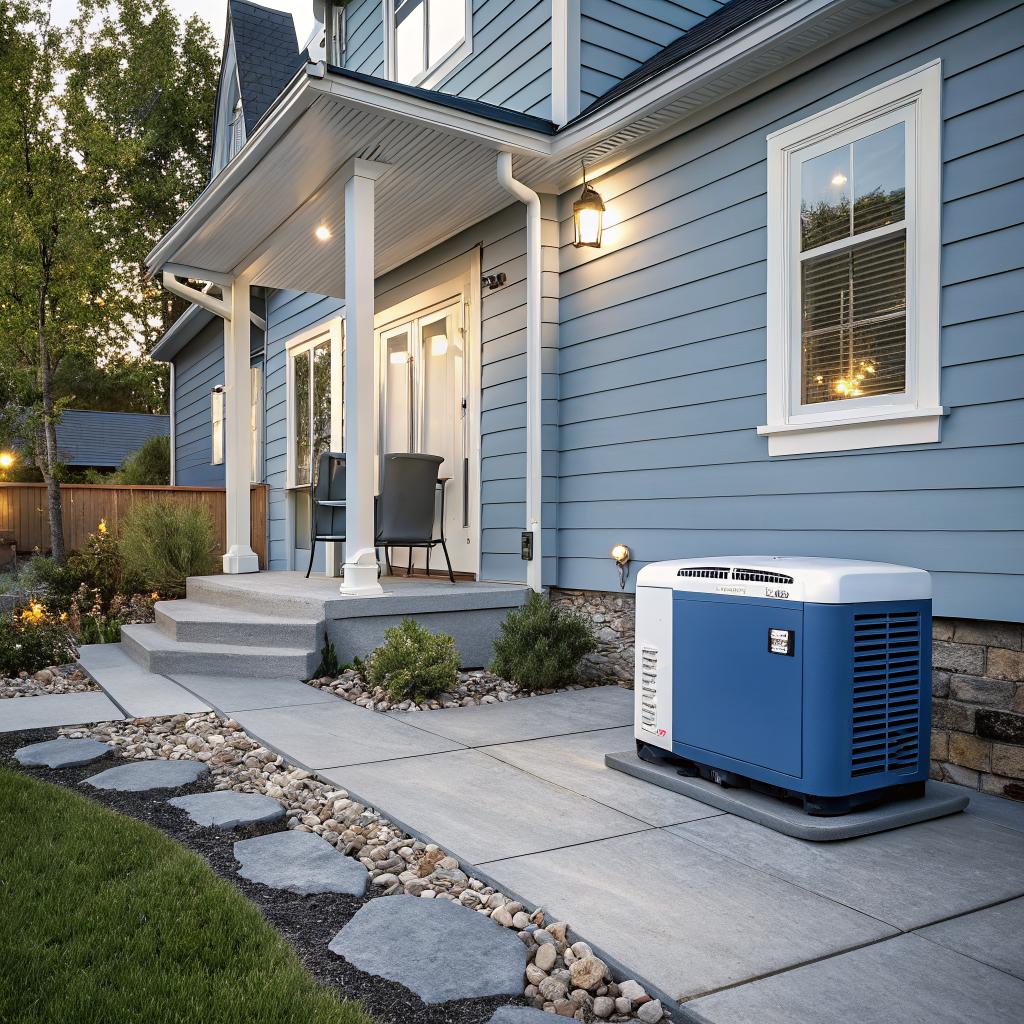
A standby generator is permanently installed on a concrete or composite pad outside your house. It connects to your natural gas line or propane tank. It connects to an automatic transfer switch that talks to your main electrical panel.
Power goes out, generator senses it, starts, and your selected circuits come alive within seconds. When the grid comes back, it shuts down on its own.
People tend to trust standby units more for one simple reason: they just work without much input.
If you want your generator to feel like part of the house instead of an extra project, a standby system usually wins.
It is more money up front, and you do have to plan. But once it is in place, there is not a lot to think about besides routine service.
How to think about generator sizing for a Des Moines home
Sizing is where many homeowners either overspend or underspend. In my view, both happen because of the same mistake: starting with kilowatts instead of starting with priorities.
Step 1: Decide what actually needs to run
Ask a few blunt questions:
– If the power went out for 48 hours, what must keep running?
– What would cause damage or serious cost if it stopped?
– What would simply be nice to have, but not critical?
Most Des Moines homeowners end up with three buckets.
| Bucket | Examples | Why it matters |
|---|---|---|
| Must have | Furnace blower, sump pump, fridge/freezer, Wi-Fi, a few outlets and lights | Protects the house and allows basic work and communication |
| Good to have | Garage door opener, microwave, bedroom outlets, TV, office equipment | Makes outages less stressful, helps work and normal life |
| Nice but optional | Central AC, hot tub, full kitchen range, dryer | Comfort and convenience, but you can live without them for a while |
Once you know these buckets, a licensed installer can translate that into actual load numbers. The list above will drive whether you land in the 10 kW range, or 14, or 22, or higher.
Step 2: Think about your house style and systems
A small ranch with gas heat and modest appliances will need less power. A large two story home with electric range, multiple AC units, and home office gear is a different story.
Ask yourself:
– Is your heating gas or electric?
– How many air conditioning units do you run?
– Do you have a well pump or are you on city water?
– Is there any medical equipment that must never go out?
These answers change the picture fast.
Step 3: Plan for your life, not just your square footage
Two houses with the same layout can need different solutions because of the people inside.
If you work from home full time, back up power for your modem, router, laptop, and at least one monitor is not a luxury. It affects your income.
If you run a small business out of a detached garage or outbuilding, that may also need power.
If you have family in other states who depend on you being reachable in emergencies, you might see Wi-Fi and phone charging as non-negotiable, even if your neighbors think that is overkill.
Sizing should start with how you live and work, then move to the technical details, not the other way around.
What makes an installer “trustworthy” in Des Moines?
You can buy a generator from a big box store. You can also search online for dozens of electricians and contractors. The tricky part is knowing who you can trust with something that sits on your property for 10 to 15 years.
You are not just buying hardware. You are buying:
– Design and planning
– Safe gas and electrical work
– Permit handling and inspection support
– Long term service and emergency help
So what should you look for?
Local presence and real references
A strong installer is not just a random listing. They:
– Have a local address, not only a call center
– Can show you photos or descriptions of jobs done in neighborhoods like yours
– Are willing to answer questions without rushing you
Ask neighbors. Look at reviews, but not only the star rating. Pay attention to what people mention about communication, follow up, and how the crew behaved on site.
Licensing, permits, and code knowledge
For a standby generator, you want:
– A licensed electrician handling the electrical side
– Proper gas line work by someone qualified to do it
– City or county permits pulled correctly
If a contractor tells you that you can “skip permits and save money,” that is usually a red flag. Permits are not only paperwork. Without them, you may run into trouble when you sell the house, make an insurance claim, or have an electrical issue later.
Clear scope, clear pricing
The proposal should specify:
– Generator brand and model
– kW rating
– Whether it is air cooled or liquid cooled
– What circuits will be connected
– Type and size of the transfer device
– Whether concrete pad, gas line work, and electrical upgrades are included
Ask what is not included. It is fine if not every tiny thing is covered, but it should be clear.
This is where you can also check your main target: you want someone who can handle the complete job, from planning through tests, not only drop a unit on the ground.
Key steps in a Des Moines generator installation
To make the process less confusing, it helps to see the steps in order. Different companies use slightly different wording, but the general path is similar.
1. Site visit and assessment
Someone visits your home, looks at your current panel, the gas meter or propane tank, meter location, and the likely spots for the generator and transfer device. This is where you talk through loads and priorities, and where they measure distances.
You should expect questions about:
– Your typical power usage
– Previous outages and how long they lasted
– Future plans, like adding a hot tub or finishing a basement
If the person only talks hardware and never asks about your life or business needs, that is a small warning sign.
2. Design and proposal
After the visit, you get a written proposal with:
– Generator size and brand
– Location of the unit
– Location and type of transfer device
– Circuit coverage plan
– Total price, including labor and materials
This is where you can compare bids. Just be careful. A cheaper bid that excludes something important might be more expensive in the end.
3. Permits and scheduling
Once you accept, the installer should handle permits. Timing depends on city processing, weather, and equipment availability.
Some homeowners forget to ask about timing and then get frustrated. So ask up front:
– When can you start?
– How long will the work take on site?
– Do I need to be home the whole time?
4. Concrete pad and rough-in work
The outdoor pad is either poured or set with pre-made composite material. The unit needs clearance from doors, windows, and vents, usually guided by both manufacturer and code. The contractor also handles rough routing for conduit and gas piping.
5. Electrical and gas connections
This is the part you should never attempt yourself.
The crew will:
– Install the transfer device, usually near your main panel
– Reroute selected circuits to the transfer device
– Run electrical conduit to the generator
– Connect gas, pressure test it, and check for leaks
– Bond and ground the unit correctly
Expect at least one short period when your power is off so they can reconfigure the panel. Good crews warn you and try to minimize this.
6. Startup, testing, and homeowner walk-through
Once everything is connected and inspected, they:
– Start the generator
– Test automatic start and shutdown
– Simulate a utility loss and restore event
– Show you the controls, normal lights, and warning signals
– Explain basic maintenance needs
If they rush through this part, slow them down. This is your equipment. You deserve to understand how it works.
How much does generator installation usually cost in Des Moines?
Every house is different, but typical ranges help you avoid surprises.
| System Type | Typical Size | Installed Cost Range | What you get |
|---|---|---|---|
| Portable, manual setup | 3 – 8 kW | $700 – $2,500 (plus cords or manual transfer) | Manual use, limited circuits or corded items |
| Partial house standby | 10 – 16 kW | $5,000 – $9,000 | Automatic coverage for key loads, gas connected |
| Whole house standby | 18 – 26+ kW | $9,000 – $16,000+ | Automatic coverage for most or all circuits |
Add a bit more if:
– The gas meter needs upgrading
– The electrical panel is old and must be replaced
– The generator must be placed far from the gas source
If someone gives you a quote far under typical ranges for your size, ask detailed questions. Sometimes it is a great deal. Sometimes it means something crucial is missing.
Return on investment: more than keeping the lights on
Since many readers here like to think in terms of business and growth, it helps to think about backup power as a long term asset, not just a purchase.
Hard benefits
You can measure some benefits in dollars:
– Prevented water damage if your sump pump keeps running
– Preserved food inventory in your fridge and freezer
– Avoided hotel costs when the house stays livable
– Business continuity if you work from home and cannot afford downtime
If one bad basement flood would cost you $8,000, and a generator setup costs $7,000, the math is not emotional. It is plain.
Soft benefits
There are other gains that are harder to price, but still real:
– Family stress levels drop when outages become boring instead of chaotic
– You feel safer when you know heat and basic light will stay on
– You stop losing work time every storm season
These do not show up on any balance sheet, but they affect decisions like whether you can confidently say yes to a big remote project, or whether your partner feels comfortable when storms roll in and you are out of town.
Maintenance and reliability: what keeps trust high over time
A generator you never maintain is like a car you never service. It works, until it does not, and when it fails, it usually fails at the worst time.
Basic maintenance tasks
Most manufacturers recommend:
- Oil and filter change every 1 to 2 years or after a set number of hours
- Air filter checks and replacement as needed
- Battery testing and replacement every few years
- Exercising the generator weekly (many units do this automatically)
- Visual checks for corrosion, nests, or debris
Ask your installer whether they offer a service plan, what it covers, and how often they visit.
Why people lose trust in generators
When you hear people complain about generators, it is often not the hardware. It is:
– Lack of maintenance
– Poor original installation
– Wrong size for the load
– No training for the homeowner
If you handle these four points up front, chances are high your generator will feel boring, in a good way. It will just run when needed.
How backup power fits into your wider growth plans
This might sound like a stretch at first. A generator is a piece of equipment. Growth in business and life is more about habits, systems, and decisions. Still, the two overlap.
Here is why.
Controlling the controllable
You cannot control storms, grid issues, or accidents down the line. You can control how dependent you are on those factors.
The same way you build an emergency fund, you can build power resilience. The mindset is similar.
You ask:
– What parts of my life and work are fragile?
– How can I make them a bit more stable, without overreacting?
– What investments reduce future surprises?
A generator is one answer for some households, especially if your income rides on your ability to stay functional.
Protecting time and focus
Every unplanned outage steals time and attention. You stop what you are doing, scramble for flashlights, charge phones in your car, throw out food later, and deal with insurance if something floods.
That is time you never get back.
If you see time and attention as the core of your personal “capital,” any tool that preserves them becomes part of your growth plan.
Setting your baseline level of comfort
When your base level is higher, you can take more smart risks. Not reckless ones, just smart.
You know that no matter what the grid does, you will still have a warm or cool house, food, and internet. That might sound small, but it affects the kind of projects you say yes to, the way you look at travel, and the way you support others.
Common questions Des Moines homeowners ask about generators
Do I really need a generator if outages are rare in my area?
Sometimes no. If your area has short, rare outages and you do not store a lot of food or rely on home office income, a full standby system might not make financial sense.
On the other hand, if a single long outage could damage your basement or knock out your business for days, even a “rare” event becomes serious enough to plan for.
A way to think about it: ask yourself, “If we lost power for 48 hours twice in the next 5 years, what would that cost us in money, energy, and stress?” If the answer is small, you might skip it. If the answer makes you uneasy, a generator is worth a closer look.
Is a natural gas generator better than propane for Des Moines?
If you already have natural gas, it is usually the most convenient choice. The supply is continuous, you do not have to schedule tank refills, and fuel cost per hour tends to be lower.
Propane can be better if:
– You are in a rural area without gas service
– You want full control over your fuel supply
– Your existing propane system is already sized for more load
Both can work fine if designed correctly. The key is proper pipe sizing, regulator setup, and clear estimates of runtime based on your tank size.
How loud are standby generators? Will my neighbors complain?
Most modern air cooled standby units fall in the range of a loud central air conditioner when running under load. You will hear it, your neighbors might hear it, but it should not sound like a construction site.
Placement matters a lot:
– Behind the house rather than near bedroom windows
– Away from patios where you relax
– With attention to property lines and local rules
Many units also have a weekly exercise mode that can be scheduled for a time when it bothers you the least.
Can I install a generator myself to save money?
If we are talking about a small portable generator and simple extension cords, you can do that on your own, as long as you follow safety guidelines and keep it outdoors.
For a standby unit tied into your gas line and electrical panel, self install is a bad idea. Besides safety risks, you will run into:
– Permit issues
– Warranty problems
– Insurance questions if anything goes wrong
This is one of those projects where professional help is not just nice to have, it is part of making the whole system legitimate.
How do I find a reliable installer around Des Moines?
Look for companies that focus on electrical and generator work and have real projects in the area. One example is providers that offer full services such as generator installation Des Moines, where they handle assessment, installation, and ongoing support under one roof. You still need to ask hard questions, compare proposals, and trust your own judgment, but at least you are starting with someone who treats generators as a core service, not just a side job.
What is one small action I can take this week?
You do not need to buy anything yet. The simplest step is this: make a short list of what must stay powered in your house during an outage. One page, handwritten is fine.
Then ask yourself: “If the power went out tonight for 24 hours, what would I regret not preparing for?” That single question will tell you more about your real backup power needs than any brochure.