| Topic | Quick Answer |
|---|---|
| Best fit for mini splits in Albuquerque | Homes with hot rooms, older houses with no ducts, garages, casitas, and home offices. |
| Average install time | 1 indoor unit: about 1 day. Multi‑zone: 1 to 3 days. |
| Rough cost range | Single zone: about $3,500–$6,500 installed. Multi‑zone: about $7,000–$18,000+, depending on size. |
| DIY vs pro install | DIY is risky and often voids warranties. Most Albuquerque homeowners are better off with a pro. |
| Biggest benefits | Room‑by‑room comfort, lower bills, no big ductwork, quiet operation. |
| Biggest drawbacks | Upfront cost, visible wall units, and poor performance if sized or installed wrong. |
For most homeowners in Albuquerque, the short answer is this: a well planned mini split, installed by a local pro who actually understands our dry climate and older housing stock, can be one of the most practical comfort upgrades you ever make. If you pick the right size, place the indoor heads wisely, and hire someone who knows what they are doing, your system will quietly heat and cool the spaces you live and work in, without tearing your house apart. If you cut corners on design or installation, you get noise, uneven rooms, and higher bills. That is the real line between the mini split installation Albuquerque homeowners trust and the ones they complain about at barbecues and on neighborhood Facebook groups. For a grounded sense of what that looks like in practice, this page on mini split installation Albuquerque is a reasonable reference point, even if you do not call that company.
Why mini splits fit Albuquerque so well
Albuquerque has a strange mix of comfort problems.
We get big temperature swings. Hot afternoons, cool nights. Strong sun. Very dry air. On top of that, we have a lot of:
– Older adobe or block homes
– Houses with additions that were never tied into the original duct system
– Garages turned into gyms or offices
– Casitas, studios, and backyard offices
A traditional central system can handle the main part of the house, but there is often that one room that never quite feels right. Or maybe the main system is old and tired, and you do not feel like paying for all new ductwork.
Mini splits slot into that gap pretty well.
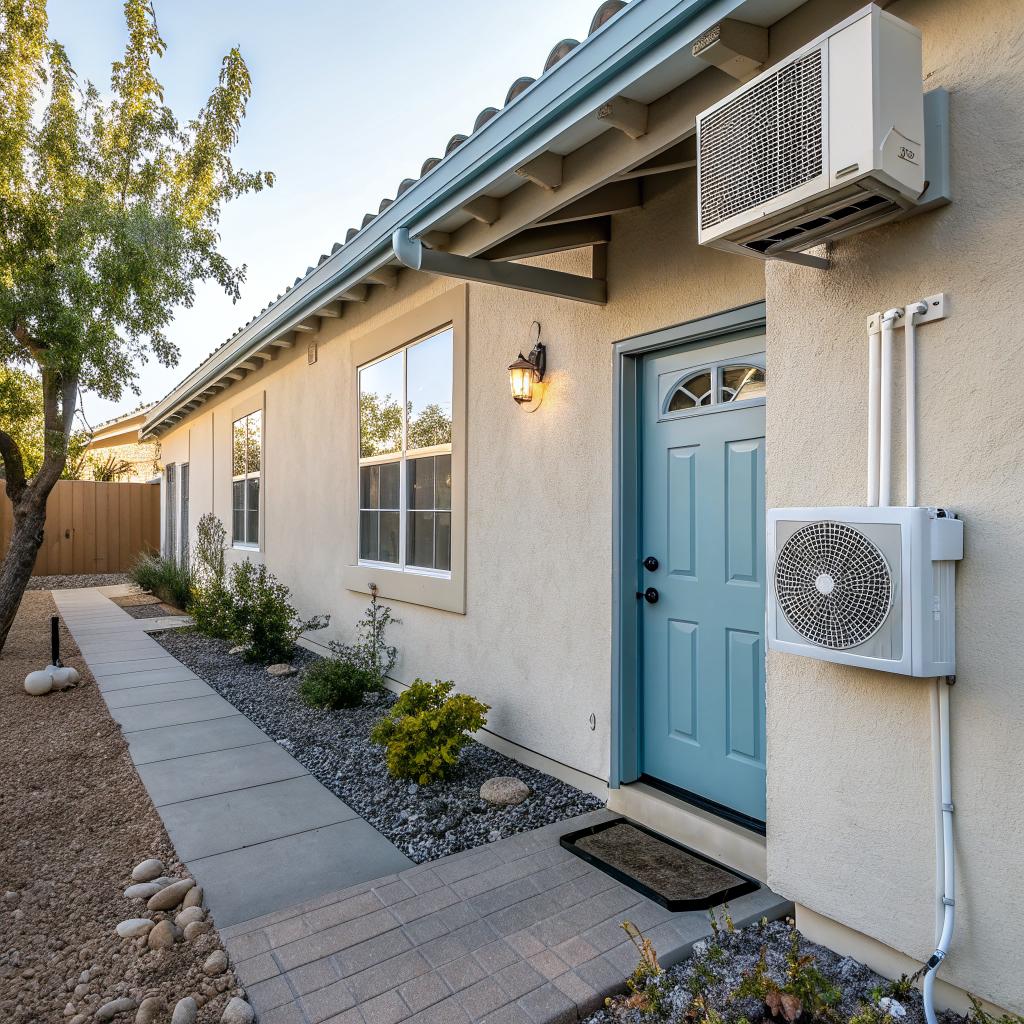
They heat and cool directly in the space, so you do not lose energy in leaky ducts. You get a wall‑mounted indoor unit and a small outdoor unit, connected by refrigerant lines. No big duct chase, no torn ceilings.
I used to think mini splits were only for server rooms and workshops. Then I visited a friend in Albuquerque Heights who had a system in his main living room and bedroom. Quiet. No big whoosh of air. And his summer bill dropped compared to his old system. It changed my mind.
Mini splits vs central air vs swamp coolers in Albuquerque
Here is where a simple table can help. This is not perfect, but it gives you a quick way to compare.
| System type | Pros in Albuquerque | Limits or tradeoffs |
|---|---|---|
| Mini split (ductless) | Room zoning, no ducts, good for additions and older homes, heating and cooling in one. | Higher upfront cost, wall units stay visible, design matters a lot. |
| Central AC + furnace | Hidden vents, whole‑home coverage, familiar to most owners and buyers. | Needs ductwork, can waste energy, hard to treat problem rooms without modifications. |
| Swamp cooler | Lower install cost, good when air is dry, cheap to run. | Struggles in humid monsoon days, poor heating, windows and doors often need to stay open. |
Some people treat this as a yes/no choice. In real life, it is often a mix.
You might keep a central system for most of the house, then add mini splits for a studio or a west‑facing room that bakes in late afternoon sun. Or replace a swamp cooler with a mini split in a home office, then tackle the rest of the house later.
What “installation you can trust” really means
I know that phrase sounds like marketing. It gets thrown around a lot.
In this context, I think it comes down to four practical things:
“Trustworthy mini split work in Albuquerque usually means correct sizing, clean line sets, solid electrical work, and a tech who takes time to explain what they are doing and why.”
If one of those is missing, you will feel it, even if you cannot name the exact mistake.
1. Correct sizing for your rooms and your habits
Sizing is where many installs go wrong.
Montana square footage rules do not work for Albuquerque. Sun exposure, insulation quality, window area, and your actual usage pattern all matter.
Common sizing mistakes:
- Oversized system that short cycles and leaves humidity or hot spots.
- Undersized system that runs all day in July and still leaves you sweating at 4 pm.
- One large head trying to cover several rooms around corners.
A careful installer will:
– Measure the rooms
– Look at windows and which way they face
– Ask where you spend time and what temperature you prefer
– Consider ceiling height and air flow paths
If someone gives you a quote in 5 minutes from the driveway, that should bother you a little.
2. Actual design, not just “one head per room”
Mini splits are more flexible than many people think, but that flexibility can tempt people into lazy layouts.
For example, I once saw a 4‑head multi‑zone setup in a Northeast Heights house where every indoor unit was set high near a corner, aiming straight at a doorway. The bedrooms felt drafty and never fully comfortable, even though the system had more than enough capacity.
A better approach would have been:
- Heads centered on the main wall, throwing air across the room
- Considering furniture layout, not just stud locations
- Placing thermostats or sensors where they sense average room conditions, not by windows or doors
This is where design and comfort overlap with how you live and work, which is why these systems appeal to people who think about business and life growth. You are not just buying equipment. You are shaping the spaces where you focus, rest, and make decisions.
3. Clean line sets and correct refrigerant charging
This part is less visible but very real.
Behind every indoor unit there is a line set that carries refrigerant. That needs to be:
– Correct size for the unit
– Properly flared, brazed, or connected
– Vacuumed to the right level
– Fully leak tested before charging
Rushed installs can leave small leaks or air in the lines. The system might run fine for a few months, then slowly lose performance.
“If your mini split worked great for the first season and then quietly got weaker, often the problem is not the brand, it is the charging and leak testing on day one.”
You cannot see any of that from a glossy brochure. This is where choosing a company with actual ductless experience in Albuquerque starts to matter.
4. Electrical, permits, and safety
Mini splits need proper electrical supply, a disconnect near the outdoor unit, and grounding that matches code.
Shortcut signs:
– Long, unsupported electrical runs
– Outdoor disconnect mounted at an odd angle or way too low
– No visible permit, or no inspection mentioned at all
You want the system to be safe, but you also want no surprises when you sell your home or pull other permits later. Inspectors in Albuquerque have seen enough creative wiring to be wary.
Money talk: what mini splits really cost here
Every home is different, and I do not want to pretend there is one magic number. There is not.
But most homeowners want a range to start planning.
Here is a simple breakdown that reflects what many people in Albuquerque see today.
| System type | Typical setup | Rough installed cost |
|---|---|---|
| Single‑zone mini split | One indoor head, one outdoor unit, for 1 room or open area. | About $3,500 to $6,500, depending on brand, size, and line length. |
| Multi‑zone (2–3 zones) | Two or three indoor heads, one outdoor unit. | About $7,000 to $13,000 for most homes. |
| Whole‑home multi‑zone | Four or more indoor heads, larger outdoor unit. | Often $13,000 to $18,000+, sometimes more for big or complex homes. |
Labor, electrical upgrades, and wall or ceiling repairs can shift these numbers.
If someone quotes you far below the lower end, I would be cautious. They might be using non‑rated equipment, skipping permits, or rushing installs. All of that will show up later in performance or reliability.
How mini splits change day‑to‑day comfort
Most homeowners do not care about BTUs or SEER ratings. They care about how the house feels at 9 pm in July, or 6 am in January when they are making coffee.
Mini splits can help with that in a few specific ways.
Room by room control
You can set the bedroom cooler for sleeping and keep the living room warmer while you work. Or turn down a guest room that is empty most of the month.
In a small business context, I have seen owners use mini splits to give a quiet, comfortable space for deep work separate from the main office or family areas. That does not sound like a big deal until you are trying to write, think, or plan and the old system is cycling loudly every 10 minutes.
Quieter operation
Most modern mini splits run much quieter than many standard central systems. The compressor outside is variable speed, and indoor fans often have very low noise settings.
I once spent a few hours working under a mini split in a home office in Albuquerque. I barely noticed when it turned on. Compared to the start and stop of a central unit that rattles the ducts, it felt calmer.
It is a small thing, but if you are on calls, recording content, or just trying to focus, it matters.
Better control of additions and problem rooms
Albuquerque has plenty of:
– Enclosed porches
– Garage conversions
– Upstairs bonus rooms that never got proper ductwork
Running new ducts to these spaces can be costly or awkward. A mini split gives you direct control in that room, without disturbing the rest of the house.
“Mini splits shine the most in the rooms your central system never quite figured out how to handle.”
If you think about your home almost like a small portfolio of spaces where you rest, work, and host, this kind of targeted control feels less like a gadget and more like a small strategy shift.
Common questions Albuquerque homeowners ask
Will a mini split keep up with Albuquerque summers?
Usually, yes, if it is sized correctly and installed with care.
What matters:
– Correct capacity for the room and sun exposure
– Keeping filters clean
– Not blocking airflow around the outdoor unit
– Reasonable set points, not swinging the thermostat wildly every day
If your west‑facing living room has large windows and no shading, your installer may suggest slightly more capacity or some shading strategies. Mini splits are strong, but they are not magic against unshaded glass at 4 pm in July.
Do they also heat well in winter?
Modern heat pump mini splits do a good job in Albuquerque winters. Our cold is real, but not like some northern climates.
Benefits for heating:
– You get stable, gentle heat rather than blasts of hot air
– You can heat only the zones you use early in the morning or late at night
– No combustion in the space, so no worries about flue gas or combustion air
If you already have a gas furnace, many people use the mini split for shoulder seasons and mild days, then let the furnace cover very cold snaps. That balance can save energy and extend equipment life.
How long does installation usually take?
For a small, single‑zone system in an easy‑access room, one full workday is common.
For a multi‑zone system, 1 to 3 days is more realistic. Factors that stretch the schedule:
– Difficult wall or attic access
– Long line runs
– Electrical panel upgrades
– Coordination with drywall repair or painting
If someone promises a big multi‑zone install in half a day, you should question what is being skipped.
Can I install a mini split myself?
Some people do. The internet is full of DIY kits and videos.
Still, I am not convinced it is a smart move for most homeowners in Albuquerque, for a few reasons:
– Many manufacturers require pro installation for warranty coverage
– Refrigerant handling needs the right tools and training
– Electrical work comes with safety and code concerns
– Mistakes often do not show up until later, when leaks or poor performance become clear
If you run a business, you already know that “saving” a little money with a rushed DIY can cost much more in lost time or fix‑ups. The same logic applies here.
Mini splits and long term costs
If you are thinking about business and life growth, you probably care about long term operating costs, not just the purchase price.
Here are a few things that affect total cost over the life of the system.
Energy usage
Mini splits tend to be more energy stingy than older central systems and especially more stingy than electric resistance heaters.
You get:
– Variable speed compressors that match load instead of just on/off
– No duct losses in unconditioned spaces
– Zoning so you do not heat and cool unused rooms
If your current setup is an aging furnace plus an older swamp cooler, and you run lots of plug‑in space heaters in winter for cold rooms, a well designed mini split system can tidy that mess up and reduce your monthly bills.
Maintenance level
Maintenance is simpler than many people expect, but it still matters.
Basic tasks:
- Clean or wash indoor unit filters every 1 to 3 months, depending on dust and pets.
- Keep the outdoor unit clear of weeds, leaves, and debris.
- Have a pro check refrigerant levels, electrical connections, and coils every year or two.
If you ignore filters, airflow drops, performance slips, and coils can ice up. Not dramatic at first, but it adds up.
Repairs and reliability
Good brands, correctly installed, tend to be reliable. When problems do show up, they often trace back to:
– Poor installation
– Electrical issues
– Lack of basic cleaning and maintenance
From a business mindset, a mini split is an asset that requires a small, steady maintenance habit. Not dramatic, but regular.
Planning a mini split project like you plan a business move
Many homeowners who care about business and growth already think in terms of:
– ROI
– Risk
– Time horizons
– Optionality
You can apply that same thinking to a mini split project.
ROI: where does the system pay you back?
Not just in energy bills.
Look at:
– Comfort in work zones, which can affect your focus and output
– Flexibility to use spaces year round, not just in mild months
– Resale appeal for buyers who value efficient heating and cooling
If a new mini split makes your garage office usable all year, and that is where you handle your side business or deep work, the payoff is larger than the power bill.
Risk: what can go wrong, and how do you limit it?
Main risks:
– Bad sizing or poor design
– Shaky installation quality
– Weak warranty support
Ways to reduce them:
- Get at least two bids from companies with real ductless experience in Albuquerque.
- Ask them to explain their sizing logic, not just give a ton rating.
- Ask who actually performs the install, not just who sells it.
- Look for brands with clear local parts support.
If someone gets annoyed when you ask design questions, that is a signal too.
Time horizons and staging
You do not have to do the whole house at once.
Many homeowners:
– Start with one key room or office
– See how they like the feel and control
– Add zones later as budget and needs evolve
This staged approach is very similar to how you might grow a business: test, learn, then scale.
Mini splits compared to other upgrades you might be weighing
If you are looking at your home as a system, mini splits are just one possible investment.
You might be asking yourself:
– Should I put money into better insulation instead?
– Do I replace my furnace first?
– Should I convert my swamp cooler to refrigerated air?
There is no single answer, but here is a rough way to think about it:
| Upgrade type | Primary benefit | Typical use case |
|---|---|---|
| Mini split system | Targeted comfort and zoning, both heating and cooling. | Problem rooms, additions, home offices, partial or full electric comfort. |
| New furnace or central system | Whole‑home comfort through existing ducts. | When ducts are in good shape and you just need new equipment. |
| Swamp cooler conversions | Better summer comfort where swamp coolers are not enough. | Homes tired of humid monsoon days and open windows in summer. |
| Insulation and air sealing | Lower loads for any heating/cooling system. | Drafty homes, old windows, clear signs of heat loss or gain. |
Sometimes the right answer is “do some insulation and air sealing, then a smaller mini split.” That can give you comfort and lower bills together, with hardware that does not have to work as hard.
Questions to ask any mini split installer in Albuquerque
If you want a quick filter for picking an installer, a few targeted questions help.
You might ask:
- “How do you decide what size system I need for each room?”
- “How many ductless installs have you done in the past year in Albuquerque?”
- “Who will actually be at my house doing the work?”
- “What does your install warranty cover, and for how long?”
- “How do you handle permits and inspections in the city or county?”
- “If I expand later and add more zones, how does that affect your design today?”
You are trying to see if they care about layout, long term performance, and your specific home, not just selling a box.
One last angle: how this connects to growth in life and business
At first look, mini split installation feels like a purely practical home topic. But there is a deeper layer.
Your environment affects your focus, your mood, and how long you can work productively. If your office is hot and stuffy by mid afternoon every summer, that shapes your decisions more than you might admit.
A few ways a solid mini split setup quietly supports growth:
– You can choose cooler sleep temperatures and warmer work temperatures, which helps both rest and productivity.
– You can open up spaces in your home for new uses: a studio, a quiet office, a workout room that is not miserable in July.
– You get more control over when and where you feel comfortable, which sounds small but adds up over years.
You do not have to over romanticize it. It is still just equipment on your wall and outside. But small environmental upgrades, chosen with some thought, tend to compound.
“If your home is where you rest, plan, and build, then getting the comfort right is less a luxury and more part of your long term strategy.”
Common mini split worries, answered quickly
Will indoor heads ruin how my rooms look?
They are visible, yes. Some people do not like that.
Many find that after a week or two they stop noticing them, especially if the installer takes care to:
– Center them cleanly
– Run line sets in neat covers
– Match locations to furniture and wall art
If appearance is a strong concern, ceiling cassette units or low wall units are other options, but they may require more complex installs.
What happens during installation day?
Typically:
– The crew arrives, walks the site, and confirms locations with you.
– They set drop cloths and protect floors where needed.
– They mount indoor brackets and drill small wall penetrations.
– Line sets and wiring are run and covered.
– The outdoor unit is set on a pad or wall brackets.
– Electrical is connected and checked.
– The lines are vacuumed, tested, and charged.
– The system is powered up, and basic controls are explained.
You may have short periods of noise from drilling, but most people can be at home and continue light work during the day.
How do I know the system is running like it should?
Within the first few days, a good system should:
– Reach your set temperature and hold it without wild swings
– Run quietly, with no grinding or harsh vibrations
– Keep rooms feeling evenly comfortable, especially away from vents
If you notice:
– Strange smells
– Water leaks from indoor units
– Loud rattling or clanging
– Ice on outdoor lines in mild weather
then something might be off, and it is worth a call to the installer.
Is a mini split right for every Albuquerque home?
No. Some homes with strong existing ductwork and a clear path to upgrade a central system might be better off with high‑efficiency central equipment.
Mini splits shine most when:
– You have problem rooms or additions
– Your ductwork is poor or missing
– You want zoning and quiet operation
– You are ready to think a bit about layout and long term comfort
If those pieces line up, they are worth serious consideration.
And if you think about your home as one of the main “offices” of your life, then a simple question can guide you:
What would it change for you, day to day, if every room you use to work, sleep, and think actually felt comfortable, summer and winter?