| Question | Short Answer |
|---|---|
| How fast should you act after water damage in Salt Lake City? | Within 1 to 2 hours for a call, within 24 hours for professional onsite help. |
| Who should you call first? | A 24/7 water damage restoration company, then your insurance. |
| Can you handle it yourself? | Minor surface water, maybe. Anything soaked into walls, floors, or ceilings, no. |
| Average cleanup timeline | 1 to 3 days for drying, 1 to 4 weeks for repairs, depending on severity. |
| Business impact | Lost revenue, damaged equipment, stressed staff, long-term mold risk. |
You handle water damage in Salt Lake City the same way you handle a surprise cash-flow crisis: you act fast, you call experts, and you do not pretend it will fix itself. In practical terms, this usually means calling a 24/7 restoration service for water damage cleanup Salt Lake City within the first hour, moving people and valuables out of harm’s way, and getting serious drying started before the first day is over. That is the simple version. The longer version is where business and life growth enter the picture, because how you respond under pressure often tells you more about your systems, your leadership, and your blind spots than any “strategy session” ever will.
Why water damage is not just about wet floors
Water damage feels like a facilities problem, but it is also a leadership and operations problem.
You do not notice how fragile your routines are until a pipe breaks over your office ceiling or a slow leak under a sink finally shows up as a swollen wall and a strange smell. The physical mess is obvious. The hidden cost is time, focus, and trust.
For a business owner or manager, a flooded office or shop can mean:
– Lost working hours and missed revenue
– Expensive equipment at risk
– Tenants or employees forced to work from strange places
– Insurance conversations that drag longer than you want
For your personal life, it can mean:
– Waking up at 2 a.m. to dripping water
– Shifting your family into one part of the home
– Arguing over what to throw away and what to save
This is where a simple property problem quietly turns into a stress test for decision making.
Fast, clear decisions in the first 24 hours matter more than perfectly “optimized” choices made later.
People often wait, hoping the water will dry on its own or that it “does not look that bad.” Sometimes it really is minor. Many times it is not. And water rarely negotiates.
How water damage works in a place like Salt Lake City
Salt Lake City has its own mix of risks. You do not have hurricanes, but you do have:
– Winter pipe breaks when temperatures drop fast
– Spring run-off, heavy rain, and clogged gutters
– Old plumbing in older homes and buildings
– Sprinkler line breaks that go unnoticed
– Basement leaks from poor grading or foundation cracks
Dry climate does help drying later, but it does not cancel the first 48 hours, which are the most critical for mold growth and structural damage.
The first 48 hours: what actually happens
Here is a simple timeline that many property owners never see, because it feels invisible at first.
| Time after water exposure | What is happening |
|---|---|
| 0 to 2 hours | Water spreads under flooring, into cracks, along walls. It wicks upward in drywall. |
| 2 to 24 hours | Drywall softens, insulation soaks, wood starts to swell, finishes and paint bubble. |
| 24 to 48 hours | Mold spores can start to grow on damp surfaces, especially behind walls or under flooring. |
| 2 to 7 days | Structural materials weaken, odors increase, repair scope moves from “clean and dry” to “tear out and replace.” |
This is why every good restoration technician sounds a bit repetitive about speed. They have seen what happens when people wait “just a few days.”
DIY vs professional help: where is the line?
You might be tempted to handle water yourself. Sometimes that is not a bad instinct. Sometimes it is a very expensive one.
Here is a simple way to think about it.
When DIY might be enough
DIY might work when:
– Water is clean and fresh (for example, a recent sink overflow you caught quickly)
– It stayed mostly on waterproof surfaces like tile or sealed concrete
– You can dry it in a few hours with towels, fans, and maybe a small dehumidifier
– There is no sign of water behind walls, under cabinets, or seeping into insulation
This kind of incident is more of a minor spill than a structural problem.
When you need experts without debate
You should expect to call professionals when:
– Water came from a broken pipe inside walls or ceilings
– Water soaked carpet, padding, or wood flooring
– Water ran down into a lower floor or basement
– The source was a sewer backup or gray water
– You notice swelling, warping, or any musty smell
In a business setting, the bar is even lower. Added risk, more people, more equipment.
If water has touched something you cannot easily lift, dry, and fully inspect, you probably need professional help.
You might feel like contractors say this to sell services. Fair question. But if you talk to people who tried to handle a serious leak on their own, many will tell you they ended up paying more later to fix hidden damage and mold.
The real business cost of slow water damage response
You care about growth, not just about dry carpets. So it helps to look at water damage the way you would look at a surprise tax bill or a sudden loss of a key employee.
Not just “What will this cost today?” but “What will this change tomorrow?”
Direct financial costs
These are easy to track:
– Repair and restoration fees
– Replacement of equipment, inventory, or furniture
– Higher energy bills during heavy drying
– Temporary relocation or rent for a backup space
If you are insured and the claim is valid, some costs come back. It just might take time, and your cash-flow has to survive in the meantime.
Hidden operational costs
These do not appear on invoices, but they hurt growth.
– Team distraction: People gossip, worry, step out of normal roles.
– Leadership distraction: You spend hours on calls instead of focusing on customers or strategy.
– Customer perception: Late responses, slower deliverables, or cancelled meetings create small cracks in trust.
– Lost momentum: Projects you were excited about quietly stall.
You might think this is a bit dramatic, but anyone who has managed a small office flood during a product launch or a busy season knows how much energy it drains.
Emotional cost and decision fatigue
This part is hard to quantify. It is also real.
– You have to decide what to save and what to throw away.
– You second-guess every call you make.
– You wonder if your insurance will fight your claim.
– You worry about mold, health, and long-term damage.
This is where having clear steps and a trusted expert matters. It removes some decisions from your plate, so you can focus on a few critical ones instead of twenty small ones.
Good disaster response is less about heroics and more about reducing the number of decisions you need to make under stress.
What a professional water damage cleanup process actually looks like
If you have never gone through full water restoration, it can feel mysterious. It is not magic. It is a well-tested sequence of steps that good companies follow.
1. Emergency contact and first call
You call. They ask questions. These might feel repetitive, but they matter:
– Where is the water coming from?
– How long has it been going on?
– What rooms are affected?
– Is power safe and available?
– Is this a home, office, retail space, or something else?
This helps them decide how many people to send, what equipment to bring, and how fast they should get there.
2. Onsite inspection and safety check
When the crew arrives, they usually:
– Look for electrical hazards
– Confirm the source is stopped or at least under control
– Measure moisture in walls, floors, and ceilings
– Take photos for documentation
– Talk to you about what they see and what they think the plan should be
This is a good time to ask honest questions. Ask what they would do in their own home. Ask what could go wrong if you do less.
3. Water removal
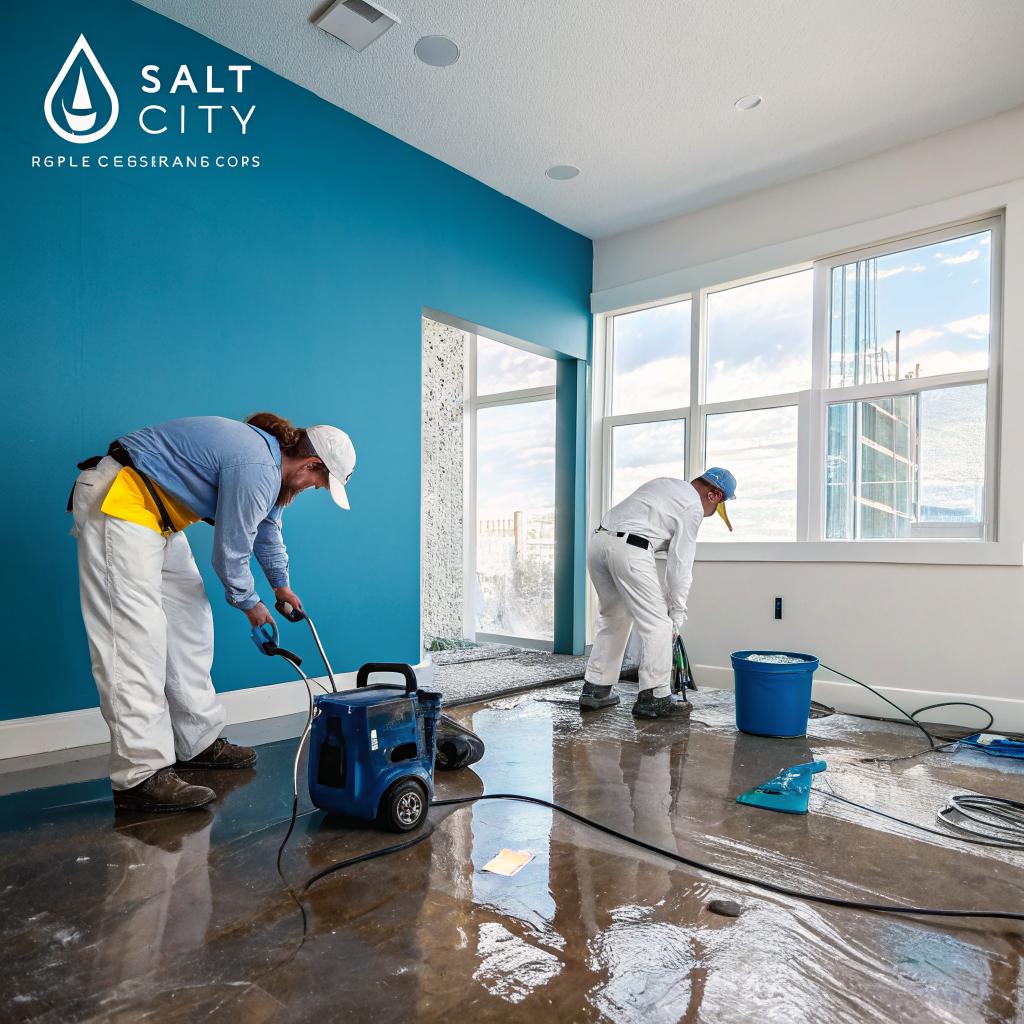
This is the visible part. They bring in pumps, extractors, and hoses. They remove standing water from floors, carpets, and sometimes from wall cavities.
The goal is to get bulk water out fast, because air movers and dehumidifiers cannot fight several inches of water.
4. Material removal
Here is where some people start to resist, because it can feel aggressive. Techs might recommend removing:
– Soaked carpet and pad
– Wet baseboards
– Sections of drywall
– Damaged insulation
– Some built-in shelving or cabinets, in serious cases
It is fair to ask why a certain item must go. It is not fair to ask them to ignore science and leave clearly soaked materials in place “to save money today.” You might be just kicking the bill down the road.
5. Structural drying
After removal comes drying.
They position air movers and dehumidifiers in patterns that push moisture out of materials and into the air, then capture it. It looks simple, but placement and balance matter.
Every day or so, they come back and:
– Measure moisture levels with meters
– Adjust machines
– Remove or add equipment
– Update you on progress
Drying usually takes 1 to 3 days for mild cases and longer for deep saturation or complex structures.
6. Cleaning, sanitizing, and odor control
If water was clean, this is mostly a cleanup and mild disinfectant step.
If water was gray or from sewage, cleaning is more serious. Surfaces are cleaned and treated with antimicrobial products. Porous items that cannot be cleaned are removed.
7. Repairs and reconstruction
Drying solves the moisture problem. It does not patch holes in drywall or rebuild cabinets.
Repairs might include:
– New drywall and paint
– New trim and baseboards
– New flooring or refinishing wood
– Repairing built-ins or cabinetry
– Reinstalling fixtures or doors
Sometimes the same company handles both mitigation and repairs. Sometimes they only handle drying and cleanup, and you work with a contractor for rebuild.
What to do in the first hour: a simple playbook
If you are reading this before disaster hits, you already have an advantage. You can create a simple one-page plan and share it with your team or family.
Here is a straightforward sequence that works in most clean water events.
1. Protect people first
– Make sure no one is standing in water near exposed wiring or outlets.
– If you are unsure about safety, do not touch switches or breakers. Call an electrician or fire department for help.
– Move children, pets, or vulnerable people away from affected areas.
2. Stop the source if you can
– For a burst pipe, find and shut off the main water supply.
– For appliance leaks, unplug if safe and close water lines.
– For roof leaks in a storm, place buckets, move items, and wait. Climbing on wet roofs in bad weather is a bad idea.
3. Call professional help
Even if you think it might be minor, a quick call helps you know if you are underestimating the problem. Ask honest questions and let them ask theirs.
4. Protect valuables and important items
– Move electronics, documents, instruments, and personal items out of the wet area.
– Take photos as you go. Do not overthink composition. Just document.
– If you run a business, protect critical tools and any items that impact customer work.
5. Do light cleanup while you wait
– Use towels or a wet/dry vacuum to remove surface water if it is safe.
– Remove soaked small rugs that you can carry outside.
– Open windows if weather allows, but ask the restoration team before leaving them open during drying.
This blend of immediate action and restraint is hard. But it is better than freezing or trying to do everything alone.
Insurance, documentation, and staying sane
Many people feel more stressed by the insurance process than by the actual cleanup.
I think part of the problem is that most of us only deal with property claims a few times in our lives, so it never really becomes a familiar skill.
Before you call your insurer
People debate this, but there is a simple pattern that helps.
– Stop the active damage if you can.
– Call a cleanup company and start documentation.
– Then call your insurance company.
Why not call insurance first? Because every minute counts for damage spread, and your insurer is rarely the one vacuuming water out of the carpet at 11 p.m.
What to document
This does not need to be artistic. It just needs to exist.
– Photos of the source: broken pipe, damaged appliance, roof area.
– Wide shots of rooms showing how far the water reached.
– Close shots of specific damaged items.
– A quick written list of items that are obviously ruined.
Send copies to yourself by email or cloud storage so you do not lose them if your phone dies.
Working with adjusters
Adjusters have a job, and so do you. You want fair coverage without padding or exaggeration. They want to stay within policy terms and prevent fraud.
Some small tips:
– Be honest when you do not know the answer.
– Ask your restoration company to share moisture readings and scope with the adjuster.
– Walk the space together if possible and point out less obvious damage like closet floors or under desks.
If you feel something is missing, say so calmly. Getting angry rarely increases coverage. Clear requests sometimes do.
What water damage teaches you about your systems
Since this blog leans toward business and life growth, it is worth zooming out.
A flood or major leak is unpleasant. But it also reveals a lot about your maturity as a leader and the strength of your systems.
Do you have a simple, written action plan?
If your team or family has to ask you what to do for every single step, your system is fragile.
You can fix this with one page taped in a utility area or shared online. Keep it boring and clear:
– Who to call first
– Where the main water shutoff is
– Where to find a flashlight and basic tools
– Who has authority to call a professional without asking you
This alone can save hours of confusion.
Are you over-reliant on yourself?
If every decision still runs through you, a water emergency will show that quickly. You will get buried.
Consider who on your team could:
– Call vendors and coordinate schedules
– Talk to the insurance company
– Communicate with staff or tenants
– Keep operations moving in a temporary space
If the answer is “no one yet,” that is something to work on before the next crisis, not after.
Do you have margin?
Sometimes the honest answer is uncomfortable.
If an unplanned repair throws your budget or schedule into chaos, that is a sign you have been running too close to the edge.
I am not saying you need a huge “disaster fund,” but having some room in your cash-flow and schedule is not just a financial tactic. It is a mental health tactic.
Preventing water damage in the first place
You cannot stop every emergency, but you can reduce the odds.
This is less dramatic than late-night cleanup, but it is more valuable.
Simple checks for homes and small offices
| Area | What to check | How often |
|---|---|---|
| Under sinks | Look for drips, stains, or soft wood. | Every 1 to 2 months |
| Water heater | Check for rust, moisture, or pooling on the floor. | Every 3 months |
| Toilets | Inspect supply lines and valves, feel for moisture. | Every 3 months |
| Roof and gutters | Look for missing shingles, clogs, or standing water. | Twice a year |
| Basement or crawlspace | Look for damp spots, musty smell, or efflorescence on concrete. | Every 3 to 6 months |
These small, boring checks can prevent the dramatic events you see in photos.
Smart upgrades that actually help
If you want to invest a little, some upgrades give real protection:
– Quality braided steel supply lines for toilets and sinks
– Leak detectors near water heaters, washing machines, and under key sinks
– A water shutoff valve that can be closed quickly and clearly labeled
– Regular HVAC and plumbing inspections in older buildings
These are not exciting purchases. That is fine. They do not need to be. They just need to work when you need them.
Leadership lessons from a soaked carpet
It might sound strange to say that water damage can teach you something about business and life, but if you have lived through a serious incident, you know it changes how you think.
Here are a few patterns I see.
1. You notice where you delay hard decisions
Many people wait before calling help, almost hoping the problem will shrink on its own. It rarely does.
The parallel in business is waiting too long to fix a toxic hire, a broken process, or a failing product line. Damage spreads quietly, then quickly.
Water does not reward hesitation. Neither does a market.
2. You see how you treat people under pressure
Under stress, some leaders:
– Blame others
– Yell or shut down
– Micromanage every step
Others stay relatively calm, ask questions, and make clear assignments. They are not perfect, but they keep people moving instead of freezing.
You might not like what you see in yourself the first time. That is fine. It gives you something concrete to work on.
3. You learn to separate what matters from what hurts
Throwing out damaged items is painful. So is tearing out a wall that “still looks okay” but is soaked inside.
In growth, you have to do a version of this with projects, habits, even identities you are attached to. Water damage just makes the process physical and visible.
Real growth often looks less like adding new things and more like cutting out what is quietly rotting behind the surface.
Common questions about fast water damage help in Salt Lake City
What is the realistic response time for professional help?
Many companies in Salt Lake City advertise 24/7 service. In real life, that usually means:
– Immediate phone contact any time
– Onsite visit within 1 to 4 hours for true emergencies, depending on distance and weather
– Same-day or next-morning visits for less urgent cases
I think it is fair to ask about real averages when you call, not just what is on the website.
How long before mold becomes a serious concern?
Mold spores start to grow in 24 to 48 hours on wet materials. That does not mean a full mold problem right away, but it does mean the clock is ticking.
Drying quickly, removing soaked materials, and keeping humidity under control are the main tools you have. If you wait several days before acting, you increase the chance of more invasive and expensive mold work later.
Can a small business operate while cleanup happens?
Sometimes, yes. It depends on:
– Where the damage is
– Noise from equipment
– Health and safety concerns
– Customer expectations
Many businesses do partial operations, with one area closed for drying while another stays open. Remote work, temporary desks, or shifted hours can bridge the gap.
It is not ideal, but it is usually better than a full stop, as long as safety and air quality are managed.
Is professional cleanup worth it for a small apartment or condo?
If water only touched a bathroom floor or a tiny area of tile and you caught it fast, maybe not.
If carpets, walls, or ceilings are wet, the answer is usually yes. Condos and apartments share walls, and your leak can become your neighbor’s problem. That adds legal and financial risk.
Sometimes the real question is not “Can I handle it myself?” but “What happens if I guess wrong?”
Final thought: what would future you be thankful you did today?
If you imagine yourself six months from now, looking back at this moment, what would you want to be true?
– That you acted quickly?
– That you kept calm and clear with your team or family?
– That you documented things well enough to avoid long disputes?
– Or that you used this disruption to improve your systems, not just patch the damage?
Water damage in Salt Lake City does not care about your growth plans, your goals, or your schedule. But how you respond to it can either slow you down for a long time or quietly strengthen the way you handle every future crisis.
The question is not only how fast you can dry a room, but how quickly you can turn a stressful event into a more prepared version of yourself and your business.