| Topic | Key Takeaway |
|---|---|
| Best time to install AC in Albuquerque | Late fall to early spring, before the first heat wave and installer rush |
| Average lifespan of a central AC system | 12 to 15 years in Albuquerque if sized, installed, and maintained well |
| Typical install time | 1 day for straightforward replacement, 2 to 3+ days for new ductwork |
| Most common mistake | Choosing the cheapest bid without asking about load calculation or duct work |
| Good contractor signal | They measure your home, ask about lifestyle, and explain options in plain English |
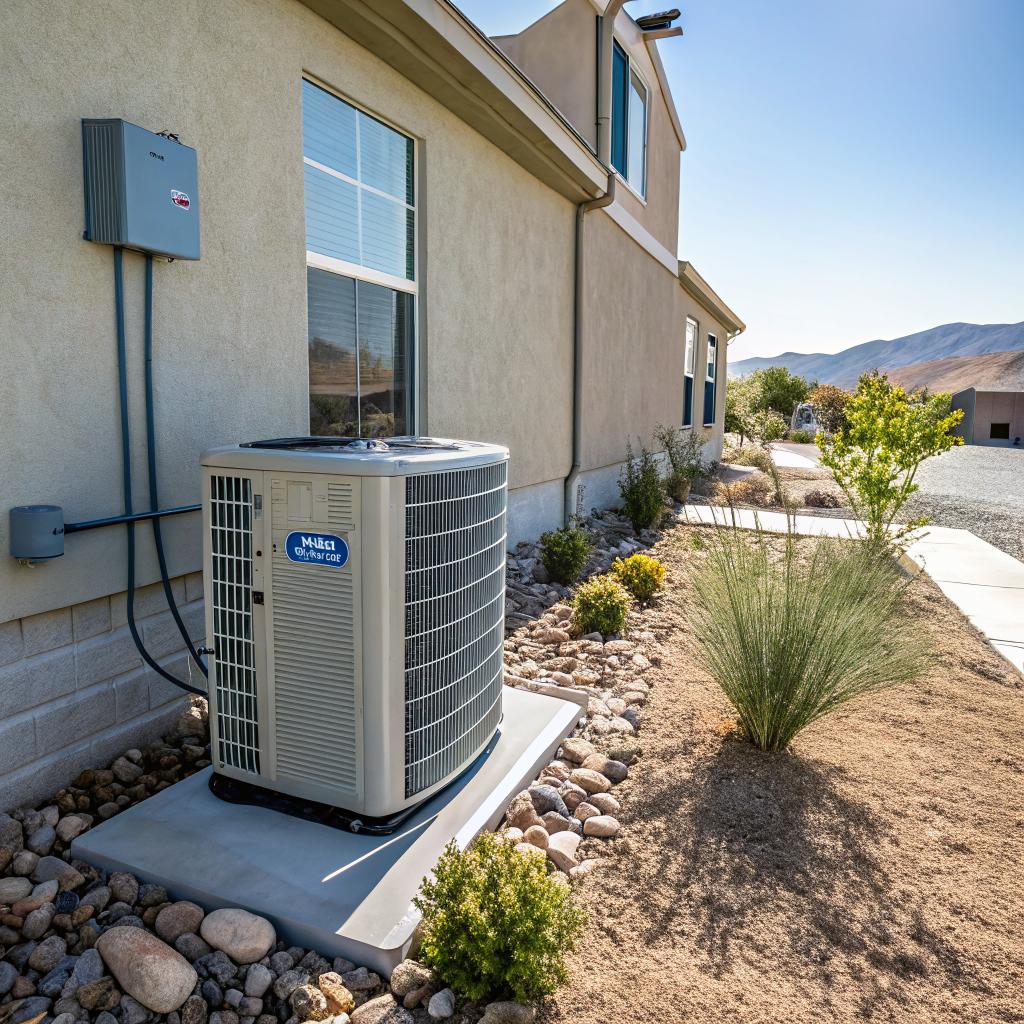
The short version is this: the kind of air conditioning installation Albuquerque homeowners actually trust comes from contractors who measure first, explain things clearly, and install a system that fits the house, not just the budget. If you want that level of work, you do not chase the lowest quote, you chase the company that will stand in your hallway with a tape measure, ask annoying questions about your habits, and still be in business the next time your system needs help. A provider like air conditioning installation Albuquerque gives a sense of what that looks like in practice.
Why AC installation in Albuquerque is not just a comfort decision
Albuquerque is strange when it comes to climate. Hot, dry days. Cool nights. Big swings in temperature. A lot of sun. And houses that range from old adobe to brand new builds that look like they were dropped from another state.
That mix turns your AC into more than a comfort appliance. It turns it into a business and life choice.
If you work from home, you know how quickly a 90 degree room kills your focus. If you are trying to build a side project at night after your day job, a house that feels like an oven makes that almost impossible.
So an AC install is really about buying:
– A predictable place to think
– A consistent sleep schedule
– A house that does not drain your energy every summer
When you look at AC installation as an investment in your time and focus, the cheap, rushed install stops looking like a bargain.
I learned that the hard way. The first house I owned had a system that “worked” but ran nonstop. It cooled some rooms, ignored others, and hummed like a car idling in the living room. Only later did I find out it was oversized, badly installed, and fighting against the duct layout.
The installer before me had saved the previous owner a few hundred dollars. I paid for that decision every month.
How to think about AC as a long-term investment
A good way to connect this to your growth goals is to treat AC the same way you treat tools in your work.
You would not buy a laptop only based on price and ignore whether it can actually run the software you need. Yet people do this with their homes all the time.
When you look at the full picture, AC is a stack of costs and benefits over a decade or more:
| Factor | Short Term View | Long Term View |
|---|---|---|
| Upfront cost | “How do I keep this number as low as possible?” | “What gives me the best comfort per dollar over 10 to 15 years?” |
| Energy bills | “We will deal with it later.” | “Can I save 10 to 30 percent every month for years?” |
| Reliability | “If it runs today, we are fine.” | “How many August breakdowns am I willing to risk?” |
| Resale value | Almost ignored | Seen as one of the top selling points in a hot market |
| Productivity | Not considered at all | Counted as part of your ability to work, sleep, and recover |
Once you start thinking in terms of ten summers instead of one, you naturally ask different questions:
– How long will this system last at Albuquerque temperatures?
– What happens to my bill if I go up one step in efficiency?
– Will this still feel comfortable in the hottest week of the year?
These questions are less exciting than “How low can you go on price?” but they are more honest.
Central AC vs mini splits vs swamp coolers in Albuquerque
Albuquerque is one of those cities where you will see central AC, ductless mini splits, and evaporative coolers in the same neighborhood. That can get confusing, because each has a story that sounds convincing.
Here is a simple comparison that might help.
| System type | Typical use in Albuquerque | Pros | Cons |
|---|---|---|---|
| Central AC | Whole house, newer construction, upgraded older homes | Even cooling, works well with proper ductwork, good for families | Higher upfront cost, relies on ducts that might need work |
| Ductless mini splits | Additions, garages, older homes without ducts, room-by-room control | High efficiency, zoning, no duct losses | Indoor units on walls, can get expensive if used for entire large homes |
| Evaporative coolers | Older homes, budget setups, dry climate use | Lower install and operating cost in dry weather | Less control, struggles in humid monsoon days, can affect indoor air quality |
For many homeowners who are serious about comfort and long-term value, central AC with proper ductwork or high quality ductless systems ends up being the right move.
The catch is that marketing often focuses on the box outside, not the quality of installation.
A premium AC unit with a poor install will usually perform worse than a mid-tier unit installed by someone who cares about airflow, ducts, and details.
What “trusted installation” really looks like in practice
The word “trust” is easy to throw around. Every contractor says you can trust them.
In real life, the kind of air conditioning installation Albuquerque homeowners rely on usually has a few consistent traits. Not perfect, but you can spot the pattern.
1. They start with a real load calculation, not a guess
If an installer walks through your door and, within five minutes, claims they “always put a 4 ton unit on houses like this,” that is a red flag.
A proper load calculation looks at:
– Square footage
– Insulation levels
– Window size, type, and direction
– Air leakage
– Duct layout and condition
– Number of people usually in the home
– Heat from appliances and electronics
It takes more time. It feels a bit tedious. You might stand there thinking, “Is all this really needed?” But that calculation is what prevents oversizing or undersizing.
Oversized systems short cycle, wear out faster, and make some rooms cold and others warm. Undersized systems run constantly and never catch up during heat waves.
Neither is good, and both cost you money and comfort.
2. They are honest about your ducts
Ductwork is not fun to talk about. It is usually in your attic or crawl space, and nobody wants to crawl up there or pay to fix it.
Many homeowners want to believe that they can just swap the outdoor unit and leave the rest as it is. Sometimes that is true. Often it is not.
Leaks, crushed ducts, undersized returns, and poor layouts are extremely common in older Albuquerque homes. If your contractor never opens a return grille, never checks the attic, never measures airflow, that is a clue.
If your ducts leak 20 percent of your cooled air into the attic, your new, “high efficiency” unit is not really high efficiency at all.
A trustworthy installer will at least:
– Inspect the ducts
– Tell you what is wrong
– Show photos or videos
– Give options, even if you decide to phase the duct work over time
They might not push hard, but they will not pretend the ducts do not matter.
3. They talk to you like a normal person
This sounds small, but it says a lot about how they run their business.
Do they explain SEER2, tonnage, and stages of cooling with simple words, or do they hide behind jargon? Do they answer your questions directly, or do they brush them off?
If you ask, “Why this size?”
A good answer sounds like: “Based on the measurements and your insulation, anything bigger would short cycle. You will get better comfort and lower bills with this size.”
A weak answer sounds like: “We always do this size in this neighborhood. You will be fine.”
One shows thought and care. The other sounds like habit.
4. They respect your time and your home
This is where “business and life growth” shows up in a subtle way.
You notice reliability patterns. Do they show up when they say they will? Do they protect your floors and clean up? Do they test the system in front of you and walk you through the thermostat?
These details may feel minor, but companies that manage these details tend to manage technical details as well. Sloppy on your carpet often equals sloppy in your attic.
How AC choices connect to your daily performance
If you are reading this, there is a good chance you care about your own growth, your work, and maybe some side project or business idea you have been pushing forward.
It is easy to put AC in the “house stuff” category and work in a different box in your mind. That separation is not very accurate.
Because heat affects focus. Noise affects meetings. Sleep affects every decision you make.
Think about a few simple questions:
– Can you work from home in the afternoon without feeling drained?
– Can you have video calls without fan noise in the background?
– Can your kids or partner sleep comfortably while you work late or make early calls?
If the answer is no, the home system is hurting the very things you say you care about.
This is not meant to guilt anyone. I have put off my own home projects longer than I should because I “had other things to do”. That is common. But at some point, neglecting where you live spills over into how you work.
Cost ranges and what you actually pay for
People often ask, “How much should I expect to spend on a new AC in Albuquerque?” Then they get annoyed when the answer is, “It varies.”
So let me be more direct, even if it is still a range.
For a typical Albuquerque home, a central AC replacement usually sits in a band like this:
| Project type | Rough price range | What affects the number |
|---|---|---|
| Straight AC replacement (same type, decent ducts) | Moderate four-figure to low five-figure range | Size, efficiency, brand, difficulty of access |
| AC + significant duct repairs | Higher four-figure to mid five-figure range | Amount of new ducting, attic conditions, design changes |
| New AC where none existed + ducts | Often in the five-figure range | Full duct system, electrical upgrades, structural work |
| Ductless mini split for 1 to 2 rooms | Low to mid four-figure range | Number of zones, line set lengths, mounting complexity |
These are broad bands, not quotes. The main point is this: a large part of the cost is the quality of labor, design, and support, not just the outdoor box.
Sometimes homeowners focus almost entirely on the brand. There is nothing wrong with caring about brand, but it is not the main driver of comfort.
If you think about your phone or laptop, the brand matters, but if the software is broken or the setup is wrong, no logo can fix that. AC is similar.
Red flags when choosing an AC installer in Albuquerque
Because you are trying to make a smart decision, it helps to know what to avoid. There are some early warning signs that I think are worth calling out.
1. “We can give you a quote over the phone” for a full install
A quick ballpark range is fine. But if someone claims they can quote a full installation without seeing your home, they are guessing. Guessing on sizing, guessing on duct condition, guessing on electrical.
That usually means the actual price will change later, or the install will match the guess, not your house.
2. They push only one size and one brand without explanation
Every contractor has brands they like. That is normal. The problem is when they cannot or will not explain why this particular system, for your particular home, is the right match.
Ask questions like:
– “What would the next size up or down change for me?”
– “Is there a lower cost option that still works, and what do I give up?”
– “What would you choose for your own house in this situation?”
If they get defensive or vague, that is not a good sign.
3. No written scope, only a lump sum number
You want a quote that says more than “New AC: $X”.
You should see:
– Model numbers
– Basic description of what is included
– Notes about duct work, electrical, permits
– Warranty terms
This is not just about being picky. It is about making sure both sides mean the same thing when they say “new AC.”
4. They trash every competitor instead of focusing on their own work
Reasonable criticism is fine. If they say, “Some companies skip the load calculation to move faster, here is why we do not,” that is useful.
But when every sentence is “Those guys are terrible,” it starts to feel like noise. Confidence in their own process is more reassuring than constant attacks.
Questions to ask before you sign anything
This is where being a bit business-minded helps.
Think of this like hiring a key contractor in your company. You would not just say, “Looks cheap, let’s go.” You would ask:
– “What does success look like after this project is done?”
– “What are the risks, and how will we handle them?”
– “How will we communicate during the work?”
Translate that to AC, and you get some practical questions.
Questions about design and sizing
- “Will you perform a Manual J or equivalent load calculation for my home?”
- “How did you decide on this tonnage for the system?”
- “Can you walk me through why this design works for the hottest week of our summer?”
Questions about ducts and airflow
- “What did you see in my existing ductwork that concerns you?”
- “Are my return and supply ducts sized correctly for this system?”
- “Will you be sealing or modifying any ducts as part of this install?”
Questions about operation, warranty, and support
- “What does the manufacturer warranty cover, in plain terms?”
- “What is your labor warranty, and what would I do if I had an issue in the first year?”
- “Do you offer maintenance options, or should I plan that with someone else?”
If a contractor answers these calmly, with patience, and without trying to rush you off the phone, that tells you something.
The installer who has nothing to hide will usually welcome detailed questions, because they already thought about them before they walked into your house.
How timing affects price and availability
In Albuquerque, timing really matters. You probably already know this in theory, but it still catches people off guard.
Most homeowners wait until:
– Their system dies
– Or the first major heat wave hits and the house feels unbearable
That is exactly when every AC installer is flooded with calls. So you compete for schedule spots. Prices tend to be less flexible. Temporary fixes become more common, because installers must triage emergencies.
If you think your system is near the end of its life, it is quieter and smarter to plan in the cooler months.
Here is how the year usually feels:
| Season | What installers are dealing with | What it means for you |
|---|---|---|
| Late spring to mid summer | Breakdowns, emergency calls, packed schedules | Slower appointments, less flexibility, more stress |
| Late summer | Still busy, but slightly less urgent work | Better planning possible, but still warm |
| Fall | Shoulder season, mix of installs and maintenance | More time for thorough planning, more options |
| Winter | Heating focus, but AC installs can be scheduled | Often the calmest time to replace AC in advance |
If you view your home like a long-term business project, you try to schedule major changes during your slow season, not your peak. AC is no different.
Common homeowner mistakes and how to avoid them
Nobody gets this perfect. Still, it helps to learn from the patterns.
1. Only comparing price, not scope
Two quotes might both say “$8,000” or “$12,000” but include very different things.
One might include duct sealing, a better thermostat, and full permits. The other might skip most of that.
Before you pick, line them up and ask yourself:
– Are the models the same tier?
– Are they doing anything with the ducts?
– Who is pulling the permit?
– What are the warranties?
If one quote is vague by comparison, that does not make it a better deal. It just means you know less about what you are buying.
2. Ignoring comfort problems you already notice
If your current system has:
– Hot and cold spots
– Weak airflow in certain rooms
– More noise than seems normal
– Strange humidity patterns, even in a dry climate
Those are clues. If you ignore them and only say, “Replace what I have,” you might lock in those problems for another 10 to 15 years.
Tell the installer what you feel:
– “This room never cools down”
– “The air feels stuffy at night”
– “The system cycles constantly”
If they shrug, maybe that is not the installer you want.
3. Not planning for maintenance from day one
People sometimes view AC maintenance as optional. It is actually closer to changing oil in a car.
Good maintenance in Albuquerque usually means:
– Regular filter changes
– Annual or semi-annual checkups
– Checking refrigerant levels
– Cleaning coils and drains
– Verifying electrical and safety components
Skipping this might not break your system tomorrow, but it shortens its life and raises your bills.
When you book your install, ask:
– “What should maintenance look like for this system?”
– “Do you offer a plan? What is covered and how often?”
Then, treat that schedule as part of your household calendar, not as something you will “get around to” someday.
How AC ties into your broader goals at home
If you see your home as your base of operations, then AC is part of your infrastructure, not just a comfort line item.
This is especially true if you:
– Work remotely or run a small business from home
– Have kids who study at home
– Host guests, clients, or coworkers occasionally
– Use evenings at home to learn or build new things
In each case, your environment feeds or drains your progress.
A room that is too hot, too loud, or inconsistent makes deep work and restful sleep harder. That might sound dramatic over a single day, but stretched across 5 or 10 summers, it adds up.
You do not need a perfect, luxury system. You just need something stable, sized right, and well installed. That alone can remove one more friction point from your life.
One last question: how do you know you made the right choice?
If you are still reading, you might feel a bit overwhelmed. Brand names, sizing, ducts, costs, timing. It is a lot.
Maybe the more useful question is not “What is the perfect AC system?” but “How will I know I made a decent, solid choice?”
Here are a few signs you can look for afterward:
– Your home reaches the set temperature without struggling on normal hot days
– The system cycles on and off at a steady, not frantic, rhythm
– Most rooms feel similar in temperature, with only small differences
– Your energy bill looks reasonable for the size of your house and the weather
– When something feels off, you know who to call, and they respond
If you get most of that, you probably did well.
Let me end with a simple Q&A, since questions are usually where real decisions get made.
Q: Should I replace my AC before it fails, or wait until it dies?
A: Waiting until it fails sounds practical, but in Albuquerque that often means paying more, waiting longer, and rushing important decisions in the hottest part of the year. If your system is older than 12 to 15 years, has had several repairs, or struggles on hot days, planning a replacement on your terms is usually the calmer and, in the long run, cheaper path.
Q: Is a more efficient unit always worth the extra cost?
A: Not always. There is a point where going up in efficiency gives you small savings for a big jump in price. You might be better off with a solid mid-tier efficiency system installed very well, instead of a top-tier unit installed carelessly. Ask your installer to show rough yearly savings for each option, based on local energy rates and your usage, and decide from there.
Q: How much should I trust online reviews when picking an installer?
A: Reviews help, but they do not tell the full story. Look for patterns more than for one perfect or one angry review. Then combine that with what you see in person: how they explain things, how they treat your home, and whether they are willing to slow down and answer hard questions. The mix of public feedback and your own direct impression tends to be more reliable than either one alone.